


Just when investors were getting comfortable with the idea of a spring rate cut, a surprisingly resilient labor market arrived to crash the party.
While the headlines scream "growth," the underlying currents suggest a complex transition for both the economy and the tech sector, particularly as artificial intelligence shifts from a buzzword to a disruptive force in software automation.
The Jobs Report: A Double-Edged Sword
The January jobs data hit the tape with 130,000 new positions, shattering the consensus estimate of roughly 55,000 to 65,000.
At first glance, seeing the unemployment rate tick down to 4.3% feels like a win for the American consumer. However, I noticed a collective sigh of disappointment across trading floors as the "higher-for-longer" interest rate narrative regained its footing.
Most of these jobs are packed into healthcare and the public sector, while retail, construction, and tech are essentially flatlining. In my view, if the Fed focuses only on the headline number, they might miss the cooling occurring in the broader private sector.
The AI Agent Evolution: Software’s New Battlefield
The most fascinating story of the day wasn't the macro data, but the "AI agent" revolution currently rattling the S&P Global software barometer, which tumbled nearly 4%.
Investors are beginning to fear that autonomous agents - like those being developed by Anthropic - could eventually automate the very tasks that many enterprise software companies currently charge for.
We saw a tale of two cities in the earnings reports. Cloudflare (NET | +5.24%) emerged as a clear winner because they provide the "pipes" - the essential infrastructure - needed for these agents to operate securely. Baird even bumped their price target to $260, citing "agentic deployments" as a major tailwind.
On the flip side, Shopify (SHOP | -6.70%) took a bruising despite its potential role as the "checkout rail" for AI shoppers. Their outlook for rising operating costs and squeezed margins clearly spooked a market that is currently unforgiving of anything less than perfection.
Meanwhile, Cisco Systems (CSCO | -7.60% after-hours) saw its stock slide after-hours despite beating earnings and launching a new AI chip, the Silicon One G300, proving that even "good" isn't always good enough in this volatile environment.

Rotation and Notable Movers
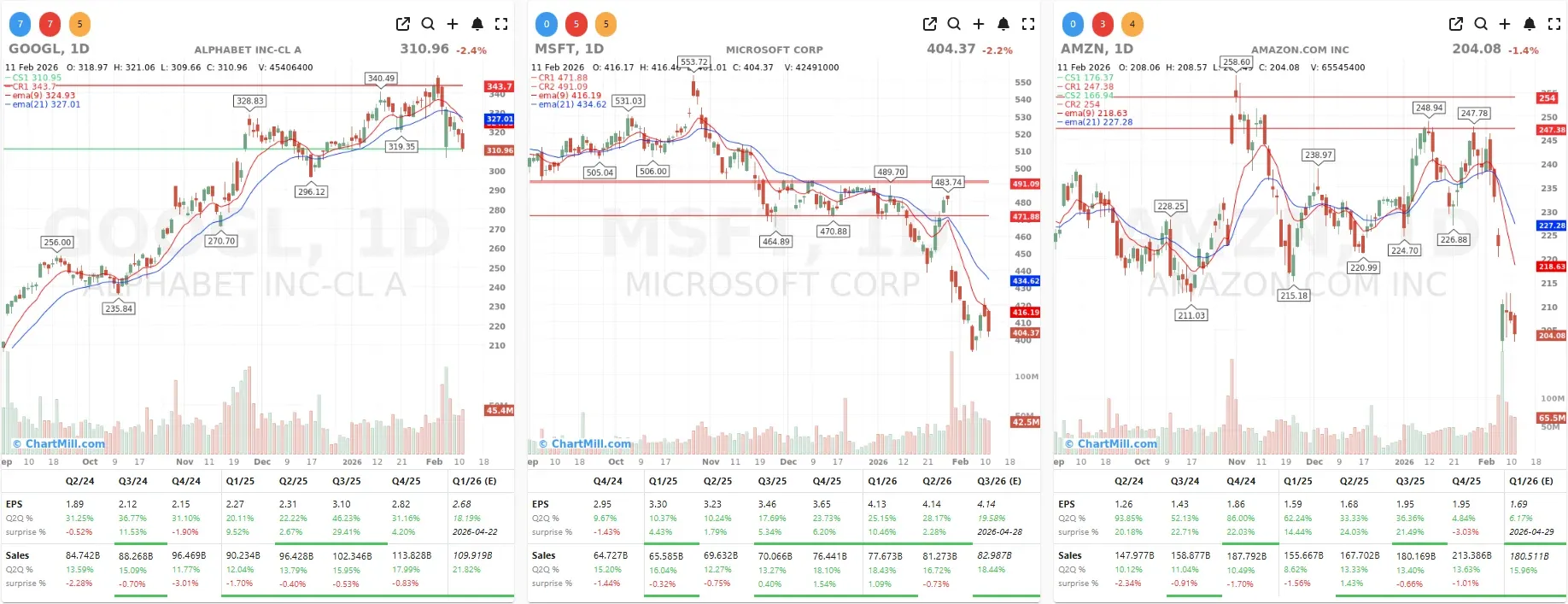
We saw Alphabet (GOOGL | -2.29%), Amazon (AMZN | -1.39%), and Microsoft (MSFT | -2.15%) all lose ground.
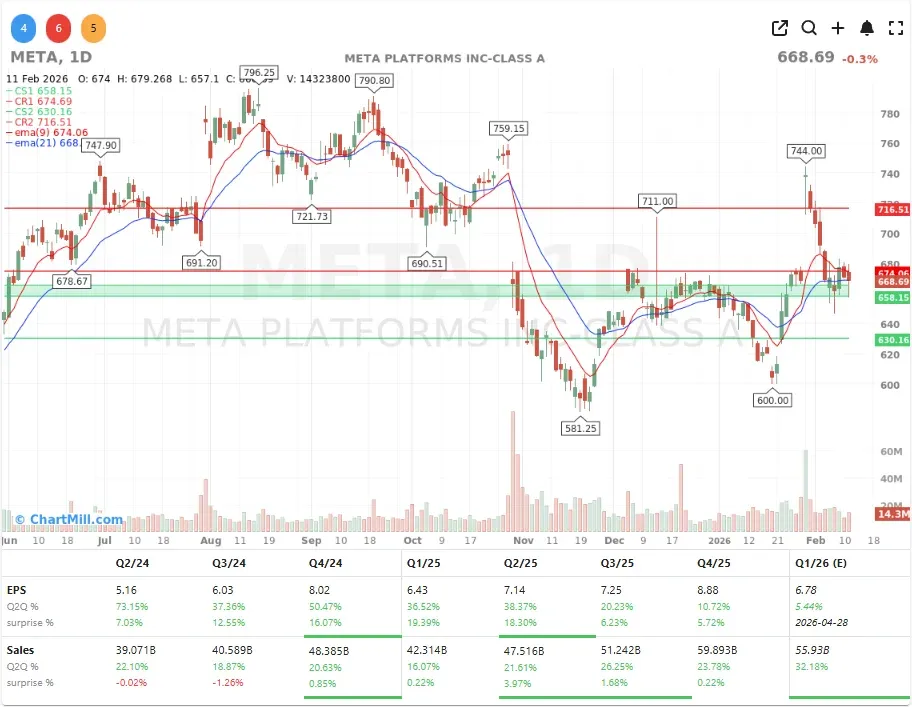
Meta Platforms (META | -0.30%) held up remarkably well. The catalyst? Bill Ackman’s Pershing Square has taken a significant stake, arguing that the social media giant is trading at a steep discount compared to its peers.
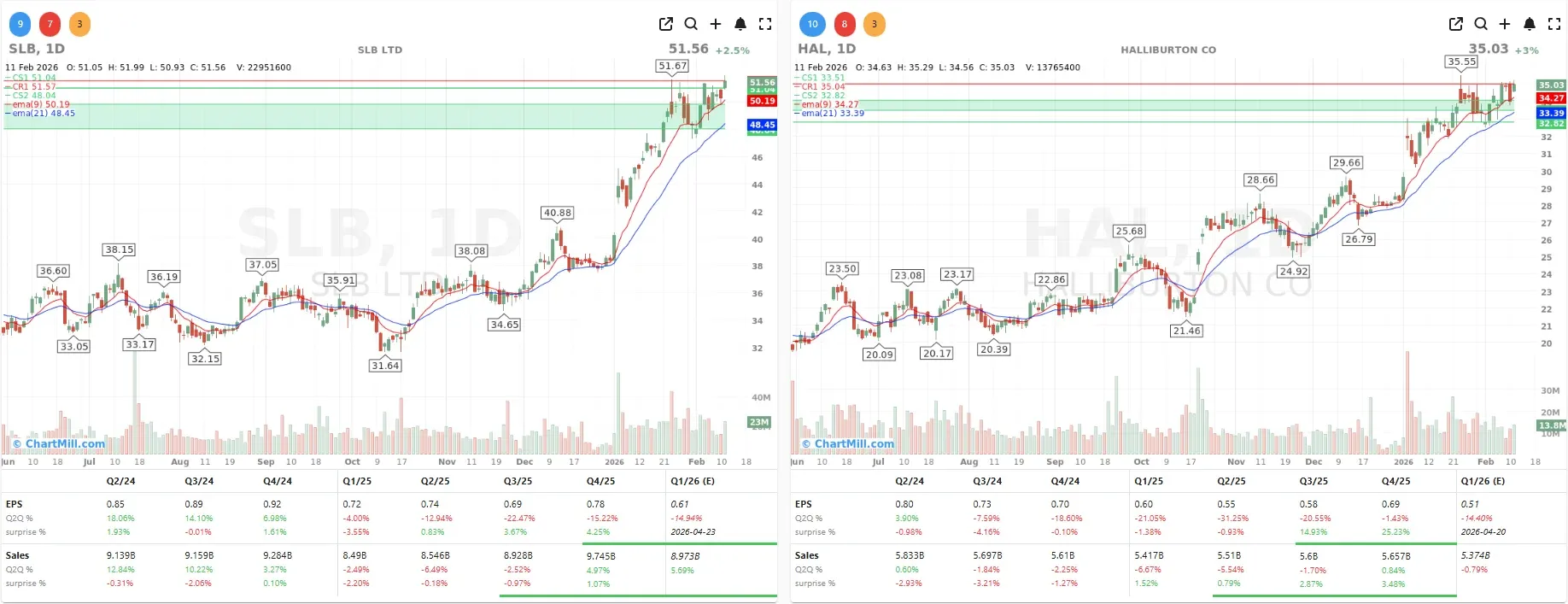
In other corners of the market, the energy sector got a boost as Washington gave the green light for companies like Halliburton (HAL | +2.97%) and SLB (SLB | +2.46%) to provide equipment to Venezuela to help restore oil production.
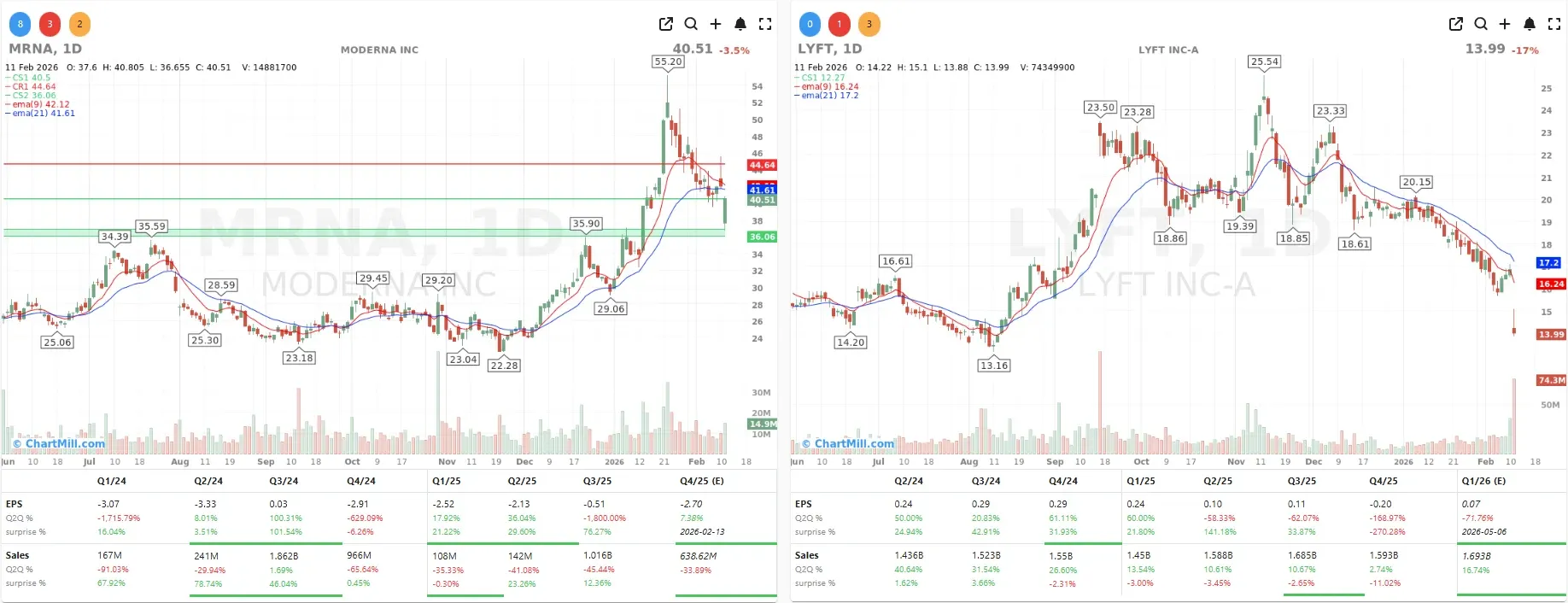
Not everyone shared in the gains, though; Lyft (LYFT | -16.97%) suffered a catastrophic drop after disappointing on rider numbers, and Moderna (MRNA | -3.54%) struggled after the FDA refused to review their new flu shot.
Closing Thoughts
Wednesday served as a stark reminder that the market is currently caught between two powerful forces: a resilient economy that prevents the Fed from easing, and a technological shift that is picking new winners and losers overnight.
Don't get distracted by the headline job numbers. The real story lies in the software sector's identity crisis and the selective rotation into quality assets. I would be cautious with high-multiple software stocks that don't have a clear "moat" against the coming wave of AI automation.
Kristoff - ChartMill
Next to read: Breadth Rebound Holds - But Leadership Still Hesitates