

The idea of "Growth at a Reasonable Price," or GARP, is a central investment method for those looking to mix the possibility of high-growth companies with the control of good valuation. It tries to steer clear of the problems of paying too much for uncertain growth while still gaining from businesses that are getting larger. One useful way to find these chances is through a structured filter, which sorts for stocks showing firm growth measures, good basic profit and money strength, and a price that is not too high.
A recent filter for "Affordable Growth" stocks, which uses these GARP ideas, found Eli Lilly & Co (NYSE:LLY) as a possibility. The filter in particular searches for companies with a high growth score (above 7 out of 10), along with acceptable scores in profit, money strength, and a valuation score above 5 to make sure the cost is not too high. Eli Lilly's basic picture suggests it deserves more study from investors using this method.
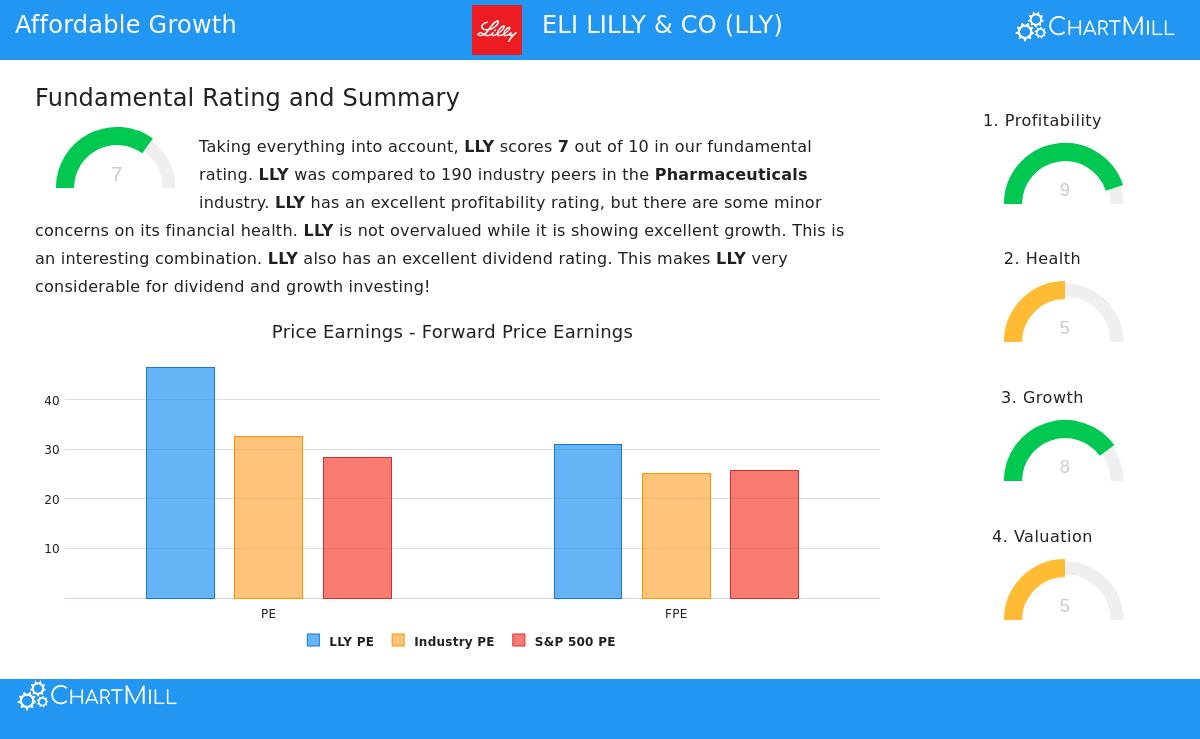
Strong Growth Path
The main attraction of Eli Lilly within a GARP view is its forceful and speeding growth picture, which gives it a high ChartMill Growth Score of 8. The company is not just growing, it is doing so at a notable speed, pushed by its top-selling drugs in diabetes and obesity care.
- Fast Recent Results: Over the last year, income jumped by 45.41%, while earnings per share (EPS) rose by over 116%. This shows the company is effectively turning sales growth into even better final profit results.
- Firm Past Pattern: This is not a single event. The company's five-year average yearly growth rates are firm, with income going up by 15.08% and EPS by 16.57% per year on average.
- Speeding Future View: Importantly, experts think this speed will keep going and even increase. Predictions show yearly income growth of nearly 20% and EPS growth of over 32% in the next years. For a GARP investor, this forward-looking speed is a main sign that the growth story is still present.
Valuation with Perspective
A stock with such growth measures often sells at a high price, and Eli Lilly is not different. Its current Price-to-Earnings (P/E) ratio is above the wider market average. However, the GARP method looks at valuation with thought to growth and quality, and here, Lilly's score of 5 suggests it is not overly costly compared to its chance.
- Field Comparison: When looked at next to its drug industry friends, Lilly's valuation seems more acceptable. Its P/E and forward P/E ratios are lower than a large part of companies in its field.
- Growth Balance: The most convincing valuation point is in its PEG ratio, which changes the P/E for expected earnings growth. Lilly's low PEG ratio shows the market may not be completely counting its strong future growth path, a clear mark of a possible GARP chance.
- Profit Support: The filter's need for acceptable profit is key here. A high P/E is more acceptable if a company makes outstanding returns, which Lilly does, helping to hold up its current valuation level.
Supporting Basics: Profit and Strength
For growth to be lasting and "affordable," it must be made on a steady base. The filter rules for acceptable profit and strength are made to sort out money-wise weak companies. Eli Lilly's full fundamental analysis report shows strong points and a notable area of watch in these groups.
Profit is a clear strong point, with a near-top score of 9. The company has outstanding margins and returns on money that are with the best in the drug industry. Its Return on Equity of over 77% and Operating Margin above 44% show a very effective and profitable business way, giving the cash flow to put back into its growth plan.
Money Strength gets a middle score of 5, which meets the filter's "acceptable" line but points out an area for investor watch. The company has a firm Altman-Z score, showing low short-term failure risk. However, its higher debt levels to pay for growth projects and buys have led to a high Debt-to-Equity ratio. While workable given its firm cash flows, it is a factor that shows the value of the strength filter in the sorting process, it makes sure investors know about such balance sheet points.
End and More Study
Eli Lilly & Co offers a convincing example for the Growth at a Reasonable Price method. It has the fast, speeding growth that growth investors want, held up by top-level profit that gives quality and lasting power. While its absolute P/E ratio is high, its valuation seems more acceptable inside its high-performing field and when its growth rate is considered. The middle strength score acts as a note that even firm companies need balanced basic study.
The "Affordable Growth" filter that found LLY is made to in an ordered way find companies balancing these exact traits. For investors wanting to look at other stocks that meet similar rules of firm growth, acceptable valuation, and acceptable money standing, you can see the full filter rules and its current findings here.
Disclaimer: This article is for information only and does not make financial guidance, a suggestion, or a deal or request to buy or sell any securities. The information given is based on supplied data and should not be the only base for any investment choice. Investing has risk, including the possible loss of main money. Always do your own study and think about talking with a skilled financial guide before making any investment choices.