
Thursday’s tape was a classic “risk-on, risk-off, all at once” session: software got punched in the mouth after Microsoft’s Azure outlook, while Meta reminded everyone that ad dollars still have a pulse.
After the bell, Apple’s iPhone demand showed up like a bouncer, but oil and gold were the real mood setters thanks to escalating Iran worries.
The Hook: When “AI” Stops Being a Magic Word
AI optimism is still alive, but investors suddenly want receipts, especially when the bill is measured in tens of billions.
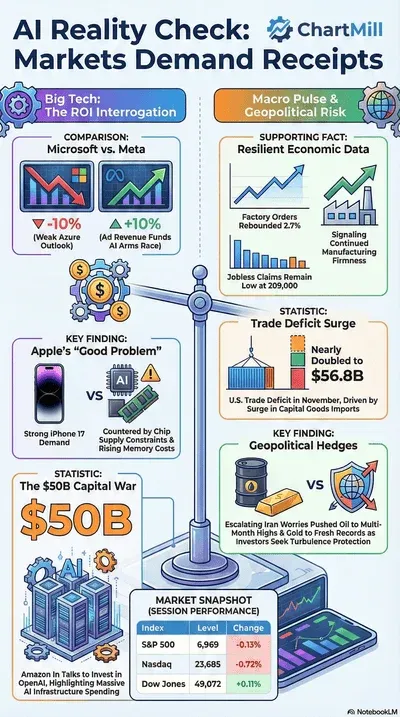
The major indexes mostly drifted, but with very loud internal rotations: the S&P 500 slipped 0.13% to 6,969, the Nasdaq fell 0.72% to 23,685, while the Dow eked out a 0.11% gain to 49,072.
Big Tech: The Market’s Patience for AI Capex Isn’t Infinite
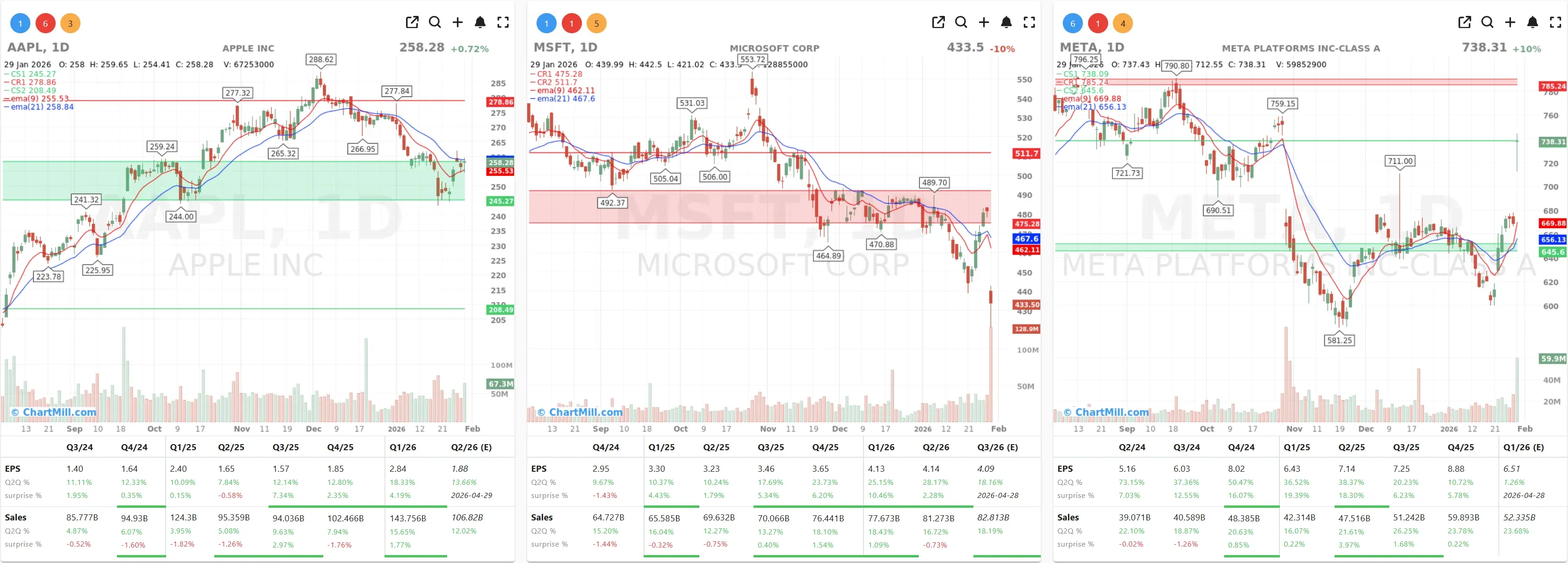
The headline move came from Microsoft (MSFT | -9.99%). The stock got absolutely re-priced after a weaker-than-expected outlook for Azure growth, basically a reminder that “we’re investing heavily” only works as a story if the growth curve stays steep.
On the flip side, Meta Platforms (META | +10.41%) ripped higher on strong numbers and upbeat revenue signals, even while telegraphing more AI spending. Investors clearly decided that Meta can fund the AI arms race with ad cash, whereas Microsoft just got interrogated on ROI.
After-hours, Apple (AAPL | +0.72%) added a late plot twist: a big beat driven by iPhone strength, specifically strong demand for the iPhone 17, plus a better-than-expected outlook.
The “catch” is supply: Apple is openly talking about constraints in advanced chips and rising memory costs, which could turn margins into the next battleground.
Corporate Crosscurrents: Deals, Splits, and Data Centers
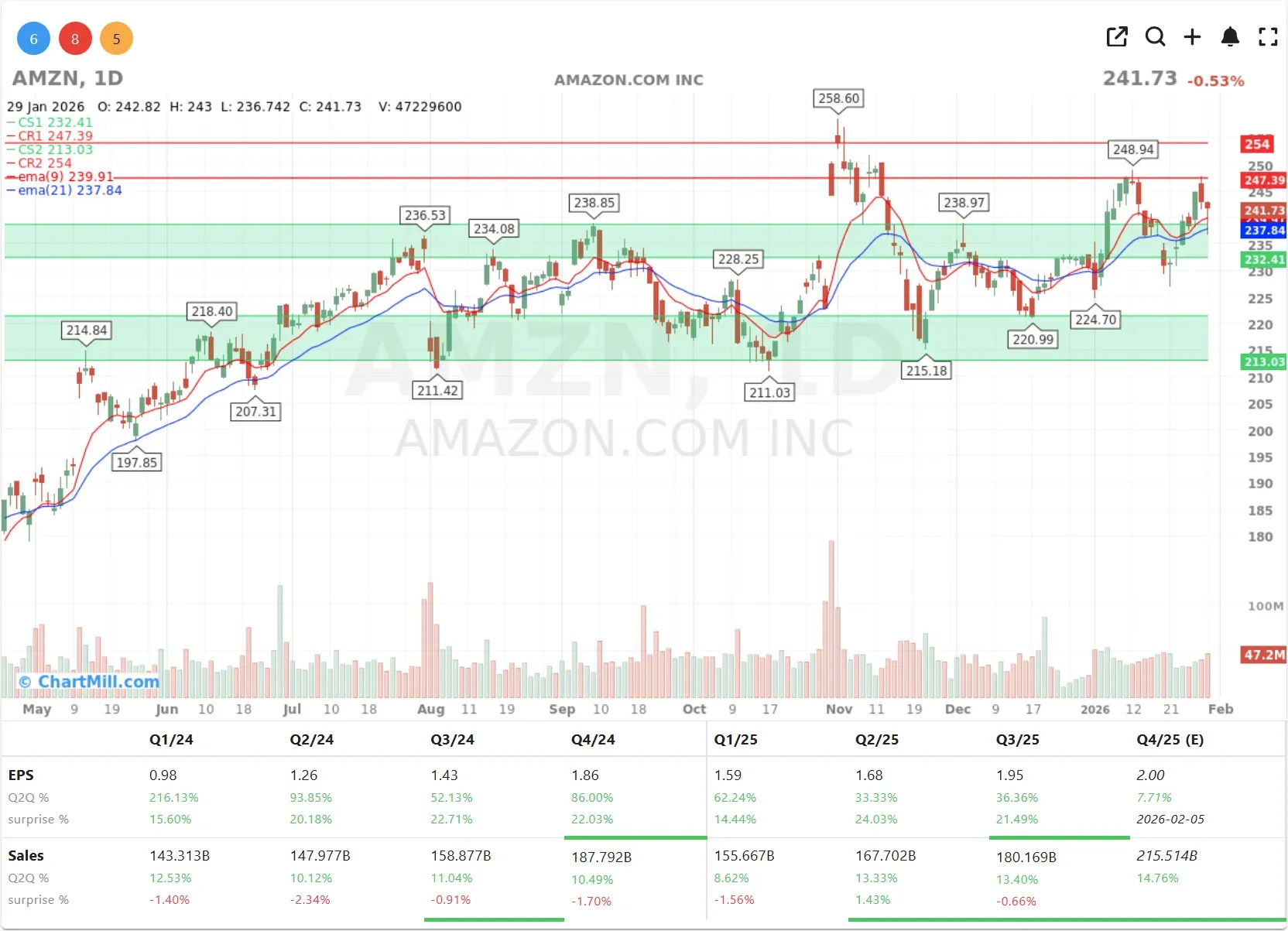
Amazon (AMZN | -0.53%) was in focus on reports it’s in talks to invest up to $50B in OpenAI, another reminder that the AI infrastructure land-grab is turning into a capital war between giants.
A few more notable movers worth filing away:
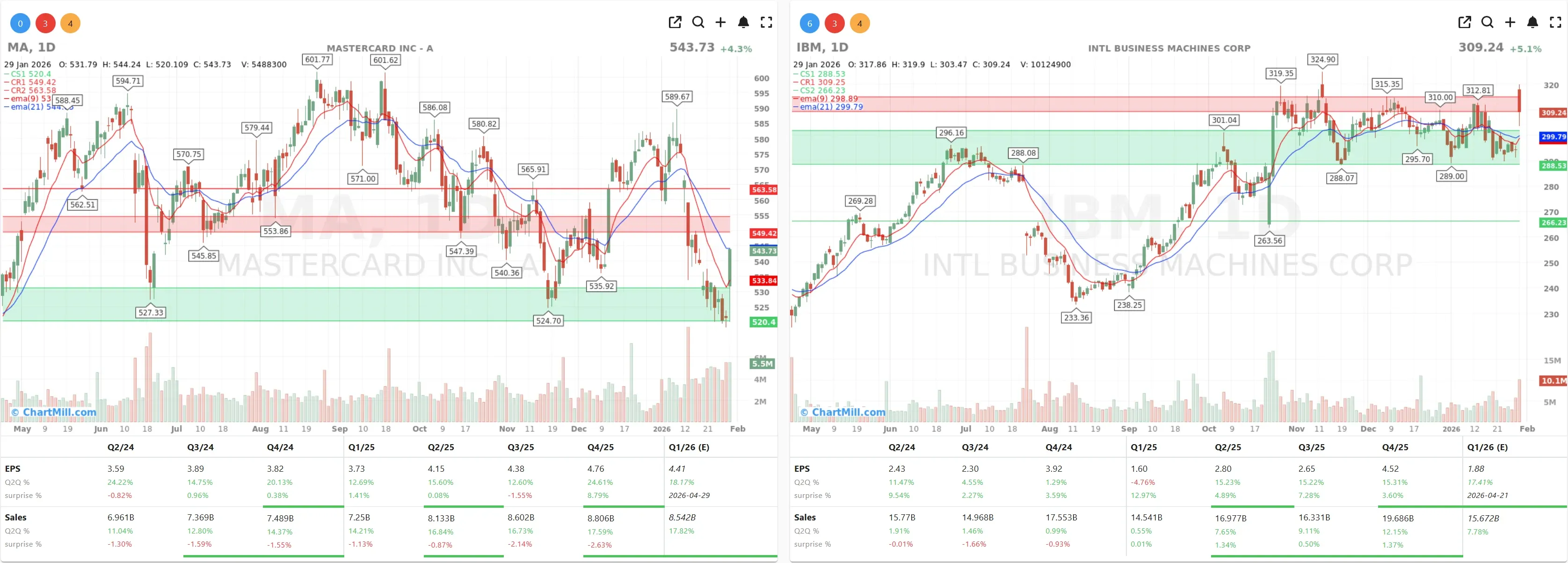
- IBM (IBM | +4.98%) climbed on strong results.
- Mastercard (MA | +4.29%) rose after a solid quarter (payments volume staying resilient is still a useful read-through on the consumer).
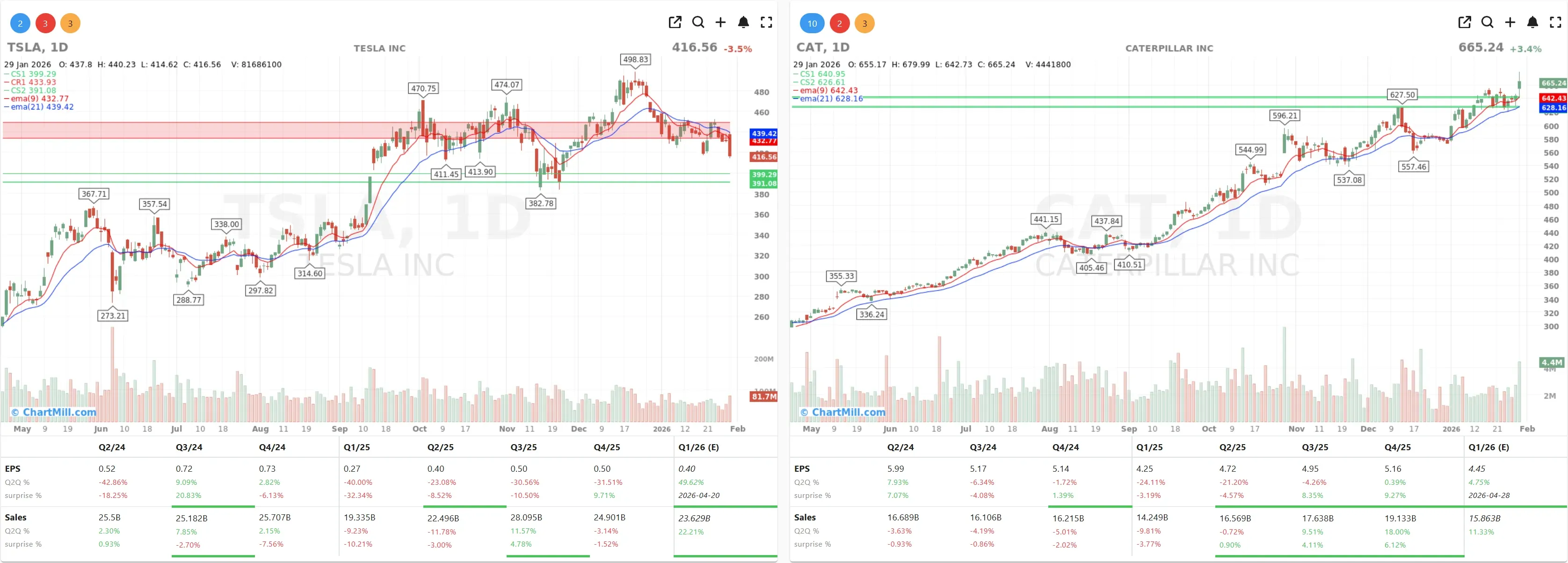
- Caterpillar (CAT | +3.41%) benefited from the very real, very unsexy part of the AI boom: power and infrastructure demand (data centers don’t run on vibes).
- Tesla (TSLA | -3.45%) slid as investors digested heavier investment plans, including money flowing toward Musk’s AI ecosystem.
Macro Pulse: Trade Deficit Whiplash, Manufacturing Bounce
The U.S. trade deficit nearly doubled in November to about $56.8B, driven by a surge in imports (notably capital goods) while exports fell. That kind of swing can distort GDP math, even if it doesn’t change the underlying “consumer still breathing” narrative.
Factory orders rebounded 2.7% in November, helped by aircraft demand and broader manufacturing firmness.
And weekly initial jobless claims ticked down to 209,000, not exactly a recession siren.
Geopolitics and Positioning: Iran Risk Bid Shows Up in Oil (and Gold)
Energy was the day’s emotional barometer. Oil jumped to multi-month highs on growing fears that U.S.–Iran tensions could escalate into supply disruptions.
Gold also surged to fresh records (and then pulled back), reflecting a market that’s simultaneously chasing growth narratives and buying hedges like it’s preparing for turbulence.
The Fed and the Political Shadow Over Rates
The Fed backdrop didn’t “move” markets yesterday so much as frame them: rates are on hold, and Powell is still signaling patience. But the bigger headline risk is political, President Trump has said he’s set to announce his pick to replace Powell (whose term ends in May), and the shortlist chatter is already feeding narratives about future policy pressure.
My Take: What I’m Watching Next
If Thursday taught me anything, it’s this: the market is no longer awarding blanket “AI multipliers.” It’s rewarding credible monetization and punishing uncertain payback periods.
For today’s playbook, I’m watching three things:
-
whether software stabilizes after the Microsoft shockwave,
-
whether Apple’s supply constraints become the next “good problem,” and
-
whether geopolitical risk keeps oil bid, because that’s the kind of variable that can quietly re-price everything.
Kristoff - ChartMill