

For investors looking to balance the search for growth with fiscal care, the "Growth at a Reasonable Price" (GARP) method presents a thoughtful option. This method seeks to find companies showing solid and lasting increase but not trading at the high prices common to aggressive growth stocks. By applying a systematic filter that looks for good increase, firm profitability, acceptable financial condition, and a fair price, investors can find candidates that may present appealing returns for the risk taken. One company found by this "Affordable Growth" filter is AUTODESK INC (NASDAQ:ADSK).
Growth: A Central Driver of Value
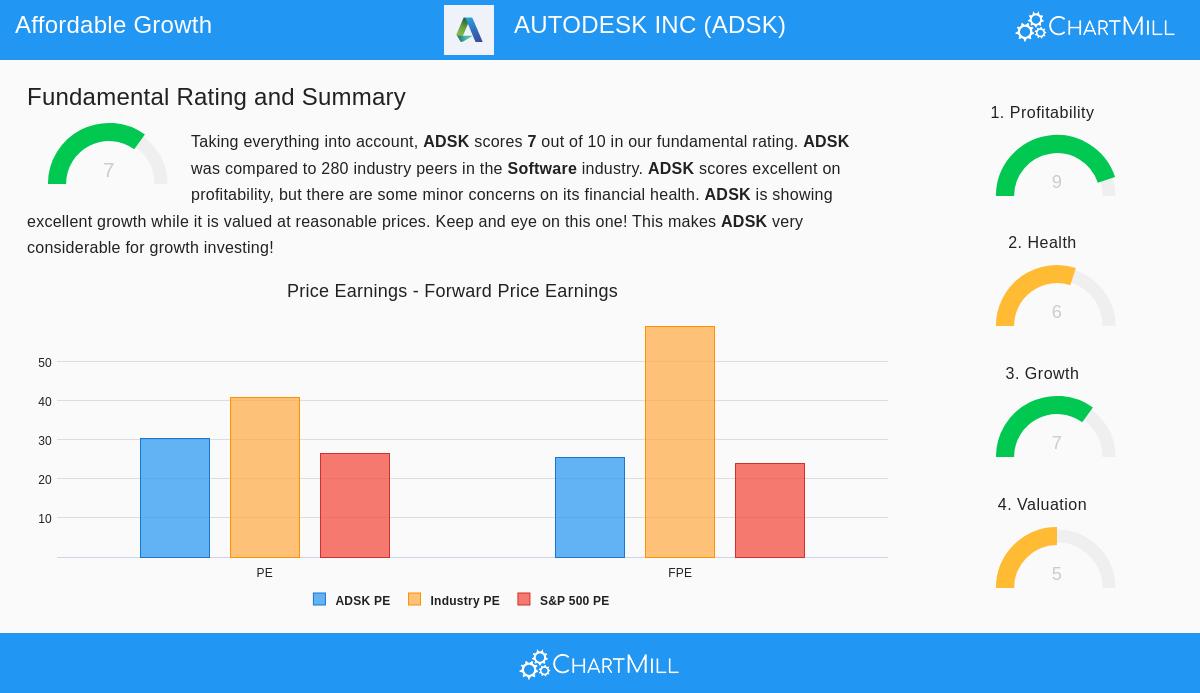
The base of any GARP investment is clear increase, and Autodesk performs well here. The company’s fundamental analysis report gives it a Growth Rating of 7 out of 10, signaling better-than-average results within its software industry group. This score is backed by notable historical and expected increase.
- Past Results: Over the last year, Autodesk increased its Earnings Per Share (EPS) by 19.20% and its Revenue by 15.55%. More notably, the five-year average yearly increase rates are stronger, with EPS rising 24.81% and Revenue going up 13.37% on average per year.
- Future Projection: Analysts anticipate this trend to persist, with estimates pointing to average yearly EPS increase of 17.45% and Revenue increase of 12.21% in the next years. This alignment between past results and future estimates is a main idea of the GARP view, as it implies the increase is built-in and can continue, not a short-term spike.
Valuation: Judging the "Reasonable Price"
A stock can show excellent increase but still be a bad investment if the cost is too steep. The Affordable Growth filter specifically searches for stocks that are "not overpriced," and Autodesk’s Valuation Rating of 5 shows a varied but ultimately fair view when increase is considered.
On its own, some of Autodesk’s valuation measures seem high. Its Price-to-Earnings (P/E) ratio of 30.40 and Forward P/E of 25.54 are above current S&P 500 averages. However, the GARP method requires perspective.
- Industry Comparison: Compared to other software companies, Autodesk’s valuation is more appealing. Its P/E ratio is lower than nearly 64% of the industry, and its Forward P/E is lower than about 65% of similar companies. This relative price is an important filter pass.
- Increase Adjustment: The most significant factor for a GARP investor is whether the cost accounts for the increase available. Autodesk’s PEG ratio, which modifies the P/E for increase, suggests a proper valuation. When paired with its high profitability (covered next), the current multiples can be accepted given the company’s solid and anticipated future earnings growth.
Profitability and Financial Health: The Supporting Elements
While increase and valuation are the main filters, the filter’s need for "acceptable profitability and health" confirms the core business is stable. Autodesk performs very well in profitability, receiving a high rating of 9.
- Profitability Level: The company has very good margins, with a Gross Margin over 90% and an Operating Margin of nearly 24%, doing better than most of its industry. Its Return on Invested Capital (ROIC) of 20.36% is with the best in the field, showing very effective use of capital to create profits.
- Health Points: Autodesk’s Financial Health rating is a 6, representing the area needing closest attention. The company shows strong solvency, with an Altman-Z score showing no bankruptcy danger and a very good debt-to-free-cash-flow ratio. However, its liquidity ratios (Current and Quick Ratios below 1) are low compared to similar companies. It is worth noting that for a software company with a strong subscription model and very good cash flow creation, standard liquidity measures can be less important, but they remain a point for investors to note.
Conclusion and Next Steps
Autodesk presents a strong example for the Affordable Growth or GARP method. It combines good, double-digit increase in earnings and revenue, both historically and expected, with a valuation that, while not low in absolute terms, is fair compared to its high-quality peer group and its own increase path. This is supported by outstanding profitability measures that support a higher price and generally acceptable financial solvency.
The company’s complete fundamental breakdown, which lists every measure behind these ratings, can be seen in the Autodesk Fundamental Analysis Report.
Autodesk is only one example located by this systematic process. Investors curious about finding other companies that meet these standards of acceptable increase, fair valuation, and acceptable fundamentals can review the full list of results using the Affordable Growth Stock Screener.
Disclaimer: This article is for informational purposes only and does not constitute financial advice, a recommendation, or an offer to buy or sell any security. The analysis is based on data and a methodology provided by ChartMill. Investors should conduct their own due diligence and consider their individual financial circumstances and risk tolerance before making any investment decisions.