

For investors looking for a dependable source of passive income, a methodical screening process is important. One useful tactic is to look for companies that provide an appealing dividend and also have the fundamental financial capacity to maintain and increase those payments. This method focuses on quality and longevity over seeking the highest available yield, which can sometimes indicate business problems. A practical technique is to search for stocks with good ratings for dividend quality, along with firm scores for earnings power and balance sheet condition. This pairing aids in finding businesses that reward shareholders and are operationally secure.
Hubbell Inc (NYSE:HUBB) appears as a notable candidate from this type of screening. The company, a designer and maker of electrical and electronic products for utility, industrial, and construction uses, shows a profile that fits the aims of a careful dividend investor.
Dividend Quality and Longevity
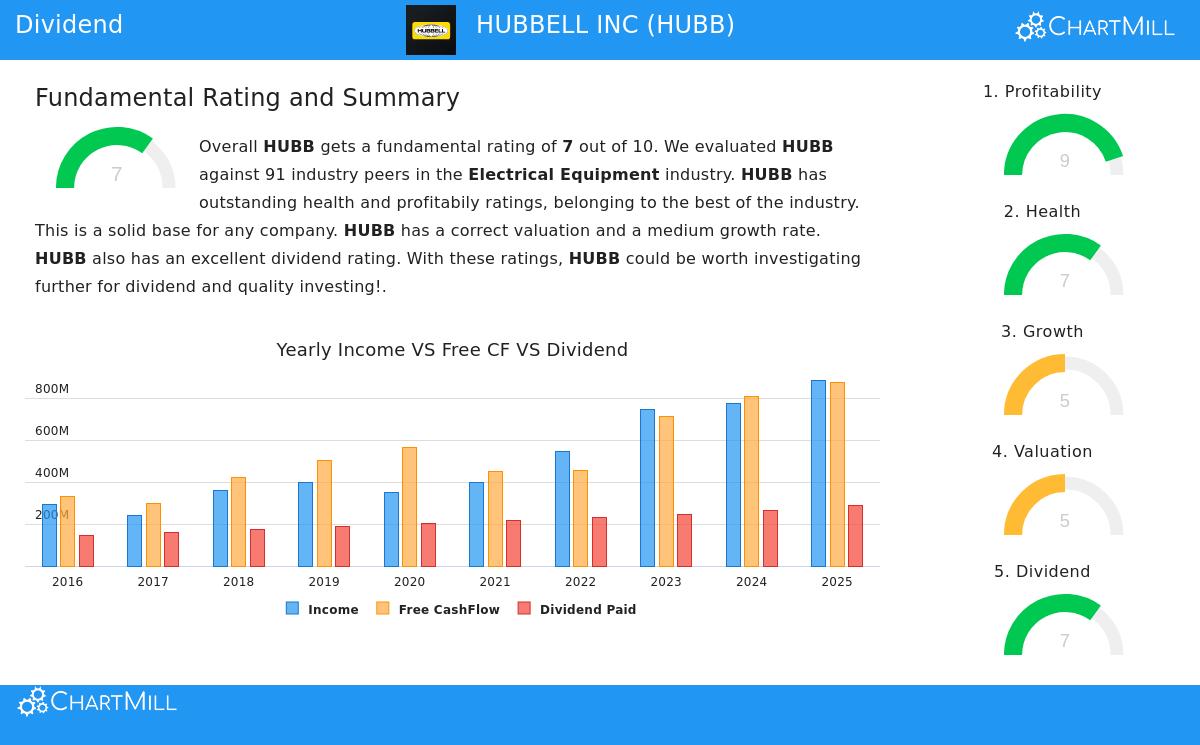
The center of the investment case for Hubbell is found in its firm dividend profile, which receives a 7 out of 10 on the ChartMill Dividend Rating. This rating combines a number of important elements for dividend investors.
- Dependable History and Increase: Hubbell has a record of consistency, having paid a dividend for at least ten straight years without a cut. Further, the company has raised its dividend at an annual rate of 7.69% over the last five years, showing a dedication to giving more value to shareholders.
- Manageable Payout Ratio: A main concern for dividend stocks is a payout that is too high. Hubbell addresses this concern well, with only 32.13% of its earnings used for dividend payments. This low ratio offers a good cushion, confirming the dividend is secure and allows space for business investment or future dividend raises, even if earnings fluctuate.
- Yield Perspective: With a yearly dividend yield of 1.19%, Hubbell’s direct income return is fair, though not exceptional. The meaning of this number is clearest with comparison: this yield is much higher than the 0.26% average for its Electrical Equipment industry group, putting it near the top. While a bit below the current S&P 500 average, the yield is backed by the good growth and security measures, making it a quality part of total return instead of just a high-yield offer.
This good dividend rating is not separate, it is supported by a base of corporate capacity. A lasting dividend plan is only feasible when a company is regularly profitable and keeps a sound balance sheet, which is exactly what the screening process sought to find.
Base of Earnings Power and Balance Sheet Condition
Hubbell’s dividend attractiveness is supported by very good operational results and a firm financial setup, achieving high scores in these screening areas.
- Superior Earnings Power: The company gets a top ChartMill Profitability Rating of 9. Important margins are sector-leading, with an Operating Margin of 21.03% and a Profit Margin of 15.26%, doing better than over 89% of similar companies. These firm and improving margins result in better returns on capital, including a Return on Invested Capital (ROIC) of 13.82%. This high level of earnings power is what finances consistent dividend payments and their growth, directly connecting to the screening aim of finding companies with the income to support shareholder returns.
- Firm Balance Sheet Condition: With a Health Rating of 7, Hubbell shows a durable balance sheet. Its ability to meet long-term obligations is a specific strength, shown by an Altman-Z score of 5.48, which indicates a very small short-term chance of financial trouble. Also, its debt-to-free-cash-flow ratio of 2.66 is very good, meaning it could repay all debt in less than three years using current cash flow. This financial strength is key for the dividend screening method, as it means the company does not have too much debt and can reliably meet its commitments, including dividend payments, during different economic conditions.
Price and Growth Factors
While the screen concentrates on dividend quality, earnings power, and condition, a full view needs to consider price and growth outlook.
- Price Measures: Hubbell’s price shows a varied image. Its Price-to-Earnings (P/E) ratio of 25.55 is similar to the wider S&P 500. However, within its own industry, which has a higher average P/E, Hubbell seems more reasonably priced, performing better than over 80% of its peers on this and other value measures like Enterprise Value to EBITDA. The screening method recognizes that high-quality, consistent dividend payers often have a higher price, which seems true here.
- Growth Path: The company displays a solid growth profile, with a 5-year historical EPS growth rate of 19.35%. Analyst projections suggest continued, though more measured, growth in both earnings and revenue in the next few years. This expected growth helps support the possibility of future dividend raises, keeping the income stream from standing still.
For investors who use a methodical screen for quality dividend payers, Hubbell Inc stands as a good example. It joins a consistent and increasing dividend, backed by a very manageable payout ratio, with the fundamental strengths of superior earnings power and firm balance sheet condition. This match makes it a stock deserving of further study for portfolios focused on income.
You can examine the detailed fundamental analysis that supports these ratings for Hubbell Inc here.
Find Other Dividend Options The review of Hubbell Inc came from a systematic screen for high-quality dividend stocks. If you want to examine other companies that fit similar standards of good dividend ratings, earnings power, and balance sheet condition, you can perform the same screen. Click here to access the "Best Dividend Stocks" screener and see the full list of current results.
Disclaimer: This article is for informational purposes only and does not constitute financial advice, a recommendation, or an offer or solicitation to buy or sell any securities. The information presented is based on data provided and should not be the sole basis for an investment decision. Investors should conduct their own independent research and consult with a qualified financial advisor before making any investment decisions. Past performance is not indicative of future results.