

For investors looking for steady income, a methodical screening process can help find companies that provide more than a high stated yield. One useful tactic involves selecting for stocks that join a firm dedication to shareholder distributions with good core business operations. This involves searching for companies with a high dividend rating, which assesses yield, growth, and durability, while also confirming they have acceptable earnings and a sound balance sheet. This layered method helps steer clear of "yield traps," where a high dividend signals a troubled company, and instead concentrates on businesses able to maintain and raise their distributions over time.
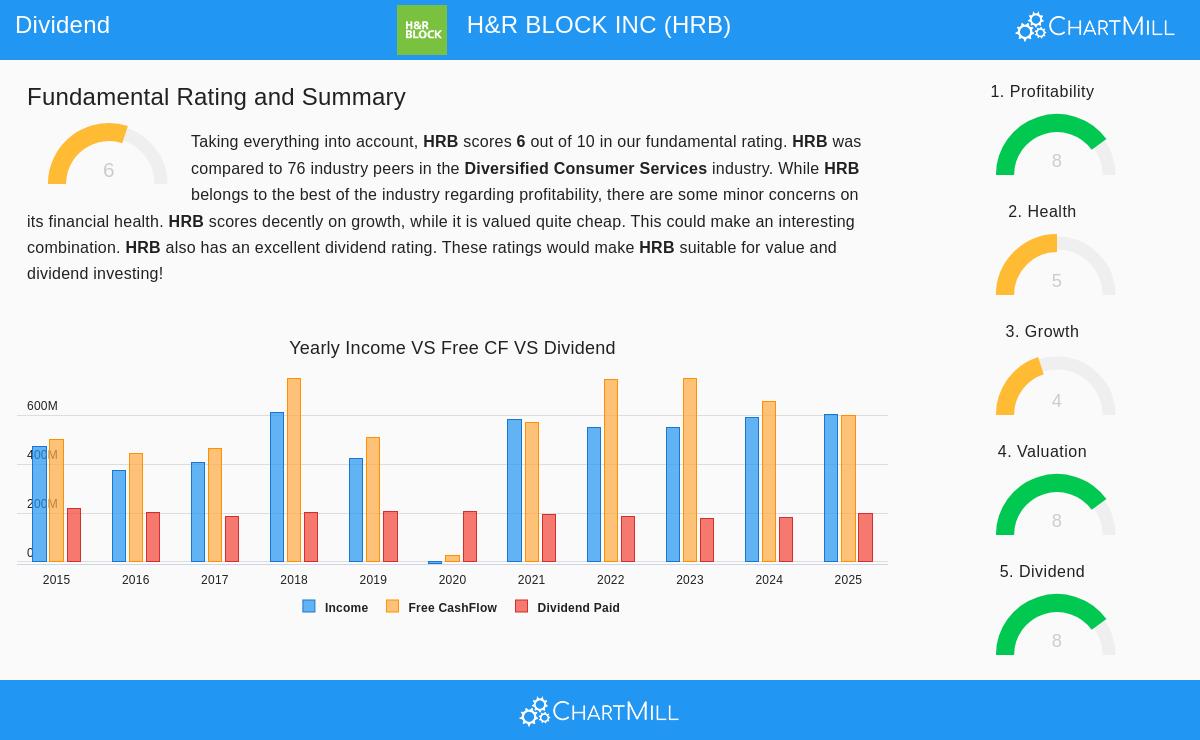
One stock that appears from such a filter is H&R BLOCK INC (NYSE:HRB), the familiar provider of tax preparation services and financial products. The company's operational profile indicates it merits additional examination by investors focused on income.
A Noteworthy Dividend Profile
The central attraction of HRB for dividend investors is its solid and carefully assessed distribution framework. According to ChartMill's study, the company receives a Dividend Rating of 8 out of 10, putting it with the more solid options for income portfolios. This score rests on a few main supports:
- Appealing and Rising Yield: HRB presently provides a dividend yield of 3.86%, which is almost twice the average yield of the S&P 500. Significantly, this is not a fixed payment. The company has raised its dividend at a yearly rate of nearly 6.8% over the last five years, showing a dedication to boosting shareholder returns.
- Established History: Dependability is critical for dividend investors. HRB has built a reliable record, having paid dividends without interruption for more than ten years without one decrease in that time. This extended consistency offers trust in management's distribution approach.
- Maintainable Payout: A high yield is only useful if it is maintainable. HRB does well here, with a modest payout ratio near 33%. This indicates the company uses only about one-third of its earnings to finance the dividend, leaving plenty of space to put money back into the business, handle economic slowdowns, and keep raising the payout. The study also mentions that earnings growth is exceeding dividend growth, further strengthening the maintainability of the present policy.
This solid dividend rating is important for the screening tactic because it goes past a basic high-yield search. It confirms the company not only pays a good dividend now but has a record of raising it and the financial ability to keep it, which are necessary for long-term income investing.
Supported by Solid Earnings
A lasting dividend must be backed by a profitable company, and this is where HRB is notable. The company gets a high Profitability Rating of 8. Its central tax preparation business produces notable margins and returns on capital.
- The operating margin is at a solid 22.5%, doing better than most of its competitors in the diversified consumer services field.
- Even more notable are the returns on capital. HRB's Return on Invested Capital (ROIC) of 35.3% is very high, showing very efficient use of capital to produce profits. This measure is not only solid but has been getting better, with the present ROIC above its three-year average.
This high profitability is the source that finances the dividend. For the screening system, confirming "acceptable profitability" is a protection against companies that might be paying dividends from borrowed money or shrinking cash holdings. HRB’s top-tier profitability measures imply its dividend is well-supported by real, high-quality earnings.
Financial Condition: A Blended View with Detail
The screening standards also ask for acceptable financial condition, and here HRB shows a more detailed view, receiving a moderate Health Rating of 5. The study shows a clear split in its financial standing.
On the good side, the company's solvency, its ability to meet long-term debts, is firm. Its Altman-Z score indicates no immediate bankruptcy danger, and its debt level compared to its free cash flow is workable, suggesting it could repay debt in a sensible period. The company has also been lowering its share count and debt-to-assets ratio, which are actions favorable to shareholders.
The main worry is in liquidity, specifically its low Current and Quick Ratios (both at 0.76). These ratios imply the company may have restricted means to cover immediate debts without depending on operational cash flow. For a seasonal business like tax preparation, which produces most of its cash in the first half of the calendar year, this is a typical but key trait to note. It highlights that while the long-term dividend maintainability looks solid due to high profitability and a low payout ratio, investors should recognize the company's cyclical working capital pattern.
Price and Expansion Background
From a price standpoint, HRB seems fairly valued, with a Price-to-Earnings ratio of 9.2, which is below both the wider market and its field average. This valuation, joined with its high yield, adds to its attraction for price-aware dividend investors. Expansion is moderate, with revenues anticipated to rise gradually, but earnings per share are forecast to grow at a double-digit rate each year. For a dividend stock, this amount of growth is often enough, as it supports future dividend raises without needing forceful, capital-heavy growth.
An Option for More Study
H&R BLOCK INC offers a noteworthy example of a stock that fits the standards of a methodical dividend screen. It joins an appealing, rising, and maintainable yield with high profitability, all at a fair price. The worries about immediate liquidity are significant but must be considered next to the company's strong seasonal cash production and very good long-term solvency measures.
For investors using this screening approach, HRB represents the aim: finding income-producing stocks where the dividend is supported by a fundamentally sound and profitable business, instead of being a sign of trouble. A complete detailed summary of the fundamental study for HRB is available in its detailed ChartMill Fundamental Report.
This study of H&R Block came from a preset screen for good-quality dividend payers. Investors interested in finding other companies that pass similar checks for dividend strength, profitability, and financial condition can review the screen and its present outcomes here.
Disclaimer: This article is for informational and educational purposes only and does not form financial advice, a recommendation, or an offer or solicitation to buy or sell any securities. The information shown is based on data supplied and should not be the only foundation for any investment choice. Investors should do their own complete research and talk with a qualified financial advisor before making any investment decisions. Past performance is not a guide to future results.