

For investors aiming to create a portfolio centered on steady income, a systematic selection process is important. One useful tactic is to look for companies that provide a good dividend and also have the fundamental financial soundness to maintain and possibly increase those payments. This method favors quality and endurance over seeking the largest available yield, which can sometimes indicate company trouble. A functional technique is to use a tool that finds stocks with a high dividend grade, along with good marks for earnings and financial condition. This pairing helps find companies that earn sufficient profits to pay their dividends and have a balance sheet strong enough to endure economic shifts.
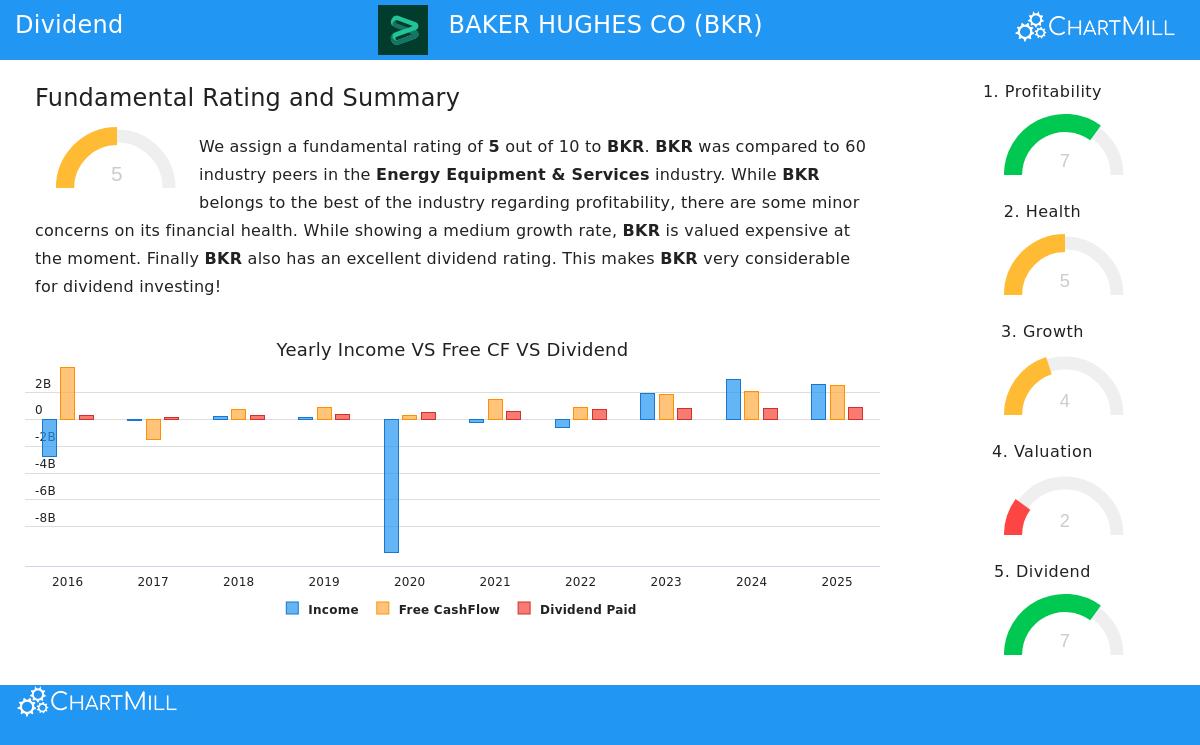
BAKER HUGHES CO (NASDAQ:BKR), a notable company in the energy equipment and services industry, recently appeared from this kind of selection method. The company's basic profile indicates it deserves further examination by dividend-oriented investors, not for an exceptionally high yield, but for a blend of dividend consistency and business steadiness.
Dividend Consistency and Endurance
The center of any dividend investment idea depends on the payment's consistency and its possibility for future increase. BAKER HUGHES CO makes a strong argument on these points, as described in its fundamental analysis report.
- History: The company has built a consistent history, having provided a dividend for at least 10 years without a reduction. This past performance is a vital sign of management's dedication to giving capital back to shareholders.
- Enduring Payment: A crucial measure for dividend soundness is the payout ratio. BKR allocates about 35% of its earnings as dividends, which is seen as an enduring amount. This keeps a large part of profits to be put back into the business, finance expansion projects, or improve the balance sheet, lowering the chance of a future reduction.
- Increase Support: While the dividend's yearly increase rate is a moderate 5.32%, it is notably backed by better earnings growth. This connection shows that the dividend rises are not pressuring the company's funds but are a direct result of gaining earnings.
Supporting Basics: Earnings and Condition
A good dividend is supported by a base of an earning business and a sound balance sheet. These are the exact filters used in the selection process to steer clear of "dividend traps." BKR's grades in these fields give background for its dividend mark.
- Earnings Quality: BKR receives a good earnings grade. Its return on equity (13.74%) and return on invested capital (10.47%) are better than most of its industry counterparts. Also, its operating margin has displayed gain in recent periods. This basic earnings ability is the source that creates the cash needed to pay for the dividend.
- Financial Condition Notes: The company's condition grade is acceptable, showing a varied situation. On the good side, BKR keeps a sound debt-to-equity ratio and its debt compared to free cash flow implies it could settle its debts fairly fast. Still, liquidity measures like the current and quick ratios are points of attention, as they are below many industry rivals. This highlights the value of the selection filter for a minimum condition grade; it confirms the company is not encountering immediate payment problems, even if some liquidity numbers are more constrained.
Price and Expansion Background
For a dividend investor with a lengthy view, present price and expansion possibilities give important background for the overall return possibility.
- Price: The stock is not selling at a large reduction. Its Price-to-Earnings ratio is higher than the industry norm, though similar to the wider S&P 500. This implies the market is valuing some of the company's quality and steadiness, so investors are not necessarily finding a concealed discount.
- Expansion View: Future expansion forecasts are mild. Analysts predict small yearly growth in both earnings and income in the next few years. For a dividend investor, this is not a primary concern, as the main objective is income steadiness. However, it does lower hopes for major price increase that might push the overall return.
Is BKR Suitable for a Dividend Portfolio?
BAKER HUGHES CO illustrates the sort of company a quality dividend selection tries to identify. It provides a fair yield supported by a ten-year history of consistent payments, an enduring payout ratio, and most significantly, the backing of a profitable core business. The selection standards effectively highlighted a company where the dividend seems to be a result of business quality instead of a market attraction.
While its price is not low and its short-term expansion path is mild, these are frequent compromises for settled, dividend-providing companies. The attention on condition and earnings grades helps reduce the danger that an apparently steady dividend could be endangered by business frailty or balance sheet stress.
For investors curious about examining other companies that satisfy similar standards of good dividend traits supported by acceptable earnings and financial condition, you can see the complete selection findings here.
,
Disclaimer: This article is for informational purposes only and does not constitute financial advice, a recommendation, or an offer or solicitation to buy or sell any securities. The information presented is based on data provided and should not be the sole basis for any investment decision. Investors should conduct their own independent research and consult with a qualified financial advisor before making any investment decisions.