
Here's something worth sitting with for a moment: oil is hovering above $100 a barrel, Moody's is throwing around the word "recession," and yet Wall Street ended Tuesday in the green.
Markets are a strange beast sometimes, and Tuesday was a textbook example of how company-specific news can temporarily override the macro noise.
Wall Street Inches Higher — But Don't Call It a Rally
The S&P 500 added 0.25% to close at 6,716, while the Nasdaq climbed 0.47% to finish the session at 22,480. The Dow Jones contributed a slim 0.1% gain. These are decent numbers in any normal environment, but with WTI crude trading around $96 and Brent flirting with $103, investors know that what the market is doing and what it should be pricing in may be two very different things.
The Airlines Found Their Mojo back
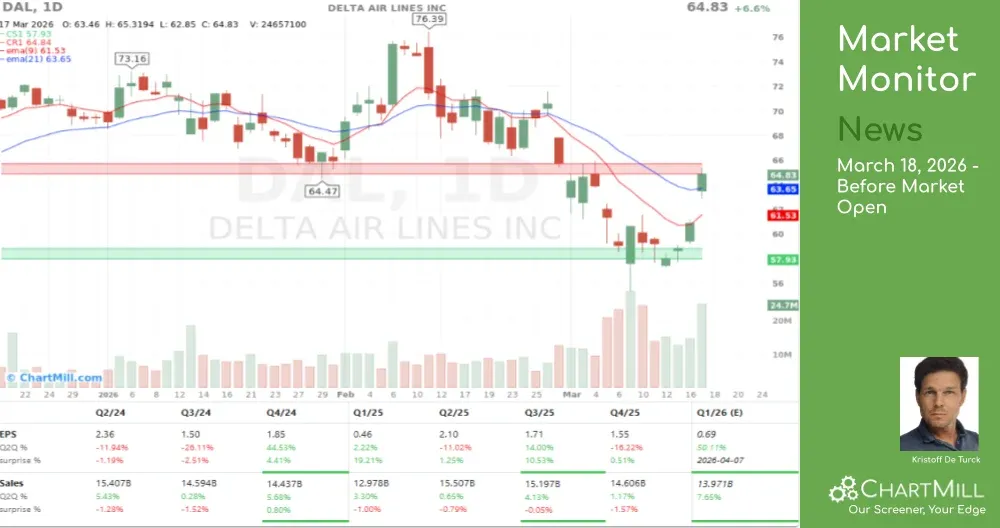
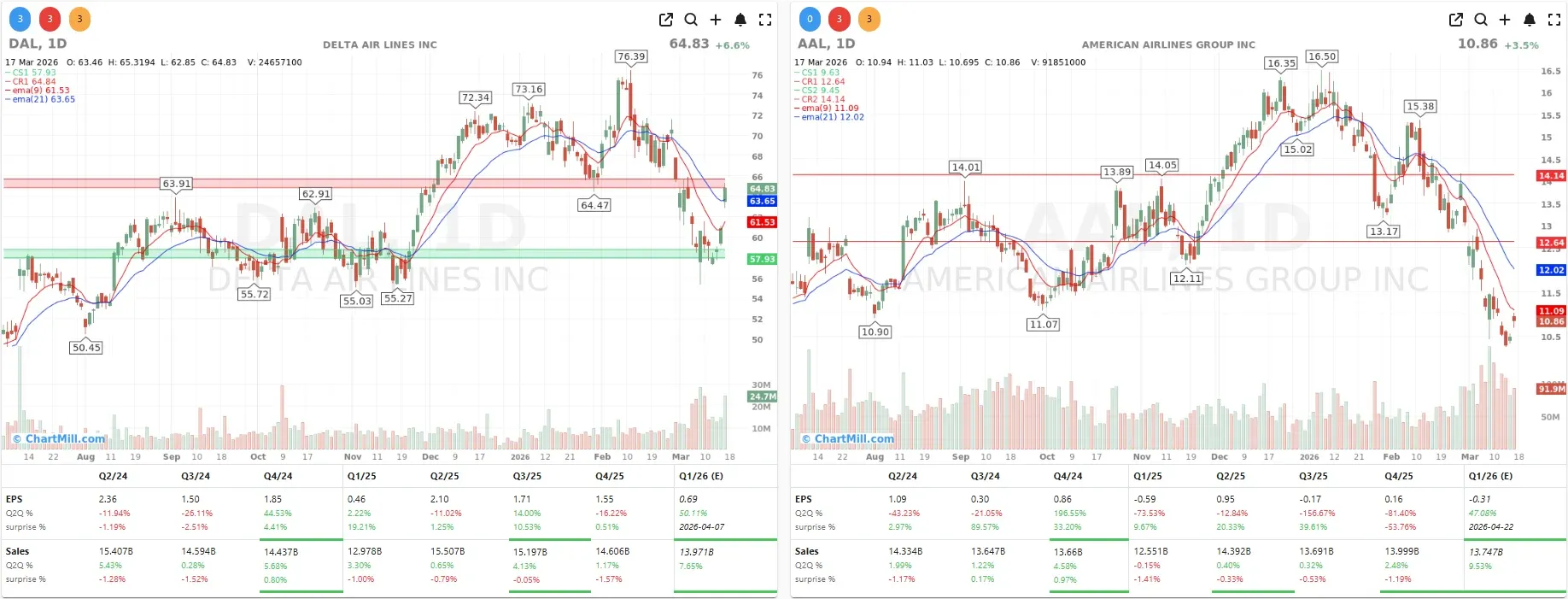
Delta Air Lines (DAL | +6.56%) pulled off the most dramatic move of the session, jumping more than 5% from its most recent close of $60.84, with CEO Ed Bastian citing strong consumer and corporate demand pushing first-quarter revenue growth well above earlier expectations.
The updated forecast now points to a "high single-digit percentage" revenue expansion - between 8 and 10 percent - compared to the prior guidance of 5 to 7 percent.
Record booking days in March are part of the story, but what I found particularly telling was Bastian's comment about pricing power. It's one thing to grow revenue when oil is cheap; it's quite another when fuel costs are eating into your bottom line at a rate of $400 million in just one month.
Citi has reaffirmed Delta with an $87 price target and placed the stock on its "upside 30-day catalyst watch," noting the airline's limited sensitivity to surging fuel prices.
That confidence in Delta's premium customer base acting as a natural hedge against fuel volatility is something worth watching closely.
American Airlines (AAL | +3.53%) also had a solid session. The carrier guided for total revenue growth of more than 10%, up from prior expectations of 7 to 10 percent, while also reporting that systemwide revenue for the first weeks of 2026 came in well ahead of last year.
I wouldn't get carried away, though. AAL's cost structure remains more exposed than Delta's, and the stock is still deeply in the red year-to-date.
Triple-Digit Oil and the Recession Clock
Goldman Sachs stated that the war in the Middle East has already caused the largest disruption to global oil supply ever recorded, with prices of refined products rising even faster than crude itself. It's a systemic input cost shock working its way through virtually every industry.
Transportation, manufacturing, food production, chemicals, the ripple effects of sustained triple-digit oil are not yet fully reflected in corporate guidance.
Moody's went a step further, warning that a recession is nearly inevitable if conditions don't change within weeks, adding that every recession since World War II was preceded by a significant oil price spike, with the COVID pandemic being the only exception.
Worth noting: Moody's already estimated a 49% probability of a U.S. recession within a year even before the conflict escalated, driven largely by weakness in the labor market and the economy's 0.7% growth rate in Q4 2025.
Eli Lilly Gets a Reality Check
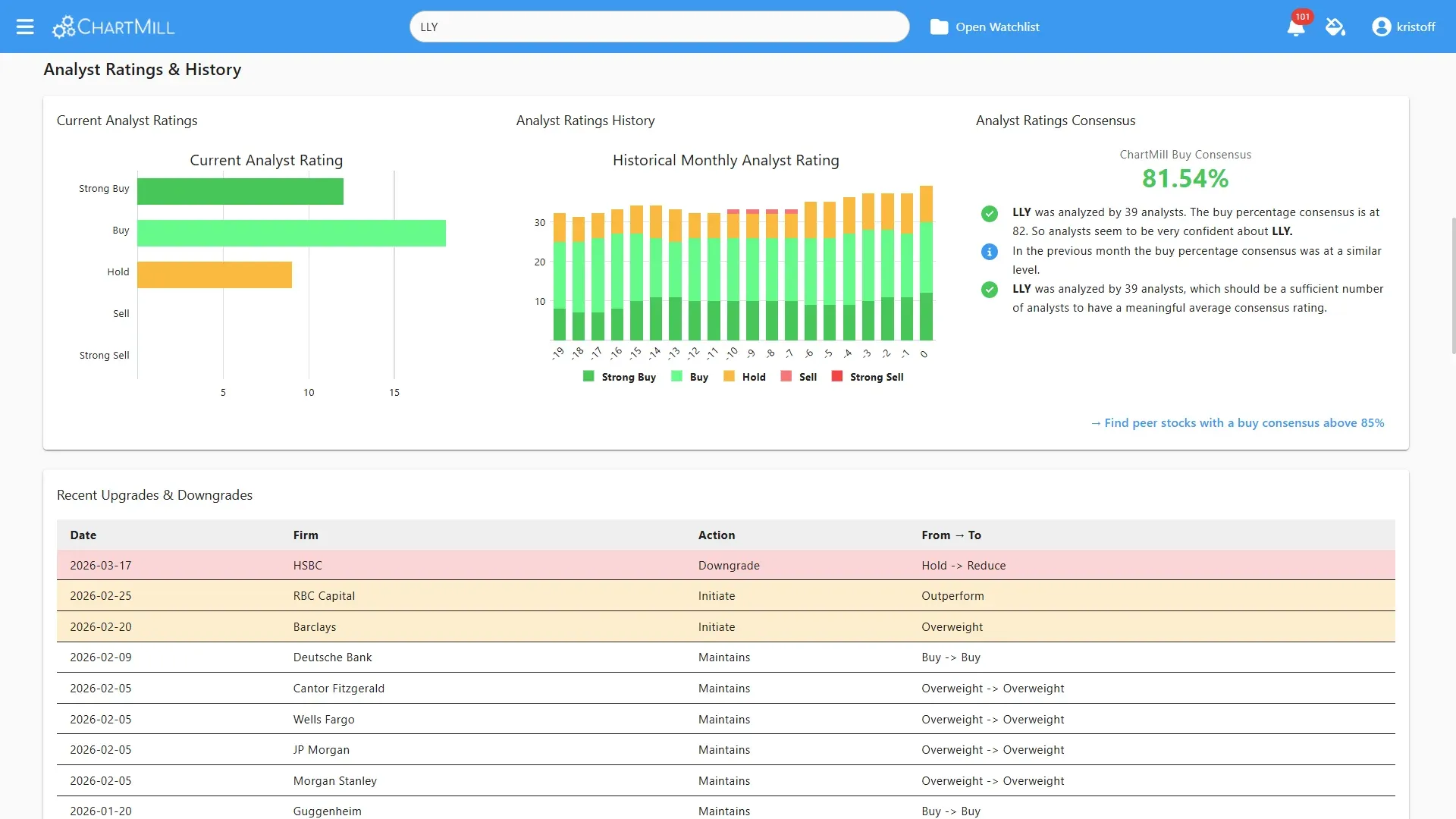
Eli Lilly (LLY | –5.94%) was handed one of the sharpest single-day declines in the pharma space in recent memory, and I think the HSBC downgrade deserves more than a passing mention. HSBC cut its rating on Lilly to Reduce from Hold, slashing its price target from $1,070 to $850, on the basis that the total addressable market for obesity drugs is likely closer to $80–120 billion rather than the $150 billion-plus that many analysts have been working with.
Analyst Rajesh Kumar's key concern is that the GLP-1 market is being driven more by pricing dynamics than product differentiation, with significant future price competition likely to be more damaging than the market currently appreciates.

I lean toward agreeing with this view. When two giant companies - Lilly and Novo Nordisk - are essentially competing in the same weight-loss space with similar mechanisms of action, pricing wars are not a distant risk; they are the base case. At 43 times trailing earnings, the stock was priced for perfection. Tuesday's move may be just the beginning of a longer re-rating.
Corporate Announcements That Caught My Eye
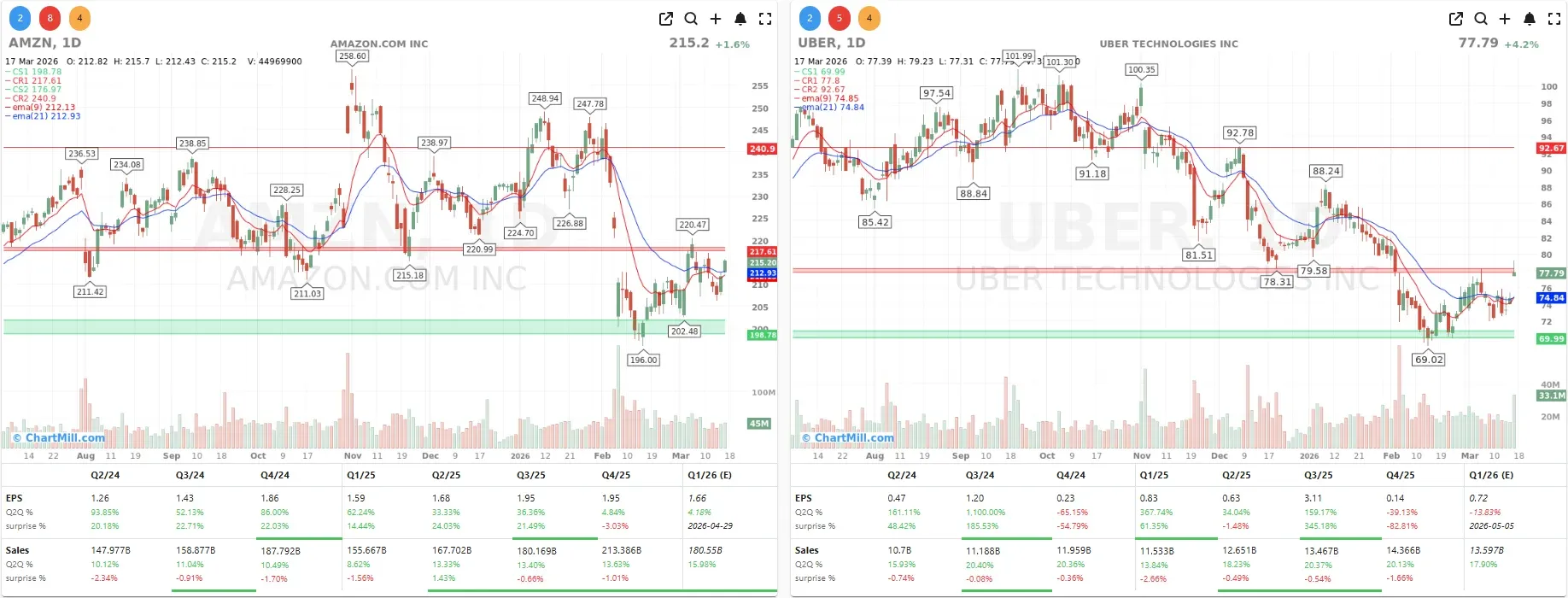
Uber (UBER | +4.19%) continues to build out what could be the most consequential autonomous vehicle ecosystem in the market. The company expanded its partnership with Nvidia, aiming to deploy a large fleet of robotaxis powered by Nvidia's DRIVE platform by 2028.
Uber's strategy here is smart: rather than building the hardware itself, it's positioning as the operating layer, the platform through which millions of rides will ultimately be booked.
Amazon (AMZN | +1.63%) announced a meaningful escalation in its logistics race. The e-commerce giant is now offering one-hour delivery in hundreds of U.S. cities and three-hour delivery in over 2,000 cities and towns, with more than 90,000 products eligible under the new scheme.
Prime members pay $9.99 for one-hour delivery and $4.99 for three-hour service, a shift toward a tiered, monetized model that reflects Amazon's effort to turn its logistics infrastructure into a high-margin offering.
Tesla (TSLA | +0.94%) secured federal backing for a major new battery facility. The U.S. Department of the Interior announced a $4.3 billion battery plant in Lansing, Michigan, a project that strengthens Tesla's domestic energy supply chain and reduces exposure to import disruptions in an environment where tariffs and geopolitical friction remain relevant headwinds.
Qualcomm (QCOM | +1.7%) made an aggressive capital return move that speaks to management confidence in the company's underlying value. The board authorized a new $20 billion open-ended share repurchase program and raised the quarterly dividend from $0.89 to $0.92 per share, one of the largest capital return announcements in the company's history, executed at a moment when the stock is down roughly 22% year-to-date.
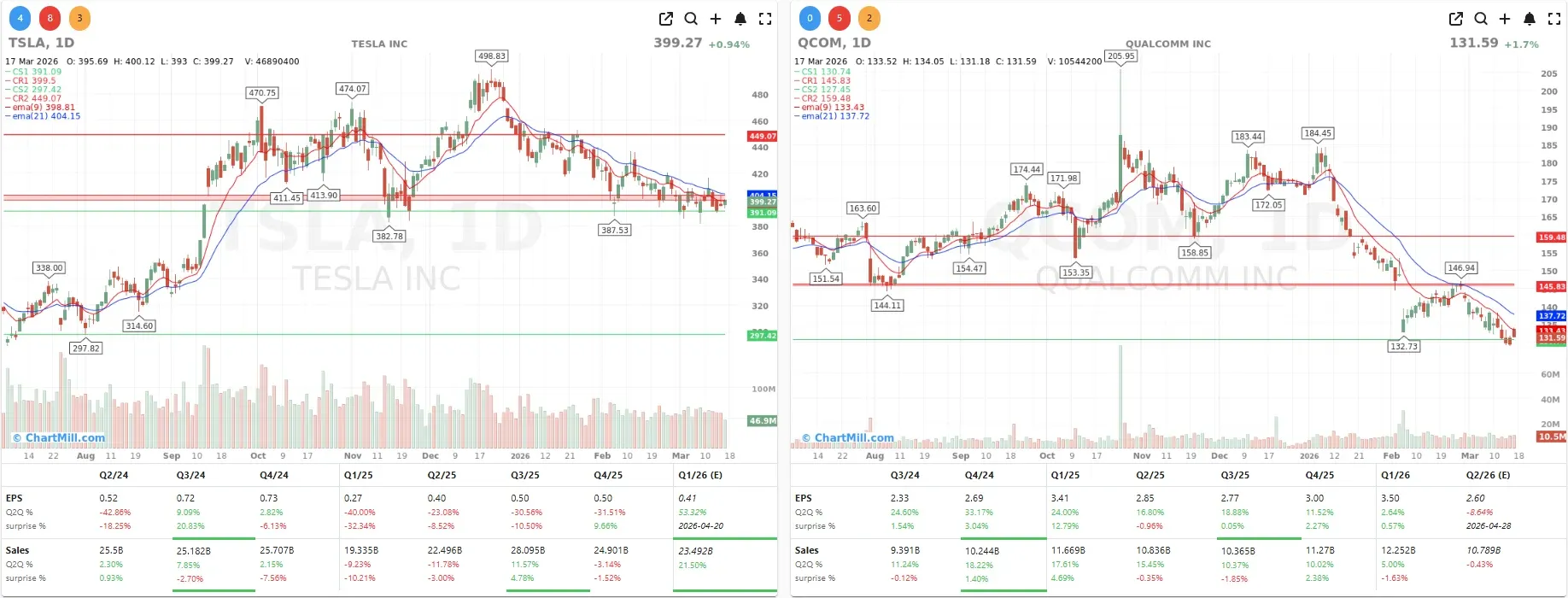
The timing appears calculated to signal that management views the current share price as significantly undervalued. That said, Qualcomm is still wrestling with concerns about its smartphone market concentration, and the buyback alone won't resolve that.
Nebius Group (NBIS | –10.41%) had the most dramatic reversal of the week. The Amsterdam-based AI infrastructure provider closed at $116.25, down 10.47%, after announcing plans to raise $3.75 billion through convertible notes, overshadowing a landmark $27 billion deal with Meta that had lifted the stock by 15% just the day before.
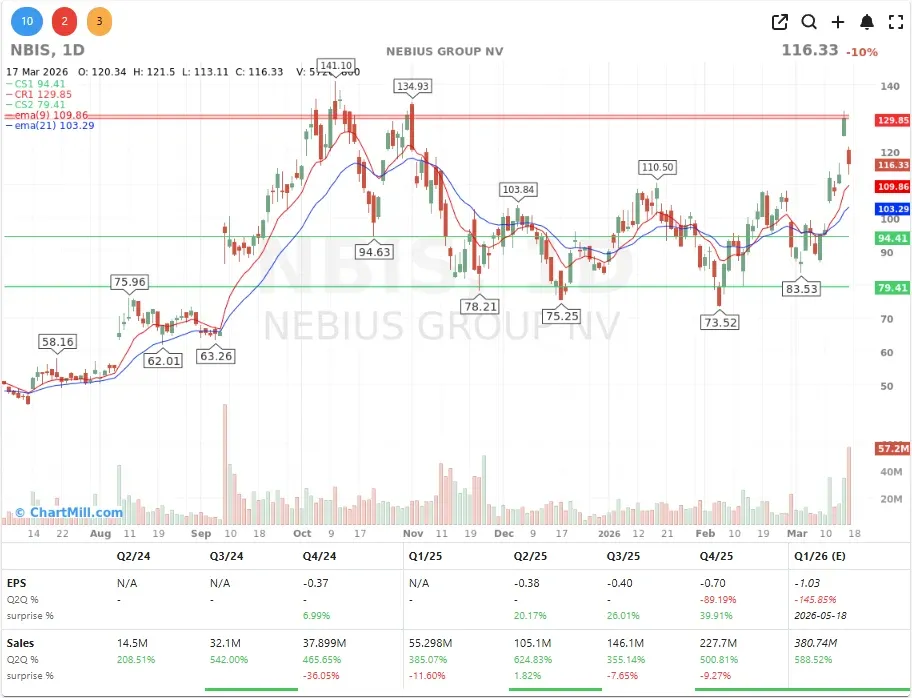
The capital will be used to finance data center construction, GPU procurement, and the expansion of its full-stack AI cloud platform. The dilution concern is legitimate, but so is the business case: when Meta signs a $27 billion commitment, you build infrastructure to honor it.
Eyes on the Fed
All eyes are now turning to Wednesday's Federal Reserve rate decision. A rate change is considered highly unlikely, with the odds of a cut having actually decreased since the Iran conflict began, a direct consequence of the inflationary pressure from elevated energy prices.
What bears watching is the dot plot. Bank of America expects the median dot plot for the longer term to drift higher, particularly if the Fed also revises its long-term growth projections upward.
The euro-dollar pair was trading at 1.1542 Tuesday evening, a useful barometer for how currency markets are interpreting the divergence in monetary policy expectations.
Conclusion
Tuesday's session offered a compelling illustration of how markets can compartmentalize: airline stocks soar on demand signals while oil prices scream macro risk in the background. The divergence won't last forever. Delta and American delivered genuinely encouraging news, and Qualcomm showed shareholder-friendly discipline.
But with Moody's putting recession odds at better than even, oil at triple digits, and the Fed meeting starting Wednesday, I'd resist the temptation to read too much green into a +0.25% S&P close.
Stay nimble, keep an eye on energy costs across your portfolio holdings, and - as always - watch what the Fed signals, not just what it does.
ChartMill Market Desk - Kristoff
This daily update is prepared by ChartMill for informational purposes only and does not constitute investment advice. Always do your own due diligence before making investment decisions.
Next to read: Market Breadth Analysis – Relief Rally Continues, But Internal Damage Is Still Visible