

The investment philosophy created by Peter Lynch stresses finding companies with good growth prospects that trade at sensible prices, a method often called Growth at a Reasonable Price (GARP). This method concentrates on lasting business development, sound finances, and profit generation, while steering clear of popular stocks with unstable growth paths. By mixing parts of both growth and value investing, the method looks for companies that can provide steady returns over a long period without requiring high payments for future earnings potential.
Meeting Lynch's Growth Criteria
OneSpan Inc. (NASDAQ:OSPN) shows a number of traits that fit with Lynch's liking for lasting growth companies. The company's earnings per share have increased at an average yearly rate of 19.39% over the last five years, fitting well inside Lynch's suggested range of 15-30% growth. This steady earnings growth shows the company has kept a stable growth path without the instability that frequently comes with faster but less stable growth. Lynch specifically warned against companies increasing too fast, as that speed is often short-lived, making OneSpan's balanced growth especially interesting for long-term investors looking for steadiness with development.
Valuation Assessment
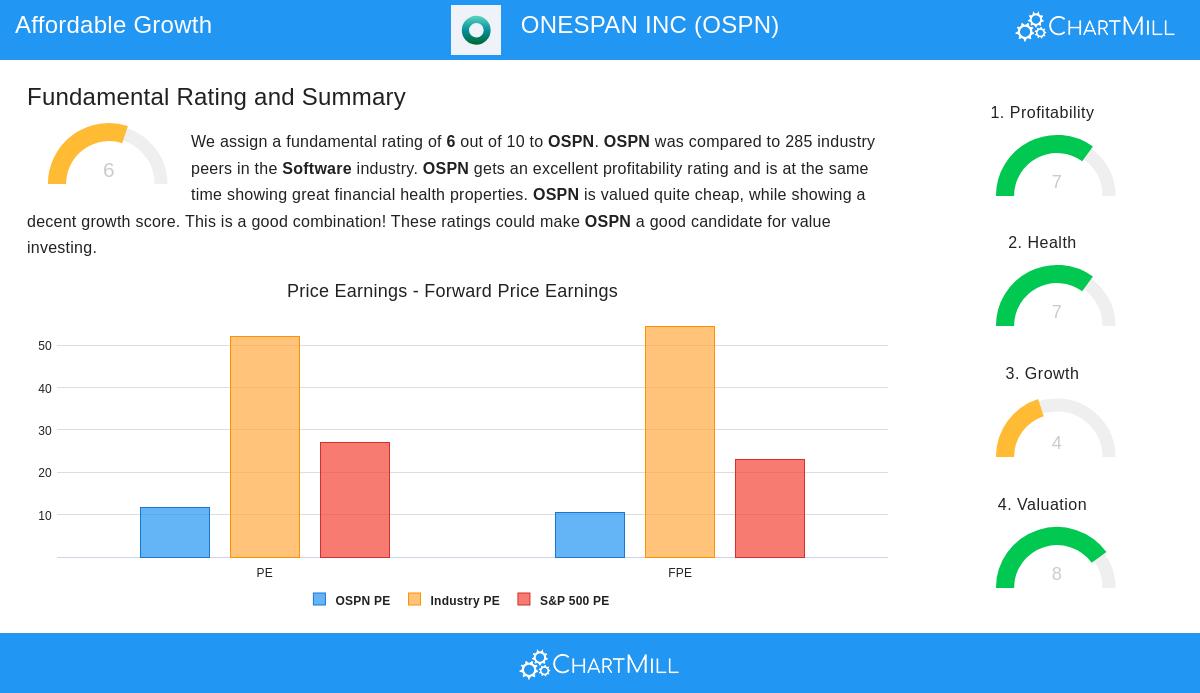
The company's valuation numbers present a strong case following Lynch's ideas. OneSpan trades at a PEG ratio of 0.61 based on past earnings growth, much lower than Lynch's limit of 1.0. This ratio, which matches the price-to-earnings multiple to earnings growth, indicates the market might be pricing the company's growth prospects too low. Also, the company has a P/E ratio of 11.76, which looks good next to the industry average of 52.12 and the wider S&P 500's multiple of 26.91. Lynch repeatedly stressed the need to avoid paying too much for growth, and these valuation numbers show OneSpan provides growth potential without a high price.
Financial Health and Profitability
OneSpan's financial condition matches Lynch's focus on company steadiness and operational effectiveness:
- Zero Debt: The company functions with no debt, leading to a debt-to-equity ratio of 0.0, well under Lynch's preferred top limit of 0.6
- Strong Current Ratio: At 1.77, the company shows sufficient cash to cover short-term responsibilities
- High Profitability: Return on equity is 24.70%, much higher than Lynch's 15% limit
- Good Margins: The company keeps profit margins of 24.90% and operating margins of 21.80%
These numbers represent the kind of financially stable business Lynch liked, companies able to handle economic changes while creating good returns on shareholder money.
Fundamental Analysis Overview
According to Chartmill's full fundamental analysis, OneSpan gets a 6 out of 10 total, with especially good results in profitability (7/10) and financial health (7/10). The analysis points out the company's very good return numbers, including return on assets of 16.78% and return on invested capital of 15.84%, both placed in the top groups within the software industry. While growth scores are more average at 4/10, the company shows better revenue growth forecasts and keeps good valuation scores of 8/10, suggesting the market may not be completely seeing the company's basic strengths.
Industry Position and Business Model
OneSpan works in the cybersecurity and digital agreement field, supplying solutions that safeguard and enable digital transactions in online, mobile, and physical settings. The company's focus on security solutions and digital agreements places it in developing market areas where need for strong authentication and transaction safety keeps increasing. This business connection with essential technology needs mirrors Lynch's liking for companies in clear, needed services instead of uncertain or fashionable areas.
For investors wanting to find more companies that match Peter Lynch's investment rules, you can look at more screening results using our specific screening tool.
Disclaimer: This article provides factual information about OneSpan Inc. and its fit with particular investment rules but does not form investment advice, a suggestion, or support. Investors should perform their own research and talk with financial advisors before making investment choices. Past results do not ensure future outcomes, and all investments have risk including possible loss of original money.