

Investors looking for undervalued possibilities frequently use screening methods that find companies trading for less than their intrinsic value and also possessing good core business attributes. The "Decent Value" method focuses on stocks with high valuation ratings, meaning they could be priced well compared to their assets and earnings, while also showing acceptable results in profitability, financial condition, and growth measures. This process helps steer clear of value traps by confirming companies are not only low-priced on paper but also operationally healthy.
Novartis AG-Sponsored ADR (NYSE:NVS) offers an interesting example for this investment method. The Swiss pharmaceutical company creates and sells healthcare products through two primary divisions: Innovative Medicines for patent-protected treatments and Sandoz for generic pharmaceuticals and biosimilars.
Valuation Metrics
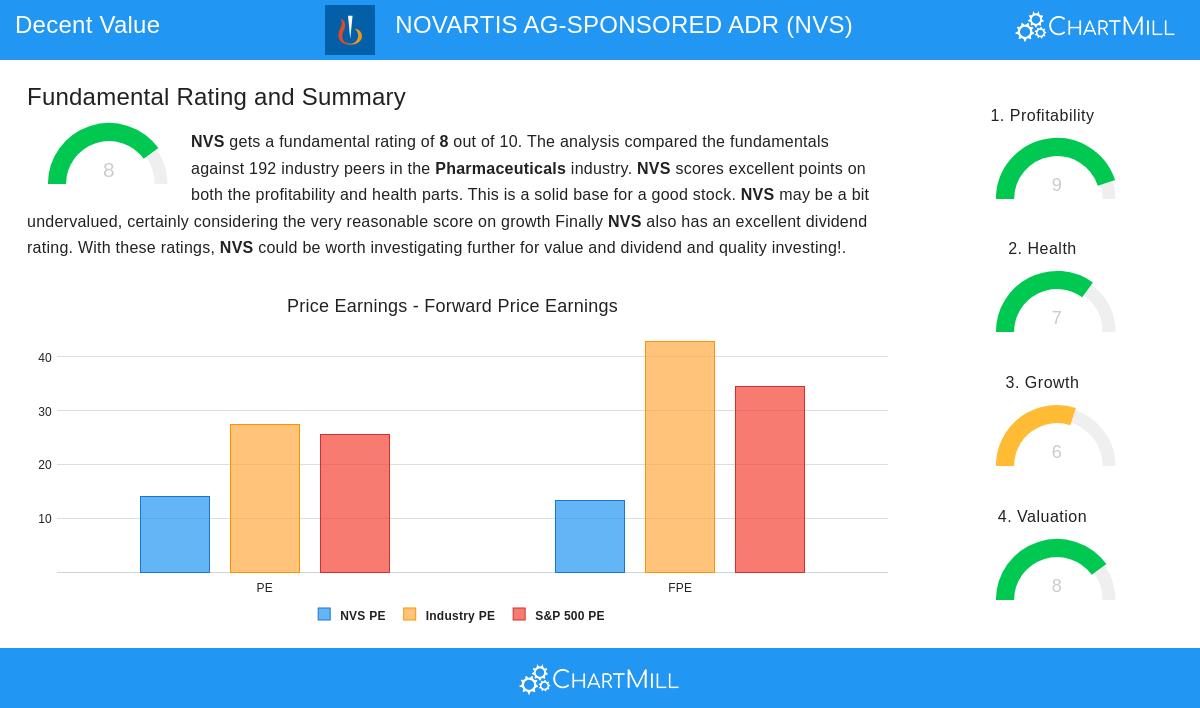
Novartis is notable with an 8/10 valuation rating, implying the market might be pricing the company below its basic financial health. Important valuation measures consist of:
- P/E ratio of 14.10, much lower than the S&P 500 average of 25.47
- Price/Forward Earnings of 13.34 compared to industry average of 42.91
- Enterprise Value/EBITDA and Price/Free Cash Flow ratios more affordable than 84-86% of pharmaceutical companies
- PEG ratio showing payment for growth at acceptable amounts
For value investors, these numbers indicate possible undervaluation, the basic idea of value investing where market price seems separated from inherent worth.
Financial Health Assessment
With a health rating of 7/10, Novartis displays good financial stability in spite of some liquidity factors:
- Altman-Z score of 3.95 suggests no bankruptcy risk
- Debt-to-FCF ratio of 1.87 indicates good capacity to settle debts
- Steady share count decrease via buybacks
- Current and quick ratios lower than industry averages, but balanced by good solvency and profitability
Value investors focus on financial condition to make sure companies can survive economic declines while maintaining operations, a key part of Benjamin Graham's margin of safety idea.
Profitability Strength
Novartis performs well in profitability with a 9/10 rating, doing better than most industry peers:
- Return on Equity of 32.47% is higher than 95% of pharmaceutical companies
- Operating Margin of 33.11% is in the top industry group
- Profit Margin of 25.69% is more than 93% of rivals
- Steady profitability and positive cash flow over a five-year span
Good profitability supplies the earning capacity that finally pushes long-term shareholder gains, making it necessary for value investments to achieve their possibility.
Growth Trajectory
The company's growth rating of 6/10 shows consistent, if not rapid, increase:
- EPS growth of 21.33% over the last year
- Projected future EPS growth of 9.60% per year
- Revenue growth speed expected to rise from 1.24% in the past to 5.42% forecasted
While value investors usually favor current valuation over fast growth, acceptable growth projections help confirm the undervaluation difference may reduce with time.
Dividend Considerations
Novartis provides income-focused value investors extra attraction:
- Dividend yield of 3.49% is more than the S&P 500 average
- 10+ year dividend payment record with five years of consistency
- Maintainable payout ratio with earnings increase outpacing dividend growth
The mix of acceptable valuation, good profitability, satisfactory financial health, and moderate growth makes Novartis a noteworthy option for value-focused portfolios. The company's pharmaceutical concentration provides defensive qualities during market instability, while its valuation numbers indicate possible gain if the market acknowledges its inherent value.
View the complete fundamental analysis report for Novartis to review all basic metrics and comparisons.
For investors looking for similar possibilities, additional decent value stock choices are available through this screening link that uses similar fundamental standards across the market.
Disclaimer: This analysis is for informational purposes only and does not constitute investment advice, recommendation, or endorsement of any security. Investors should conduct their own research and consult with financial advisors before making investment decisions. Past performance does not guarantee future results.