

Nasdaq, Inc. (NASDAQ:NDAQ) is identified by a systematic screening process made to find high-quality companies suitable for long-term investment. The Caviar Cruise stock screening method concentrates on businesses showing steady revenue and profit increases, high returns on invested capital, acceptable debt, and good cash flow conversion. This system favors lasting competitive strengths and operational quality over temporary price changes, looking for companies that can provide lasting value over long timeframes.
Financial Performance and Growth Metrics
The Caviar Cruise screen treats steady growth as a sign of quality businesses, demanding at least 5% yearly growth in both revenue and EBIT over five years. Nasdaq easily meets these levels, showing solid operational increase.
- Revenue Growth (5Y CAGR): 7.56% versus required 5%
- EBIT Growth (5Y CAGR): 12.18% versus required 5%
- EBIT Growth Exceeds Revenue Growth: 12.18% versus 7.56%
The company's EBIT growth being much higher than revenue growth points to better operational efficiency and possible pricing strength. This figure implies Nasdaq effectively turns extra revenue into profits at a growing rate, a main trait of businesses with competitive edges and scalable operations.
Profitability and Capital Efficiency
Return on invested capital is a central measure in quality investing, calculating how well a company produces profits from its capital. The Caviar Cruise method specifically looks at ROIC without cash, goodwill, and intangibles to concentrate on main operational performance.
- ROIC (Excluding Cash, Goodwill, Intangibles): 120.36% versus required 15%
- 5-Year Average Profit Quality: 126.0% versus required 75%
Nasdaq's outstanding ROIC number, well above the 15% level, shows great efficiency in using capital to create returns. The profit quality measure, calculating free cash flow conversion from net income, also greatly passes requirements, showing the company's capacity to change accounting profits into actual cash—an important factor for long-term investors.
Financial Health and Debt Management
Quality investors favor companies with good balance sheets that can endure economic downturns. The debt-to-free-cash-flow ratio calculates how fast a company could theoretically pay back all debt using current cash flow amounts.
- Debt to Free Cash Flow: 4.34 years versus maximum 5 years
Nasdaq's ratio of 4.34 years is inside the acceptable span of 0-5 years, showing acceptable debt amounts compared to cash creation. This situation gives financial room while not being too cautious, letting the company balance debt financing with operational demands.
Fundamental Analysis Overview
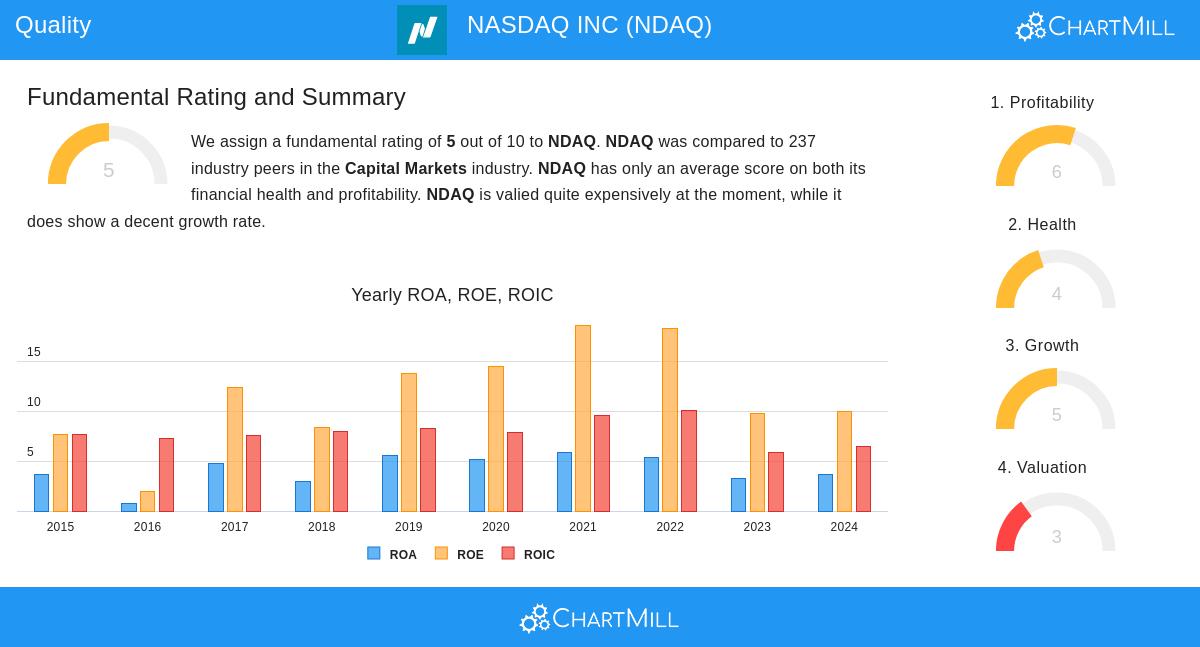
According to the detailed fundamental analysis report, Nasdaq gets an overall score of 5 out of 10, placing it as an average performer in the capital markets industry. The analysis notes several main traits:
The company shows medium growth rates with revenue growing at 11.67% each year over recent years and predicted to keep going at 7.56% in the future. Profitability figures present mixed outcomes, with good gross margins of 62.26% doing better than 72% of industry peers, but operating and profit margins ranking near industry averages. Financial health shows some issues about liquidity, although solvency ratios stay acceptable. Valuation seems high on standard earnings multiples, though growth possibilities may partly explain the higher price.
Quality Investment Considerations
Beyond numerical measures, quality investors think about non-quantitative aspects that add to business longevity. Nasdaq runs essential financial market infrastructure across different sections including trading, clearing, and market technology services. The business gains from several quality features:
The company has important competitive edges through network effects and regulatory obstacles to entry. Its worldwide operations give variety across geographic markets. The business model stays fairly simple to grasp—running exchanges and supplying market infrastructure services. Nasdaq shows pricing strength through regular fee rises to market players who need its platforms. The necessary nature of its services gives some protection during recessions, as financial markets keep working through economic cycles.
Exploring Additional Opportunities
For investors curious about using similar quality filters on other possible investments, the Caviar Cruise screening methodology is available to find other companies meeting these strict requirements.
While Nasdaq displays several traits appealing to quality investors, including outstanding capital returns, good cash flow conversion, and acceptable debt, the choice to invest needs thoughtful study of current valuation next to long-term business outlook. The company's place as essential financial infrastructure, joined with its numerical strong points, makes it worth more examination for portfolios centered on high-quality businesses.
Disclaimer: This analysis is for informational purposes only and does not constitute investment advice, recommendation, or endorsement of any security. Investors should conduct their own research and consult with financial advisors before making investment decisions.