

For investors looking for a dependable source of passive income, a systematic screening method is important. One practical technique focuses on finding companies that provide a good dividend and also show the financial capacity to maintain and increase those payments. This method values quality and long-term viability over pursuing the highest yield, which can sometimes indicate problems in a business. A practical filter, like the "Best Dividend Stocks" screen, can find prospects by establishing basic requirements for important fundamental scores. This article looks at one such prospect, MICROSOFT CORP (NASDAQ:MSFT), to see why it is notable for investors focused on dividends.
A Base of Financial Soundness and Earnings
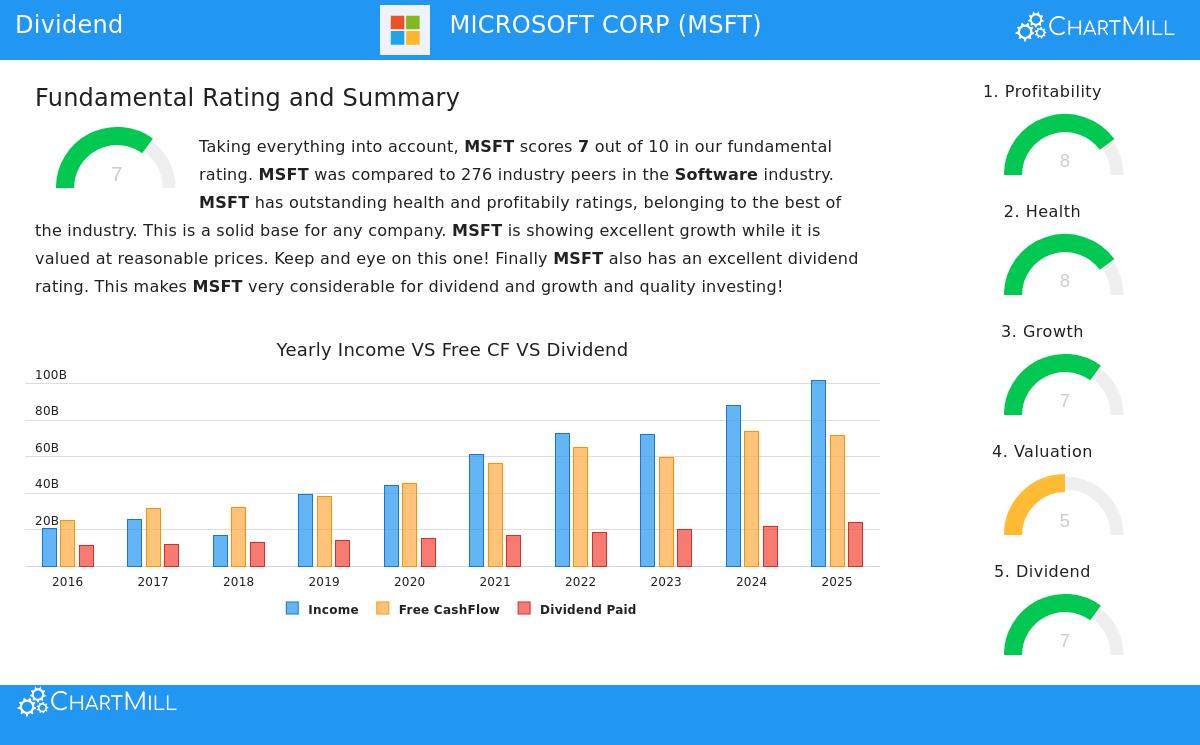
Before looking at dividend details, it is important to evaluate the core business. A company's capacity to pay dividends regularly depends on its earnings and financial soundness, two areas where Microsoft performs very well. The given fundamental analysis report gives MSFT a solid Health score of 8 and an even higher Profitability score of 8.
This solid base comes from several important elements:
- Outstanding Earnings Measures: Microsoft's Return on Invested Capital (ROIC) of 21.86% and Profit Margin of 39.04% are at the top of its field, showing very efficient use of money and a strong competitive position.
- Very Good Solvency: With an Altman-Z score of 8.32 and a low Debt-to-Equity ratio of 0.23, the company's financial position is very strong, showing almost no risk of failure and little reliance on debt.
- Steady Cash Production: The report mentions positive earnings and operating cash flow in every one of the last five years, supplying the steady cash required to pay dividends.
For a dividend plan, this financial foundation is critical. It means the company can manage economic slowdowns without threatening its payments to shareholders, making the dividend much more reliable than one from a company with weak finances.
Assessing the Dividend Details
Microsoft's dividend attractiveness is shown in its ChartMill Dividend Rating of 7. While the actual yield may not seem high, the quality and upward path of the payment are what make it interesting for investors with a long-term view.
Long-Term Viability and Increase The long-term viability of a dividend is likely more critical than its present amount. Microsoft performs very well here:
- Small and Maintainable Payout Ratio: The company uses only 21.19% of its income for dividends. This careful ratio leaves a large cushion, letting Microsoft invest significantly in growth areas like cloud computing and AI while still paying shareholders.
- Dependable Dividend Increase: Microsoft has raised its dividend every year for more than ten years, with a five-year average increase rate of 10.24%. This steady growth shows management's dedication to giving capital back to shareholders.
- Earnings Supporting Increase: Importantly, the report says that "MSFT's earnings are increasing more than its dividend." This match guarantees that dividend growth is supported by real business growth, not by straining the finances.
Yield with Perspective An investor focused only on yield might see Microsoft's 0.91% and search for other options. However, perspective matters:
- While lower than the S&P 500 average, Microsoft's yield is actually good compared to other software companies, scoring higher than 90% of them.
- The moderate initial yield is a direct result of the company's very strong share price growth. When paired with a dividend growth rate in the double digits, the yield-on-cost for investors who hold shares for a long time becomes much more appealing over the years.
Price and Growth Potential
A stock needs to be fairly priced to be a sensible investment, even for dividend goals. Microsoft's Valuation rating is a neutral 5. The stock sells at a higher price based on standard Price-to-Earnings measures, which is common for a company of its quality. However, this is reasonable given its excellent profitability and solid growth potential.
- Strong Growth Driver: The company is projected to grow earnings by almost 19% each year in the near future, supported by its leading places in cloud services (Azure) and business software.
- PEG Ratio Reason: The report mentions that the PEG ratio, which includes growth, suggests a fair price. The higher price paid is for a company that is both very profitable and still growing.
This growth path directly supports the dividend growth plan. A company that can grow its earnings at a rate in the high teens is in a good position to keep providing significant yearly dividend raises.
Summary
Microsoft Corp is a high-quality prospect for dividend investors who value quality, long-term viability, and growth over seeking high yields. It fully matches the screening goals of solid dividend traits supported by excellent profitability and financial soundness. The company provides a dependable, growing income stream paid for by one of the world's strongest cash-producing businesses. While the starting yield is moderate, the possibility for steady double-digit dividend growth, supported by a very strong financial position and a significant growth path in cloud and AI, makes it an interesting core holding for a long-term dividend collection.
For investors wishing to find more companies that fit similar standards of high dividend quality, good health, and satisfactory profitability, you can view the complete Best Dividend Stocks screen.
Disclaimer: This article is for information only and is not financial advice, a suggestion to buy or sell any security, or a support of any investment plan. Investors should do their own research and think about their personal financial situation before making any investment choices.