

Investors looking for dependable income often use dividend investing, a method centered on finding companies that not only provide regular dividends but also have the financial capacity to keep and possibly increase those payments. One useful way to find these chances is through organized screening, which sorts the market for stocks showing good dividend traits along with acceptable profitability and financial condition. This method helps sidestep the frequent mistake of high-yield traps, companies where an appealing dividend might not be lasting because of basic business problems. By focusing on a high dividend rating while confirming minimum profitability and health scores, investors can create a portfolio of companies able to provide passive income through different market periods.
Dividend Appeal
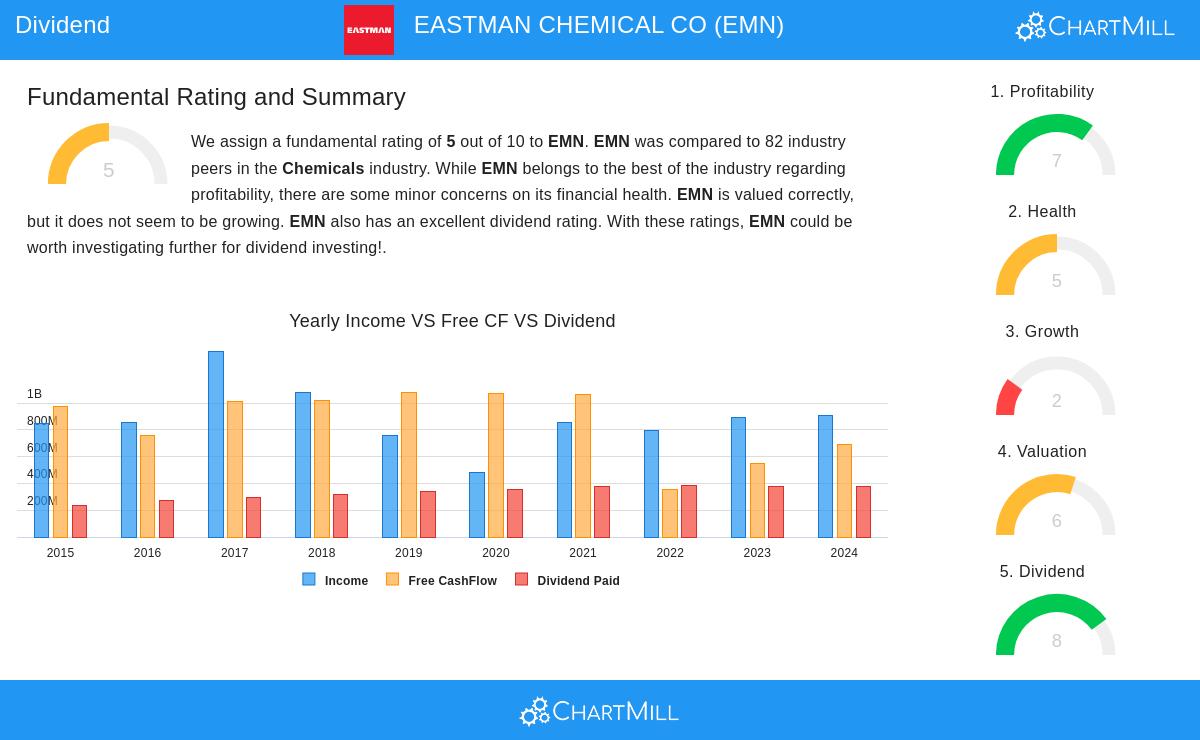
EASTMAN CHEMICAL CO (NYSE:EMN) shows a strong argument for investors focused on dividends, mainly because of its good dividend profile. The company's large yield and dependable payment history are important features for those looking for income.
- Attractive Yield: EMN provides a yearly dividend yield of 5.29%, much higher than the industry average of 4.00% and the S&P500 average of about 2.45%. This places the company in the leading group of dividend payers in its field.
- Proven Track Record: The company has kept up dividend payments for at least ten straight years without cuts, showing management's dedication to shareholder returns even in difficult times.
- Sustainable Growth: While the dividend growth rate of 5.58% is average, it shows a measured method that matches the company's operational abilities and long-term plans.
The significance of these dividend traits is very important for income investors. A large yield gives immediate income, while a history of steady payments shows dependability, both key elements for creating a steady income portfolio.
Profitability Foundation
Supporting EMN's dividend appeal is a good profitability base that backs its ability to maintain shareholder payments. The company's earning ability supplies the needed support for its dividend promises, making the payout more than just about figures.
- Strong Return Metrics: EMN shows better returns on invested capital at 7.41%, doing better than 73% of industry rivals. This effectiveness in capital use implies the company creates enough profits to finance both operations and shareholder returns.
- Healthy Margins: With a profit margin of 7.75% and operating margin of 12.92%, the company keeps profitability levels that beat most competitors, giving a buffer for dividend payments during economic declines.
- Consistent Earnings History: The company has stayed profitable over the last five years with positive operating cash flow the entire time, showing basic business strength beyond short-term market situations.
These profitability measures directly back the dividend investment method by making sure the company has the earning power to maintain its payout ratio of 54.51%. While this ratio is at the higher side of comfortable, the basic profit strength gives confidence that dividends are not being paid from borrowed time or capital.
Financial Health Considerations
EMN's financial health shows a varied but generally acceptable view for dividend continuity. While some parts need watching, overall the company keeps enough steadiness to back its income payments to shareholders.
- Debt Management: The company's debt-to-equity ratio of 0.88 shows average leverage, similar to industry norms. However, the debt-to-free-cash-flow ratio of 12.85 implies a longer time for debt repayment, though this is superior to 61% of chemical industry peers.
- Liquidity Position: EMN's current ratio of 1.76 shows acceptable short-term financial condition, though the quick ratio of 0.86 is lower than industry averages and needs notice for managing near-term responsibilities.
- Shareholder-Friendly Actions: The company has steadily lowered shares outstanding over both one-year and five-year spans, showing a pledge to improving shareholder value through planned capital use.
For dividend investors, these health measures are important because they show if a company can handle economic troubles without reducing dividends. EMN's acceptable solvency scores, joined with its share reduction history, suggest management puts shareholder returns first while keeping operational steadiness.
Valuation Context
From a valuation viewpoint, EMN seems fairly priced, possibly giving value for income investors looking for both yield and capital protection. The company's valuation multiples imply market pricing that does not expect high growth, which can be beneficial for dividend-centered plans.
- Earnings Multiples: With a P/E ratio of 9.13 and forward P/E of 8.75, EMN trades at large discounts to both the S&P500 averages and most industry competitors, making it a low-cost choice for yield-seeking capital.
- Cash Flow Valuation: The company's price-to-free-cash-flow ratio shows less expensive valuation than 73% of industry peers, implying the market might be pricing its cash creation abilities low relative to dividend promises.
These valuation traits match well with dividend investment plans, as fair multiples lower downside risk while the large yield gives upside through income, a mix that can lead to satisfactory total returns even without major price gains.
Growth Outlook
While not a main concern for pure dividend investors, EMN's growth possibilities give background for future dividend continuity. The company's growth path implies modest but steady situations that back continued dividend payments rather than large rises.
- Earnings Trajectory: After a recent EPS drop of 11.05%, analysts forecast modest EPS growth of 3.03% per year, showing possible stabilization instead of strong increase.
- Revenue Trends: Both past and expected revenue growth stay very low, reflecting the established nature of the chemical industry and EMN's set market position.
For dividend investors, this growth profile backs the income method by implying management is not likely to move cash away from dividends to fund aggressive expansion, instead choosing steady shareholder returns from stable operations.
Investors curious about finding more dividend chances found through similar strict screening rules can look at extra results using the Best Dividend Stocks screen. This tool constantly searches the market for companies mixing appealing dividends with financial steadiness, supplying a useful beginning point for more study.
For a complete breakdown of EMN's fundamental analysis, including full rating details across all assessment groups, readers can see the full fundamental report.
Disclaimer: This analysis is based on current fundamental data and does not constitute investment advice. Investors should conduct their own research and consider their individual financial circumstances before making investment decisions. Past performance does not guarantee future results, and dividend payments are subject to company discretion and market conditions.