

For investors looking for a dependable source of passive income, a methodical screening process is necessary. One useful tactic is to look for companies that provide an appealing dividend and also show the fundamental financial capacity to maintain and possibly increase those payments. This method focuses on quality and longevity instead of seeking the absolute highest yield, which can sometimes indicate trouble. A practical technique is to use a multi-factor filter that finds stocks with good dividend traits, backed by acceptable earnings and a sound financial position.
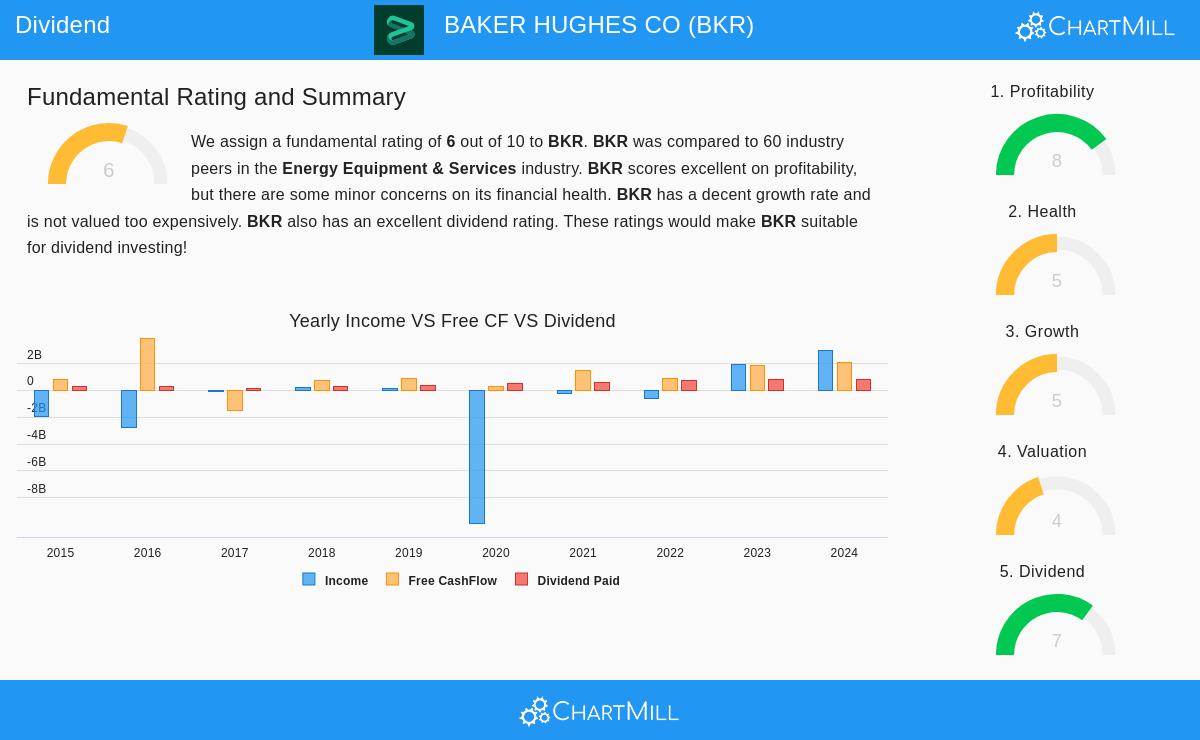
Baker Hughes Co (NASDAQ:BKR), a worldwide energy technology company, recently appeared as a result from this kind of methodical screening process. The company, which supplies equipment and services for the oilfield and industrial energy sectors, shows a profile that matches the main principles of lasting dividend investing. By looking at its fundamental report, we can understand why BKR deserves more attention from investors focused on income.
Dividend Dependability and Longevity
The main attraction for dividend investors is a company's capacity to pay regularly and raise its payment over time. Baker Hughes shows several good qualities here, receiving a ChartMill Dividend Rating of 7 out of 10. This rating combines important dividend measures into one score, pointing out stocks with solid dividend profiles.
- History: BKR has built a dependable record, having paid a dividend for at least 10 straight years without a cut. This steadiness is a key sign of management's dedication to giving capital back to shareholders.
- Maintainable Payout: A crucial measure for dividend safety is the payout ratio. Baker Hughes uses about 30.8% of its earnings on dividends, which is viewed as a low and maintainable amount. This provides plenty of space to put money back into the business, handle economic shifts, and keep financing the dividend without difficulty.
- Growth Support: While the dividend's yearly growth rate of 4.36% is moderate, it is backed by better earnings growth. This connection is important; a dividend that increases quicker than earnings cannot last. For BKR, the fundamental earnings power gives a firm base for future dividend raises.
You can see the complete details of these measures in the detailed fundamental analysis report for BKR.
Supporting Factors: Earnings Power and Financial Condition
A high dividend rating by itself is insufficient. The screening method highlights "acceptable profitability and health" for an important cause: a company must produce enough earnings and keep a good balance sheet to finance its activities and its shareholder payments for the long run. Baker Hughes performs well here, especially in earnings power.
The company gets a strong ChartMill Profitability Rating of 8. This is caused by better returns compared to its industry counterparts in the Energy Equipment & Services sector.
- Its Return on Equity (ROE) of 15.92% and Return on Invested Capital (ROIC) of 11.19% are better than 85% and 83% of its competitors, in order.
- Also, both its Profit Margin (10.43%) and Operating Margin (13.01%) have gotten better in recent years and are in the high group of the industry.
This solid earnings power is what supports both business investment and the dividend. The company's financial condition, with a ChartMill Health Rating of 5, shows a more varied but satisfactory view. The balance sheet does not depend too much on debt, with a workable Debt/Equity ratio of 0.33. However, liquidity measures like the Current and Quick ratios are seen as lower than many industry peers, an aspect for investors to watch. In total, the solvency measures are sufficient, supporting the idea that the company is not in danger concerning its continuing duties.
Price and Growth Setting
From a price standpoint, Baker Hughes seems fairly valued within its market environment. Its Price-to-Earnings (P/E) ratio of 17.97 is lower than the wider S&P 500 average and is also relatively low compared to its industry peers. This indicates the stock is not trading at a high price that would reduce its attractiveness to dividend investors mindful of value.
Growth expectations are stable more than outstanding. Analysts estimate average yearly EPS growth of about 10.4% over the next few years, supported by moderate revenue growth. This fits the profile of an established, cash-producing company appropriate for a dividend portfolio, not a high-growth speculative choice.
A Candidate for More Study
Baker Hughes Co presents a strong example of a stock found through a quality-oriented dividend filter. It joins a reliable, well-backed dividend with notable earnings power in its field and a satisfactory financial base. For investors constructing a portfolio aimed at lasting income, BKR stands as a candidate deserving of more detailed examination, especially concerning its place within the shifting energy sector.
This review of BKR came from a systematic filter for quality dividend payers. If you want to investigate other companies that fit similar standards of good dividend traits, acceptable profitability, and financial condition, you can see the present filter results here: View the Best Dividend Stocks Screen.
Disclaimer: This article is for information only and does not form financial advice, a suggestion to buy or sell any security, or a support of any investment plan. Investors should do their own study and think about their personal financial situation and risk tolerance before making any investment choices.