
By Friday's close, Wall Street had logged its third consecutive weekly loss, a streak driven by the ongoing conflict in the Middle East, an oil price that refuses to retreat, and a string of corporate earnings that landed with varying degrees of thud. The Dow Jones finished down 0.3%, the Nasdaq shed 0.9%, and investors headed into the weekend with more questions than answers.
The Oil Problem And Why It's More Than Just Prices at the Pump
Brent crude closed at $103.14 per barrel - the highest level in over three years - as concerns about the conflict in Iran continued to rattle energy markets. The underlying fear isn't just expensive gasoline; it's the dreaded combination of stagflation. Investors are increasingly worried that the Iran war will produce exactly that: lower economic growth colliding with higher inflation.
WTI crude was trading near $99 per barrel by Friday evening, driven by the ongoing blockade of the Strait of Hormuz, and on a weekly basis WTI gained 8.6%.
The U.S. offered some relief by temporarily lifting oil sanctions against Russia to offset a potential shortage, but analysts weren't impressed. Analysts at Siebert Williams Shank noted that the sanctions had not meaningfully impacted Russian production, only the price and the markets into which Russia sells, leaving little room for meaningful additional supply.
There were some glimmers of diplomatic movement: a Turkish tanker reportedly received permission on Thursday to transit through the strait, and India was said to be negotiating with Tehran for safe passage of several ships. Whether that becomes a trend or a one-off, nobody yet knows.
The Macro Picture: Growth Slipping, Inflation Sticking
The week's economic data made for uncomfortable reading. U.S. GDP growth for Q4 came in at just 0.7%, exactly half the previously reported 1.4%, and a dramatic deceleration from the 4.4% growth registered in Q3. It tells us the economy was already losing momentum before the Iran conflict began.
On the inflation front, there's no reprieve in sight. Core PCE inflation edged up from 3.0% to 3.1% in January, and similar increases are expected for February and that's still without fully incorporating the impact of rising energy prices.
CIBC Capital Markets economist Katherine Judge noted that the Fed would have good reason to be concerned about the rise in core PCE even before the war's inflationary effects fully feed through.
The University of Michigan's consumer confidence survey showed a light dip in early March, with the survey split between responses gathered before and after the outbreak of conflict. Notably, inflation expectations measured from February 28 onward - after the conflict started - were higher than those captured beforehand.
Adobe: The CEO Shock the Market Didn't Need
Adobe (ADBE | -7.58% | $249.32) fell sharply after confirming the departure of CEO Shantanu Narayen, a veteran leader who had been at the helm for nearly two decades. A soft guidance for the current quarter added to the pressure, and for a stock that has been squarely in the crosshairs of AI disruption concerns, the combination of a leadership vacuum and muted outlook was a tough double whammy for investors.
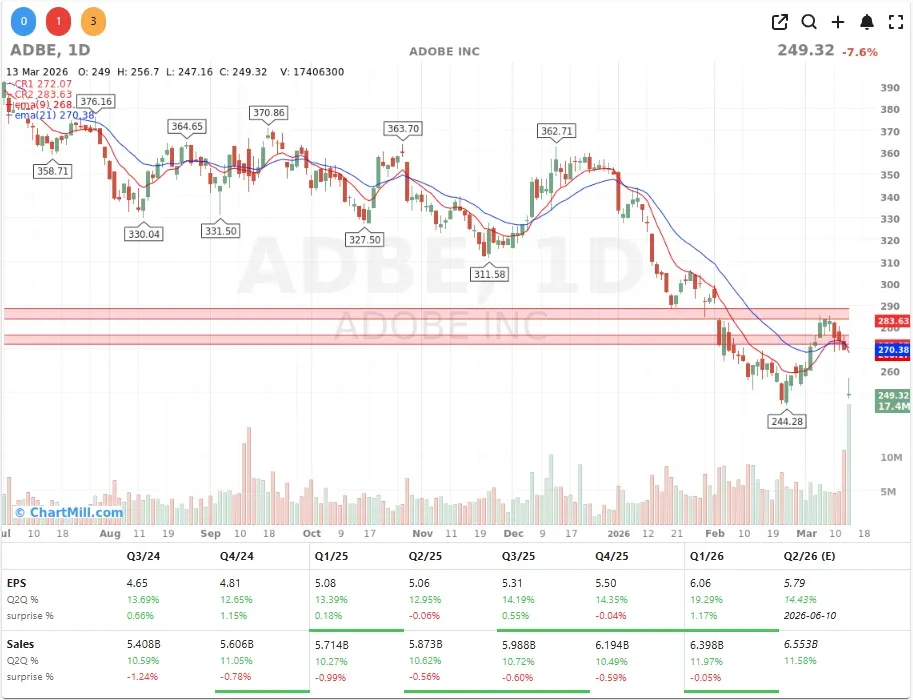
To be fair, Adobe's Q1 results were decent by most measures, but markets were clearly pricing in more. The stock has lost roughly 37% over the past year. The real question now: who steps in, and do they have a credible AI strategy that can change the narrative?
Until that answer is clear, I'd expect this one to remain under pressure.
Ulta Beauty: Consumers Are Getting Pickier
Ulta Beauty (ULTA | -14.24% | ~$535.72) fell sharply on Friday after posting Q4 earnings that narrowly missed EPS expectations, while its fiscal 2026 guidance disappointed investors who had been expecting more. The company projected net sales growth of 6-7% and EPS in the range of $28.05-$28.55 for the coming year.
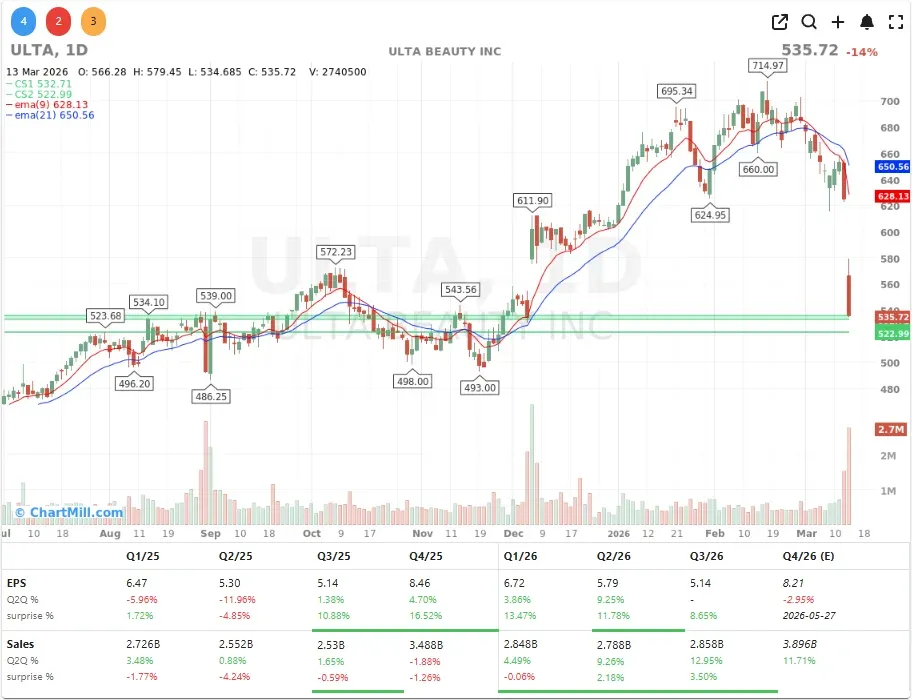
Ulta said it sees consumers becoming increasingly selective and cautious in their spending, and noted that it is paying closer attention to the potential impact of international conflicts on the U.S. economy. That's the "lipstick effect" starting to crack a little around the edges, an interesting signal for anyone watching consumer discretionary broadly.
Despite the dramatic single-day drop, it's worth noting that the stock had nearly doubled over the previous 52 weeks, so some giveback is mathematically rational. Whether this is a dip or a trend reversal depends entirely on how long the consumer confidence headwinds persist.
Klarna: When the Chairman Buys, Take Notice
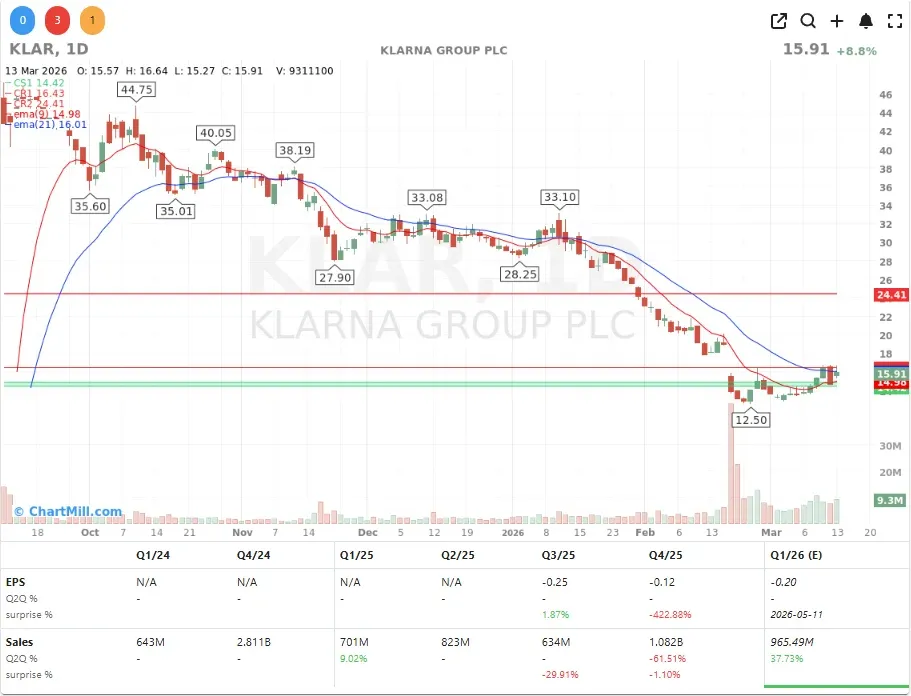
In a sea of red, Klarna (KLAR | +8.82% | ~$15.91) stood out. Chairman Michael Moritz acquired 3.47 million shares, worth approximately $50 million, with multiple other executives also adding to their holdings. That's meaningful insider conviction, and the market responded accordingly.
The stock has seen a roughly 70% decline since its IPO and Klarna came to market last September at $40 per share. At current prices, the chairman is essentially betting that the market has grossly mispriced a company with real commercial momentum. Time will tell, but insider buying at this scale is rarely background noise.
The Bright Spots: Micron, SentinelOne, and Lennar
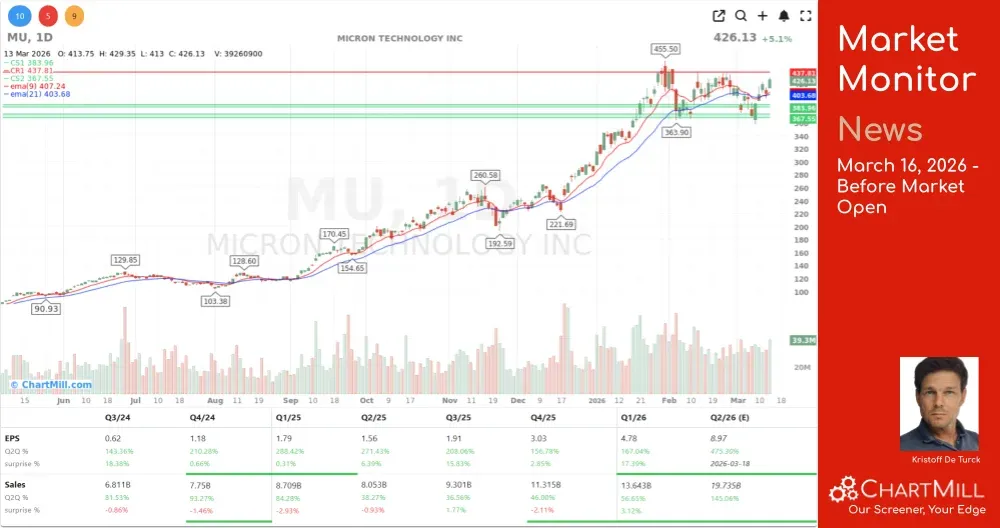
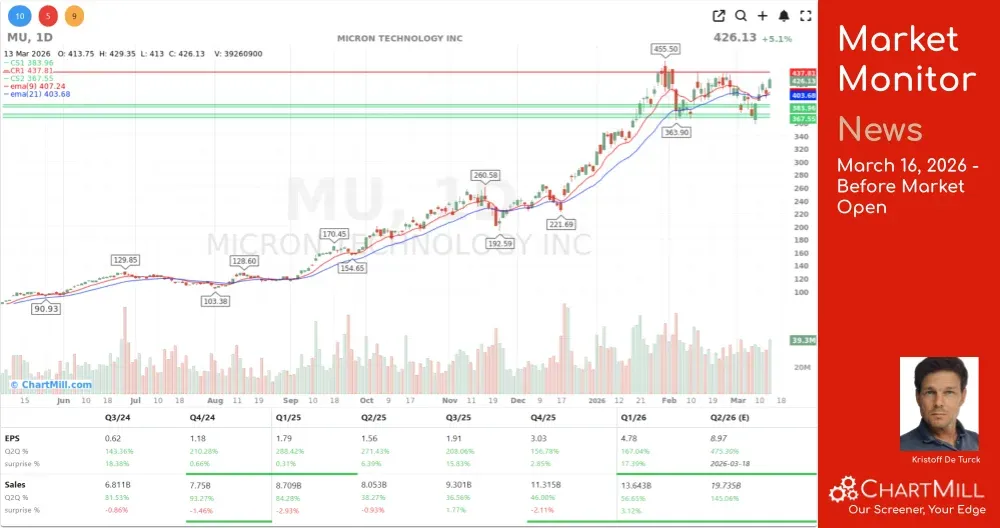
Not everything went south. Micron Technology (MU | +5.13% | $426.13) gained ground ahead of its earnings report due next Wednesday. Positive analyst commentary helped lift the stock, with peers including Western Digital, Seagate Technology, and Sandisk also moving higher in sympathy.
With multiple analysts lifting price targets in recent days, including Wedbush raising its target to $500, this one is clearly building into a meaningful catalyst event.
SentinelOne (S | +5.37% | $14.52) had a volatile session but ultimately closed higher after reporting strong fiscal 2026 results, including a landmark crossing of $1 billion in annual revenue and achieving non-GAAP profitability.
Revenue grew 22% year-over-year as SentinelOne positioned itself as a leader in AI security. There's a genuine business being built here, the question now is whether the FY27 revenue guide of approximately $1.2 billion can sustain the momentum.
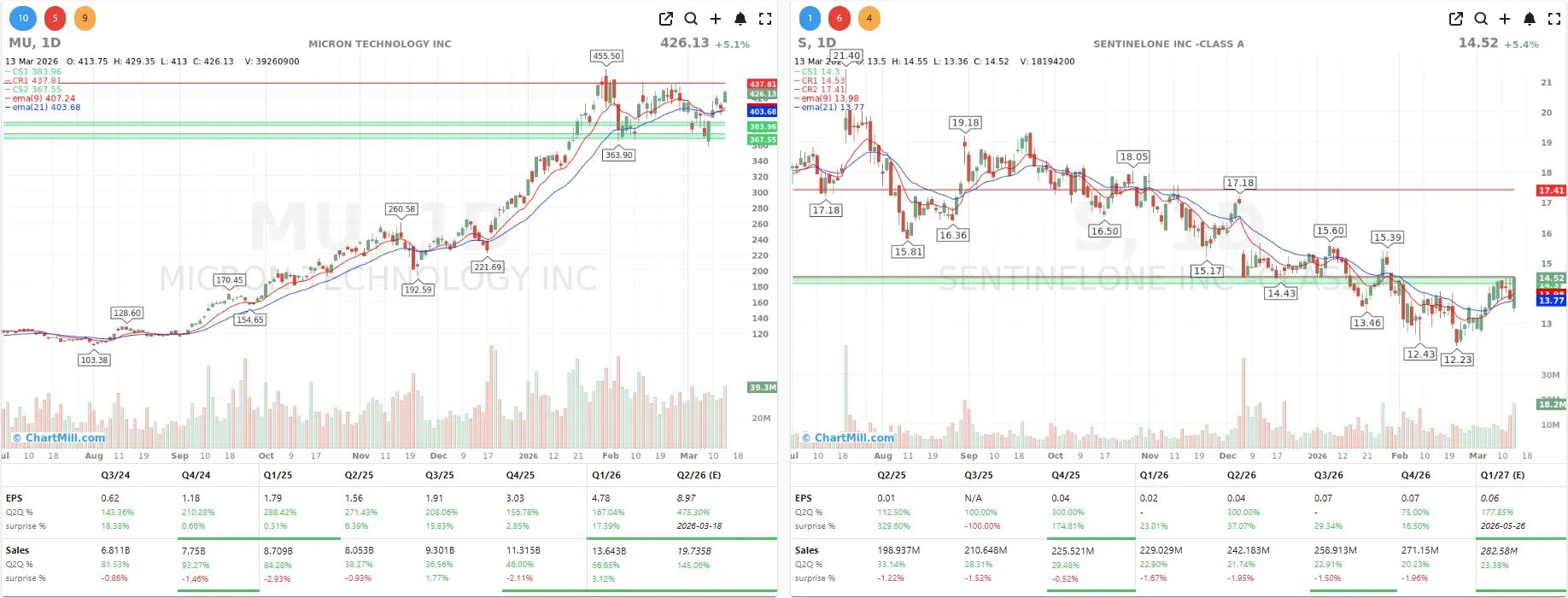
Lennar (LEN | +2.62% | $94.96) managed to rise despite reporting its second consecutive quarterly earnings miss. Management signaled that Q1's gross margin of 15.2% should represent the low point for the year, with sequential margin recovery expected.
The company posted a 13.3% decline in revenue and flagged ongoing affordability pressures, but clearly the CEO's comments struck the right tone. A cash position of $2.1 billion and a disciplined land strategy gave investors enough to hold on to.
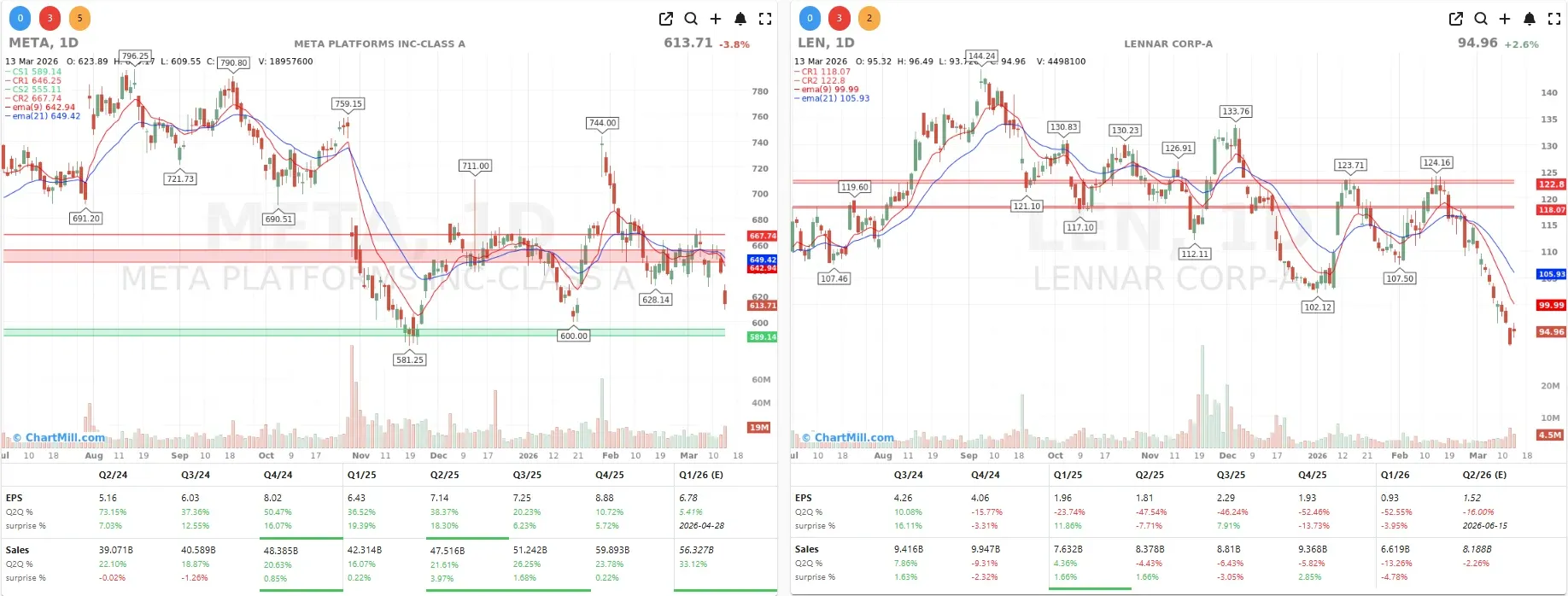
Meta Platforms (META | -3.83% | $613.71) was among the notable decliners. The sell-off followed reports that Meta's next-generation AI model, dubbed "Avocado," has underperformed internal benchmarks relative to rivals from Google, OpenAI, and Anthropic, forcing a delay in its launch. For a company that has staked its reputation - and tens of billions in capex - on AI leadership, this is not a good look.
What to Watch Heading Into Monday
A few things deserve close attention as the new week opens. Micron's earnings on Wednesday are the most obvious near-term catalyst and with sentiment running hot (Wedbush raising its target to $500, multiple other analysts piling on), the bar has been set high. Any disappointment there could sting.
The oil picture remains the macro wildcard. Every new development out of the Strait of Hormuz will move markets. Any signals of a de-escalation path between the U.S., Iran, and regional partners could trigger a sharp reversal in energy prices and with it, some relief across equity markets. For now, though, the path of least resistance for oil remains upward.
For software and AI names, Adobe's leadership transition is a story worth tracking carefully. The sector was already under pressure from AI disruption concerns; a power vacuum at one of its marquee names doesn't help sentiment.
Conclusion
The market is contending simultaneously with a geopolitical shock, a commodity price surge, downward GDP revisions, and sticky inflation, all while absorbing a messy earnings week.
None of that resolves quickly. The third consecutive weekly loss is a signal. For long-term investors, the volatility may present opportunities, particularly in quality names that have been dragged lower by macro fear rather than fundamental deterioration. But selectivity has rarely mattered more than it does right now.
ChartMill Market Desk
This daily update is prepared by ChartMill for informational purposes only and does not constitute investment advice. Always do your own due diligence before making investment decisions.
Next to read: Market Breadth Remains Weak as Selling Pressure Stays Broad