

Technology giant ALPHABET INC-CL A (NASDAQ:GOOGL) appears as a notable option for quality investors using the Caviar Cruise screening methodology. This investment process looks for firms with outstanding financial condition, lasting profitability, and competitive strengths that can provide long-term value. The method stresses measurable data points such as solid revenue and profit expansion, high returns on invested capital, acceptable debt amounts, and steady cash flow generation.
Financial Performance and Growth Metrics
The Caviar Cruise method favors firms showing steady expansion in both revenue and operational profitability. Alphabet's past results greatly surpass the screen's lowest limits, pointing to strong business speed and operational effectiveness.
- Revenue Growth (5Y CAGR): 11.30% compared to required >5%
- EBIT Growth (5Y CAGR): 26.03% compared to required >5%
- EBIT Growth vs. Revenue Growth: EBIT growth strongly exceeds revenue growth, indicating rising profitability and possible economies of scale.
This outstanding profit expansion compared to revenue is a key part of the quality investing view, as it implies the firm has pricing strength and functions with growing effectiveness, letting more of each revenue dollar reach the net income.
Profitability and Capital Effectiveness
A main idea of quality investing is the effective use of capital, measured by Return on Invested Capital. The Caviar Cruise screen asks for a minimum ROIC of 15%, and Alphabet provides more than double this standard.
- ROIC (Excluding Cash/Goodwill): 35.65%
This measurement is important because it shows how well Alphabet creates profits from the capital put into its main operations. A number this high puts the firm in the top group for capital effectiveness, indicating a strong business model and important competitive strengths that produce significant value for shareholders.
Financial Condition and Cash Flow Nature
Quality investors look for firms with solid balance sheets and high-grade earnings, meaning accounting profits are supported by real cash creation. Alphabet does very well in both areas, showing little debt load and great conversion of profits to cash.
- Debt-to-Free Cash Flow: 0.29 years (compared to acceptable <5 years)
- Profit Quality (5Y Average): 92.29% (compared to required >75%)
The very low debt-to-FCF number shows Alphabet could repay all its debt in just over three months using its present cash flow, pointing to outstanding financial safety. The high profit quality percentage verifies that almost all its reported net income becomes real, available free cash flow, confirming the lasting nature of its earnings.
Fundamental Analysis Summary
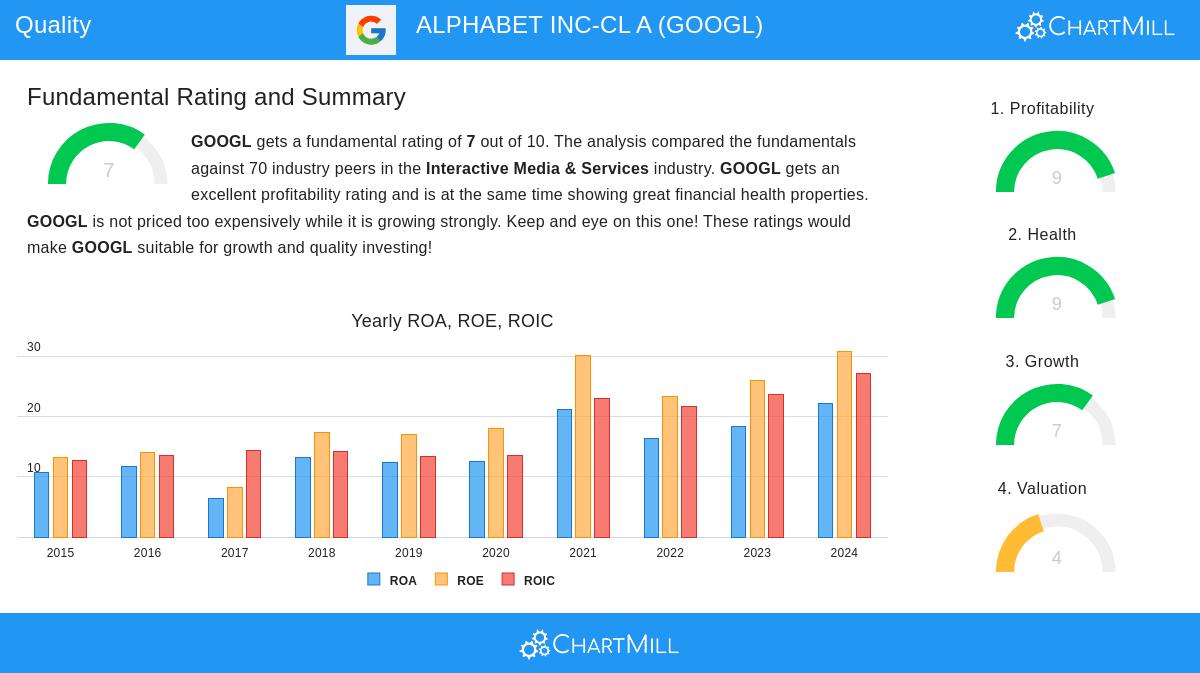
Alphabet's complete fundamental analysis report gives it a solid score of 7 out of 10, with special force in profitability and financial condition, both getting 9 out of 10. The firm shows better margins and returns than most industry competitors, with a profit margin over 32% and a return on equity above 32%. While its valuation seems relatively high on a normal P/E basis, this is partly reasonable due to its exceptional growth and profitability picture. For a detailed view, see the full fundamental analysis report.
Investment Points for Quality Portfolios
For investors using a quality-oriented, buy-and-hold plan, Alphabet offers a solid argument based on measurable financial data. The firm not only reaches but greatly passes the starting requirements for revenue growth, profit increase, capital returns, and financial steadiness. Its leading positions in global digital advertising, cloud computing, and consumer technology platforms indicate lasting competitive strengths that match the less measurable parts of quality investing, like pricing strength and downturn endurance.
The Caviar Cruise screen found Alphabet based on its outstanding financial features. Investors curious about finding other firms that pass this strict quality screen can view the full list of results here.
Disclaimer: This analysis is based on publicly available information and is for informational purposes only. It does not constitute investment advice, a recommendation to buy or sell any security, or an offer to provide investment advisory services. All investment decisions involve risk, including the potential loss of principal. Investors should conduct their own research and consult with a qualified financial advisor before making any investment decisions.