
For investors aiming to assemble a portfolio of durable, long-term holdings, the principles of quality investing offer a useful framework. This approach goes beyond looking for low-priced stocks and instead concentrates on finding superior companies with lasting competitive strengths, sound financials, and the capacity to produce steady, reliable profits over many years. The "Caviar Cruise" stock screen is built to methodically search for these specific traits, highlighting measures like solid revenue and profit increase, high returns on invested capital, reasonable debt, and profits that are consistently turned into cash.
One company that appears from this strict screening process is The Sherwin-Williams Company (NYSE:SHW), a worldwide leader in making and selling paints and coatings. A detailed look shows how its financial picture matches the central ideas of quality investing.
A History of Profitable Increase
The Caviar Cruise method favors companies that show not only increase, but profitable and efficient increase. The screen asks for a minimum 5% compound annual growth rate (CAGR) for both revenue and EBIT (earnings before interest and taxes) over five years, with EBIT increase preferably exceeding revenue increase, a mark of better operational efficiency and pricing ability.
Sherwin-Williams fits these basic requirements:
- EBIT Increase (5Y CAGR): 5.87% – This is above the 5% minimum, showing steady rise in core operational earnings.
- Revenue Increase (5Y CAGR): 4.45% – While a little under the 5% screen goal, it shows persistent top-line rise in an established industry.
- EBIT > Revenue Increase – The reality that EBIT increase has been greater than revenue increase over this time is a good indicator. It implies the company has ably controlled costs or gained from positive product mix changes, turning more of each sales dollar into operating profit.
Superior Returns on Capital and Reliable Earnings
Maybe the most important filter in a quality screen is Return on Invested Capital (ROIC), which gauges how well a company uses its capital to produce profits. The Caviar Cruise screen sets a high standard at 15%. Also, it stresses "Profit Quality"—the part of net income changed into free cash flow—looking for companies that transform accounting profits into actual, usable cash.
Sherwin-Williams performs well in these aspects:
- ROIC (Excluding Cash & Goodwill): 36.82% – This is a very high number, more than two times the screen's need. It shows that Sherwin-Williams has a strong competitive advantage, letting it produce excellent profits from its manufacturing plants, brand investments, and store network.
- Profit Quality (5Y Avg.): 90.97% – This is much higher than the 75% screen filter. It proves that almost all of the company's reported net income over the past five years has been changed into free cash flow. This reliable cash creation offers great flexibility to pay for dividends, strategic purchases, or share buybacks without needing much outside financing.
A Reasonable Financial Setup
Quality investing prefers companies with solid balance sheets. The Caviar Cruise screen uses the Debt-to-Free Cash Flow ratio to evaluate how fast a company could theoretically pay off its debts using its present cash creation. A ratio under 5 is seen as acceptable.
Sherwin-Williams shows a detailed but workable situation:
- Debt / Free Cash Flow: 4.17 – This fits within the screen's goal of under 5, meaning it would take about four years of current free cash flow to eliminate all debt. This is viewed as a workable level for a stable, cash-producing business.
- It should be mentioned that the company has a higher amount of leverage (Debt/Equity of 2.33) than some similar companies, which is usual after its large purchase of Valspar. However, the solid and steady free cash flow offers a clear way to manage and lower this debt over time.
Fundamental Analysis Summary
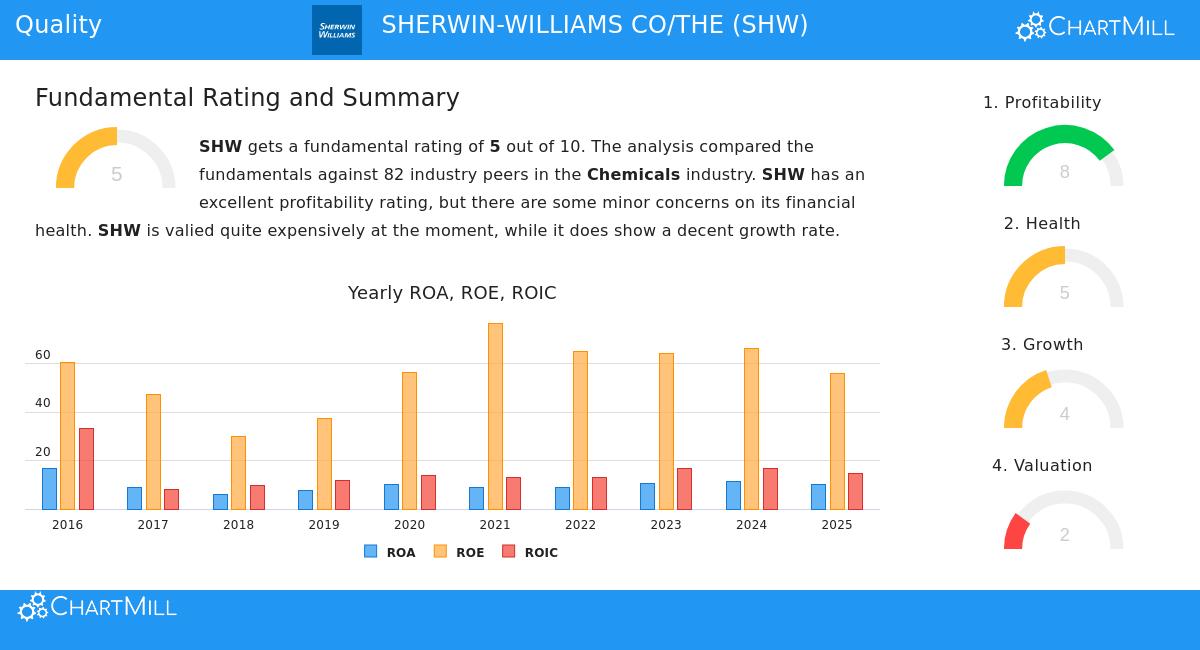
An examination of Sherwin-Williams' detailed fundamental report supports this quality story while noting points for thought. The company gets a good profitability score of 8 out of 10, pushed by sector-leading margins and returns on equity and assets. Its dividend condition is healthy, with a long record of dependable and rising payments.
The main notes of caution in the report focus on valuation and liquidity. The stock sells at a high price, with a P/E ratio above both industry and S&P 500 averages, mirroring its quality standing. Also, short-term liquidity ratios are low, though this is common for a company with Sherwin-Williams' business model and is lessened by its solid total cash flow creation.
Locating Other Quality Prospects
Sherwin-Williams acts as a clear example of the kind of company a quality-oriented screen can find, one with a strong brand, superior capital efficiency, and lasting cash flows. For investors wanting to use this method to find other possible candidates, the Caviar Cruise screen is a helpful beginning point.
You can see and adjust the full Caviar Cruise screen to examine other qualifying companies here.
To conclude, The Sherwin-Williams Company displays many of the characteristics wanted by quality investors: a past of profitable increase, excellent returns on capital, reliable earnings conversion, and a financial setup backed by solid cash flow. While its high price requires thought, its operational abilities and market leadership make it a prospect for those constructing a long-term, durable portfolio.
,
Disclaimer: This article is for informational purposes only and does not constitute financial advice, a recommendation, or an offer to buy or sell any security. Investing involves risk, including the potential loss of principal. You should conduct your own research and consult with a qualified financial advisor before making any investment decisions.