

For investors looking for dependable income, a systematic process for choosing dividend-paying stocks is important. A frequent plan includes searching for companies that provide a good dividend now and also have the fundamental financial soundness to maintain and possibly raise those payments in the future. This usually requires examining more than just the current yield to evaluate earnings, balance sheet condition, and the company's history. One such search process centers on stocks with strong dividend grades, backed by satisfactory marks in earnings and balance sheet condition, trying to find businesses designed for lasting dividend dependability.
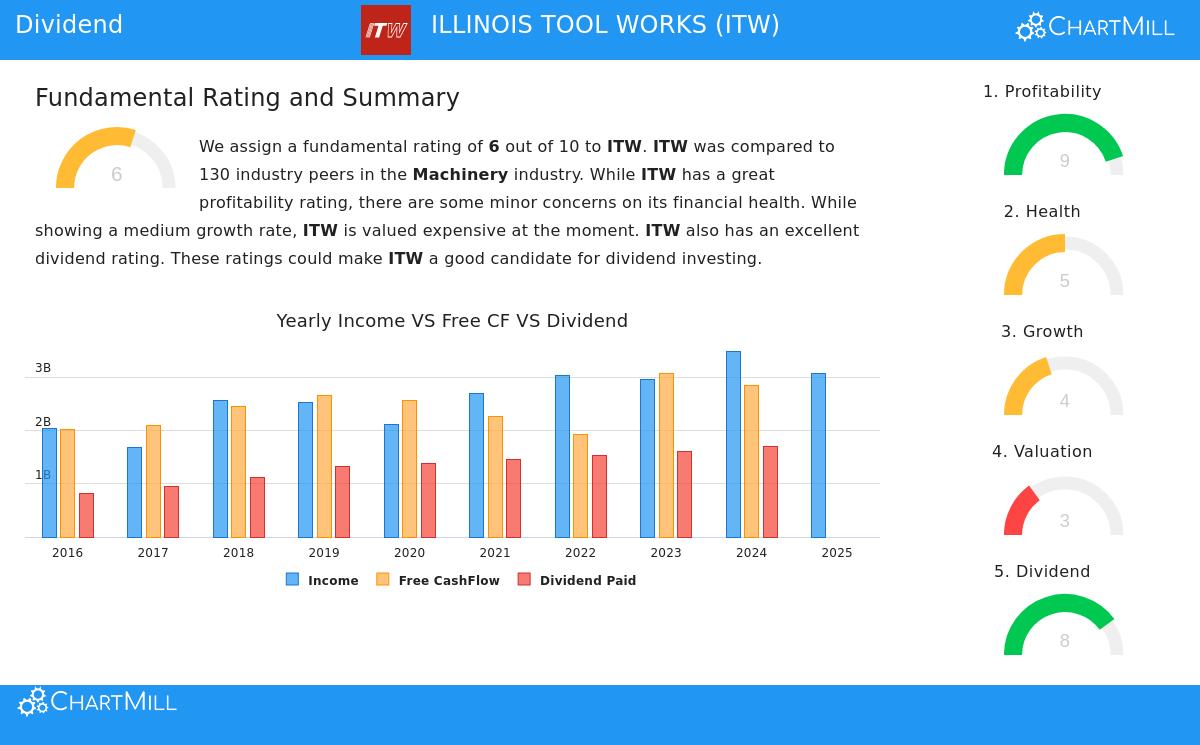
ILLINOIS TOOL WORKS (NYSE:ITW) appears as a candidate from this kind of methodical search. The industrial manufacturer’s fundamental picture suggests it deserves further examination by income-oriented investors.
Dividend Dependability and Growth
The center of any dividend investment case is the payment itself. Illinois Tool Works makes a strong argument on several points measured by a detailed fundamental study.
- Sustainable Yield: The company provides a yearly dividend yield of 2.22%. This is not the highest, but it is a sensible return that exceeds both the industry norm (1.13%) and the present S&P 500 average. Significantly, the yield is supported by a history of dependability.
- Established History: ITW has paid a dividend for at least ten years and has not cut it in that time. This lengthy, steady history is a clear signal of management’s dedication to giving capital back to shareholders.
- Dedication to Growth: The dividend has increased at an average yearly rate of almost 7% over the last five years. This growth is supported by earnings growth that is faster than the dividend rises, an important marker of sustainability.
- Payout Ratio Evaluation: The company uses approximately 58% of its earnings for dividends. This is above average but stays within a zone often viewed as acceptable, particularly given the steady and profitable character of the business. It shows a large part of profits is given to shareholders while keeping money for reinvestment.
These elements together build ITW's high dividend grade, which is a main filter in the search plan. A high grade here assists investors in steering clear of companies with yields that are too high to last or poor payment histories.
Fundamental Earnings Soundness
A lasting dividend needs to be paid for by a profitable company. This is why searching for satisfactory earnings is a vital partner to dividend measures. ITW performs well here, having a top-level profitability grade. The company's margins are a notable characteristic:
- It keeps a solid Profit Margin of 19.05% and an Operating Margin of 26.20%, both placed in the top level of its machinery industry group.
- Important return measures, like a Return on Invested Capital (ROIC) of 24.43%, are much better than the industry norm. This shows very efficient use of capital to create earnings.
This outstanding profitability supplies the necessary source for the dividend. Solid and industry-leading margins mean the company creates plenty of earnings from which to pay shareholders, supporting the sustainability case beyond just the payout ratio.
Balance Sheet Condition Factors
The last part of the search plan is balance sheet condition, which makes sure the company can handle economic declines without putting its dividend at risk. ITW’s condition grade is acceptable, presenting a varied but generally steady view.
- Solvency Strengths: The company has a very strong Altman-Z score, showing low short-term bankruptcy danger. Its debt compared to its free cash flow is also at a sensible level, indicating it can manage its debts without difficulty.
- Points to Watch: The study mentions a high Debt-to-Equity ratio, which is usual in industries that require a lot of capital but shows a dependence on debt funding. Also, liquidity ratios like the Current and Quick ratios are lower than many industry peers, although they stay at levels normally seen as enough to meet immediate responsibilities.
For a dividend investor, this condition profile suggests attention is needed concerning debt, but the company’s solid profitability and cash creation offer a balance. The search’s need for a "satisfactory" condition grade helps remove companies with serious balance sheet problems, which ITW does not have.
Price and Growth Setting
It is necessary to see the dividend story within the complete investment setting. ITW is presently priced high on a Price-to-Earnings basis, trading similarly to both its industry and the wider market. Growth is consistent but limited, with low-single-digit revenue growth forecast along with high-single-digit EPS growth. For a dividend investor, this could be suitable; the attraction is in the dependable, increasing income from a high-quality, profitable company, more than major price gains.
Locating Comparable Possibilities
ILLINOIS TOOL WORKS shows the kind of company a methodical dividend search can reveal: one with a dependable and increasing payment, driven by outstanding profitability and an acceptable financial setup. Investors wanting to investigate other stocks that fit comparable standards of high dividend quality together with sound fundamental condition and profitability can use the prepared Best Dividend Stocks screen. This tool offers a changing beginning point for creating a durable income portfolio.
Disclaimer: This article is for informational purposes only and does not constitute financial advice, a recommendation, or an offer to buy or sell any security. Investors should conduct their own research and consult with a qualified financial advisor before making any investment decisions. Past performance is not indicative of future results.