

For technical investors, finding stocks that are in a solid uptrend and ready for a near-term breakout is a central method for gaining from momentum. One organized path uses a filter for securities that join a high technical health score with a high setup quality rating. The first finds stocks with solid, confirmed upward trends, while the second spots those trading in a narrow range, indicating a possible breakout is near. This process removes less certain trends and stretched moves, concentrating on likely chances where a stock's existing force may be ready to push into a new upward phase.
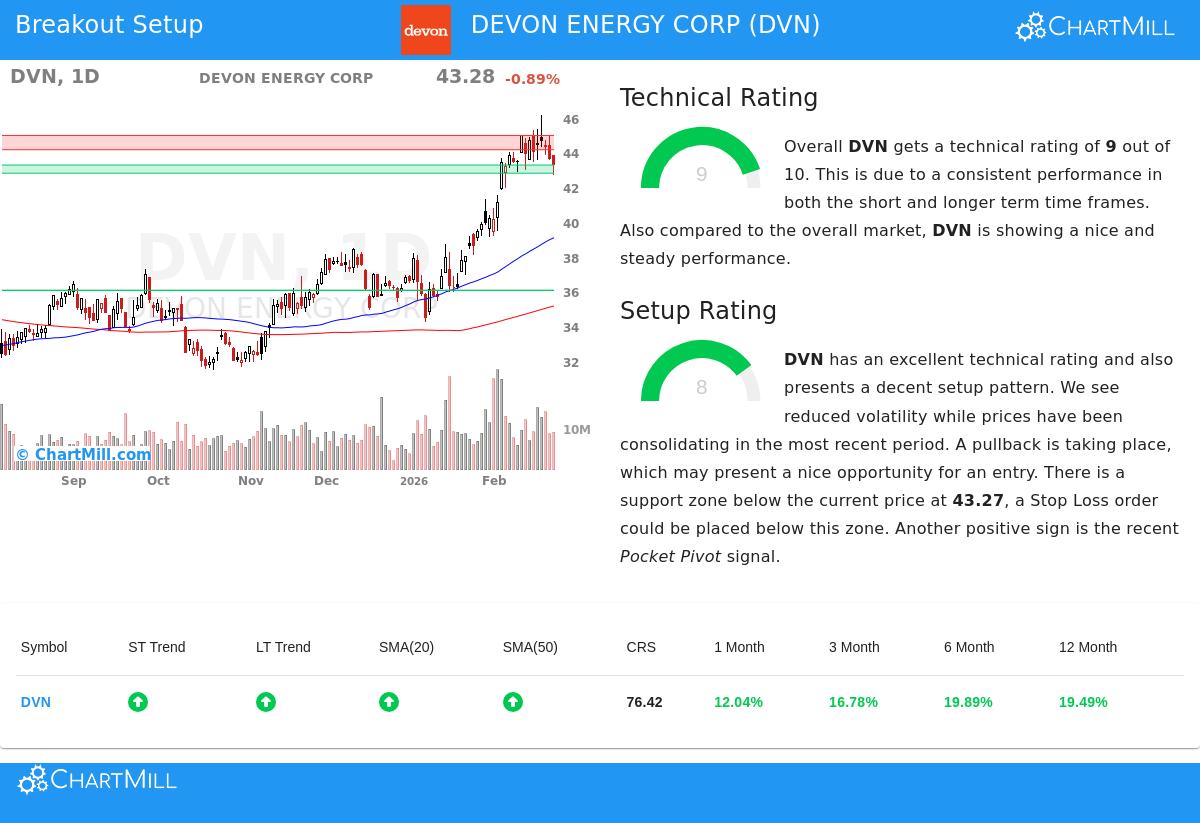
A recent filter using this approach has pointed to Devon Energy Corp (NYSE:DVN) as a candidate needing further examination. The independent energy company, with holdings centered on U.S. shale areas like the Delaware Basin and Eagle Ford, is now showing a notable technical view that fits the breakout filter rules.
Judging Technical Force
The base of any breakout trade is a stock's existing technical condition. A solid trend supplies the momentum that a breakout can increase. Devon Energy's technical outline is particularly strong, as explained in its ChartMill Technical Report, which gives the stock a high Technical Rating of 9 out of 10.
This rating is built by a few main points:
- Positive Trend Agreement: Both the long-term and short-term trends for DVN are scored as positive. This agreement across periods shows continued buying interest and lowers the chance of an opposing trend change.
- Solid Relative Performance: The stock is doing better than about 76% of the wider market over the last year, marking it as a frontrunner, not a follower. This relative force is a key part for a high technical rating, as it shows the stock's rise is not just due to a climbing market.
- Supportive Moving Averages: The stock's price is above all its main simple moving averages (20, 50, 100, and 200-day), and each of these averages is itself in an upward pattern. This layered, positive arrangement of moving averages works as a set of changing support points.
This group of factors confirms the first filter condition: DVN is a "technically sound" stock with its trend clearly upward. Without this basic force, a breakout try would have much greater chance of not working.
Judging the Setup Quality
A solid trend by itself is not a buy signal; entering after a fast rise can result in quick declines. The second filter condition looks for a high-quality setup, which finds a period of tightening inside the uptrend, giving a more precise entry point. Devon Energy gets a Setup Rating of 8, showing such a period of contraction is now happening.
The technical report states that prices have been tightening recently with lower price swings, calling the shape a "bull flag." This shape often appears after a solid rise and shows a short pause or small decline, preparing for a possible continued move. The setup review points out exact, usable levels coming from this tightening:
- A set resistance area is found between $44.15 and $44.97. A clear move above this area could mark the beginning of the next positive stage.
- A close support area is present between $42.80 and $43.27. This gives a sensible place to set a protective stop-loss order, setting the trade's risk from the start.
- A recent "Pocket Pivot" signal was seen, a shape where the stock rises on volume greater than the largest down volume of the previous ten days. This can be an early hint of institutional buying during the tightening.
The existence of this high-quality setup directly answers the "when" to buy. It indicates the stock is not stretched but is instead tightening inside its uptrend, possibly giving a good risk/reward entry on a breakout above the noted resistance.
Important Levels and Trade Plan
From the technical and setup review, a clear trading plan appears. The automated report proposes a possible breakout entry just above the resistance area at $44.98, with an initial stop-loss set just below the support area at $42.79. This plan sets a risk of about $2.19 per share, or 4.87% of the entry price.
For a portfolio manager planning to risk 1% of total funds on this idea, the position size math proposes an allocation of about 20.5%. It is very important to note that this is a mechanically created example. Investors should always do their own review, thinking about items like coming earnings reports, wider market state, and personal risk comfort, before placing any trade. The current positive short-term trend for the S&P 500 gives a generally helpful setting for such breakout tries.
Finding Like Chances
The filter that pointed to Devon Energy is used each day to find new technical breakout setups. Investors searching for like chances in other stocks can see the present results through the Technical Breakout Setups filter.
Disclaimer: This article is for information only and is not investment guidance, a suggestion, or a bid to buy or sell any security. The review shown is based on technical measures and automated reports. All investing has risk, including the possible loss of original money. You should do your own study and talk with a qualified financial advisor before making any investment choices. Past results do not guarantee future outcomes.