

For investors looking to build a portfolio that creates steady passive income, a methodical screening process is important. One useful strategy involves selecting for companies that not only provide a good dividend now but also have the fundamental financial soundness to maintain and increase those payments over time. This method frequently centers on three main elements: a high dividend quality score, acceptable profitability, and firm financial condition. By focusing on these areas, investors try to find businesses that can endure economic shifts and keep paying shareholders, instead of only following the highest stated yield.
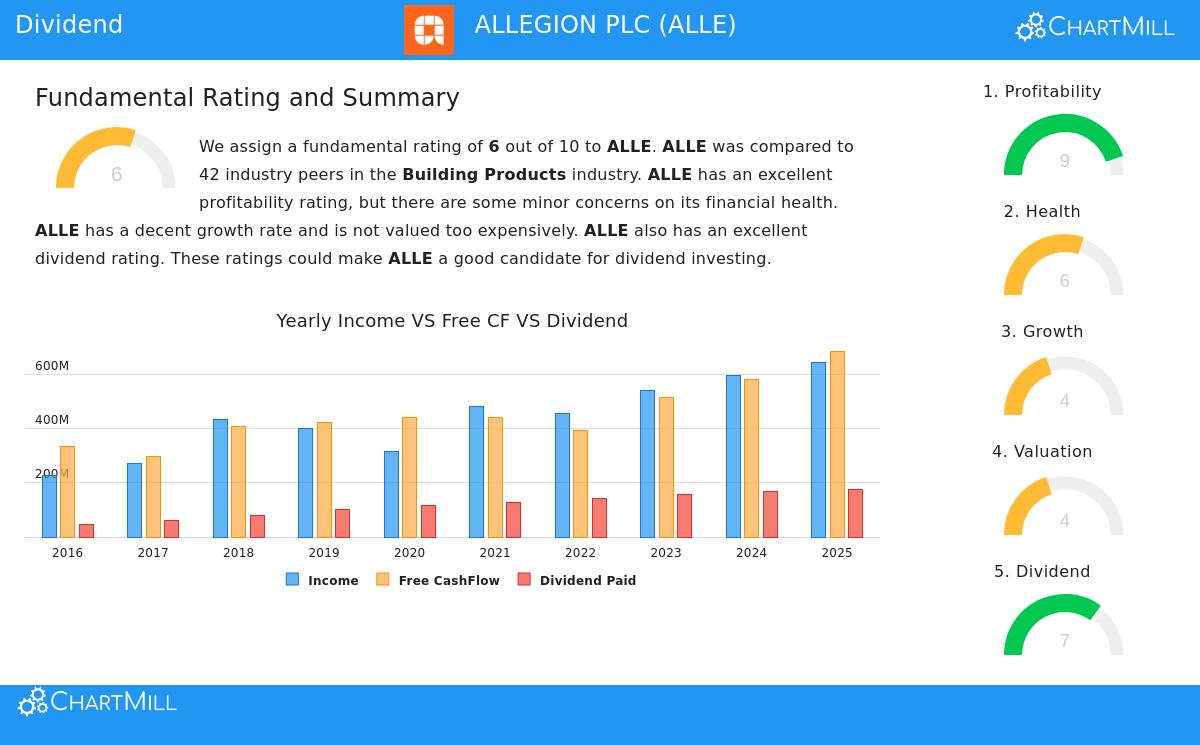
Allegion PLC (NYSE:ALLE), a worldwide supplier of security products and solutions for homes and businesses, appears as a candidate from this kind of screening method. The company's basic profile indicates it fits the standards important for lasting dividend investing.
Dividend Reliability and Growth
The foundation of any dividend investment is the payment itself. Allegion's dividend details show a mix of present income and past consistency, which is important for investors needing regular cash flow.
- Yield and History: The stock gives a dividend yield of 1.53%, which is twice the industry average of 0.77%. Significantly, Allegion has built a consistent history, having paid and raised its dividend for at least ten straight years. This record of dedication is a good sign for dividend investors.
- Maintainable Payment: A major risk for high-yield stocks is a payment ratio that cannot be maintained. Allegion's ratio of 27.23% is cautious, meaning the company uses under one-third of its earnings to pay the dividend. This leaves plenty of room to put money back into the business, handle slow periods, and keep increasing the dividend without stressing finances.
- Growth Path: The dividend has increased at a notable average yearly rate of 9.79% over recent years. This increase is a vital part of total return and helps maintain income against inflation over many years.
Supporting Profitability
A rising, maintainable dividend must be paid for by a profitable company. This is where Allegion performs very well, supplying the necessary earnings capability to back its shareholder returns. The company's excellent profitability measures are the source behind its dividend policy.
- Good Returns: Allegion produces high returns on its capital. Its Return on Invested Capital (ROIC) of 16.28% and Return on Equity (ROE) of 31.14% are much better than most of its competitors in the building products industry. These numbers show effective use of shareholder capital to create profits.
- Good Margins: The company keeps good profit margins, with an operating margin of 21.13% and a gross margin of 45.20%, both placed in the high end of its industry. Firm and steady margins give protection during economic weakness and make sure cash flow stays sufficient to fund dividend payments.
Financial Condition Evaluation
Financial condition is the protection for dividend continuity. It makes certain a company can fulfill its duties and prevent reducing its payment during hard times. Allegion's condition score points to a mostly firm position with some points to note.
- Solvency Soundness: The company's Altman-Z score of 4.40 indicates a low short-term chance of financial trouble. Also, its debt-to-free-cash-flow ratio of 2.89 is positive, showing it could pay off all its debt in less than three years using its present cash flow, a mark of good solvency.
- Liquidity and Debt: Allegion's current and quick ratios are sufficient and similar to industry standards, showing it can manage immediate obligations. A point for attention is its debt-to-equity ratio of 0.96, which is above many industry competitors. While controllable given the company's firm cash flow, it is a measure for investors to note over time.
Valuation and Growth Setting
From a valuation view, Allegion does not seem overly costly. Its forward P/E ratio of 16.13 is about the same as the industry average and is lower than the wider S&P 500 average. This implies the market is not valuing its quality and income flow too high. Growth projections are modest, with analysts predicting mid-single-digit percentage growth in both revenue and earnings per share for the next few years. For a dividend-centered plan, this stable, dependable growth outline is often better than more unpredictable, high-growth situations.
Conclusion
For dividend investors, Allegion PLC offers an interesting profile that matches a careful screening plan. It joins a reasonable and increasing yield with a ten-year history of raises, all backed by high-level profitability and mostly good financial condition. The company's capacity to create high returns on capital and keep firm margins supplies a solid base for its dividend, while a cautious payment ratio gives a safety buffer. While its debt is a bit higher compared to competitors, its overall cash flow soundness lessens this worry.
A full explanation of these basic factors is provided in the complete ChartMill Fundamental Analysis Report for ALLE.
Allegion acts as an illustration of the kind of company a methodical dividend screen can find. Investors wanting to examine more stocks that fit similar standards of high dividend quality, profitability, and condition can use the screen themselves through the Best Dividend Stocks screener on ChartMill.
Disclaimer: This article is for information and learning only and is not financial guidance, an investment suggestion, or a proposal or request to buy or sell any securities. The study uses past data and present estimates, which are not promises of future results. Investors should do their own investigation and talk with a certified financial advisor before making any investment choices.