

For investors looking for a disciplined, long-term method for assembling a portfolio, few strategies are as respected as Peter Lynch’s. The famous manager of the Fidelity Magellan Fund supported a "growth at a reasonable price" (GARP) idea, concentrating on companies with lasting earnings growth, sound financial condition, and prices that do not overestimate that future promise. His system, explained in One Up on Wall Street, stresses fundamental study and a long-term view, avoiding attempts to predict market movements in favor of knowing a business. A main instrument for using this strategy is a stock filter constructed on Lynch's particular financial measures, which can help find companies deserving of more study.
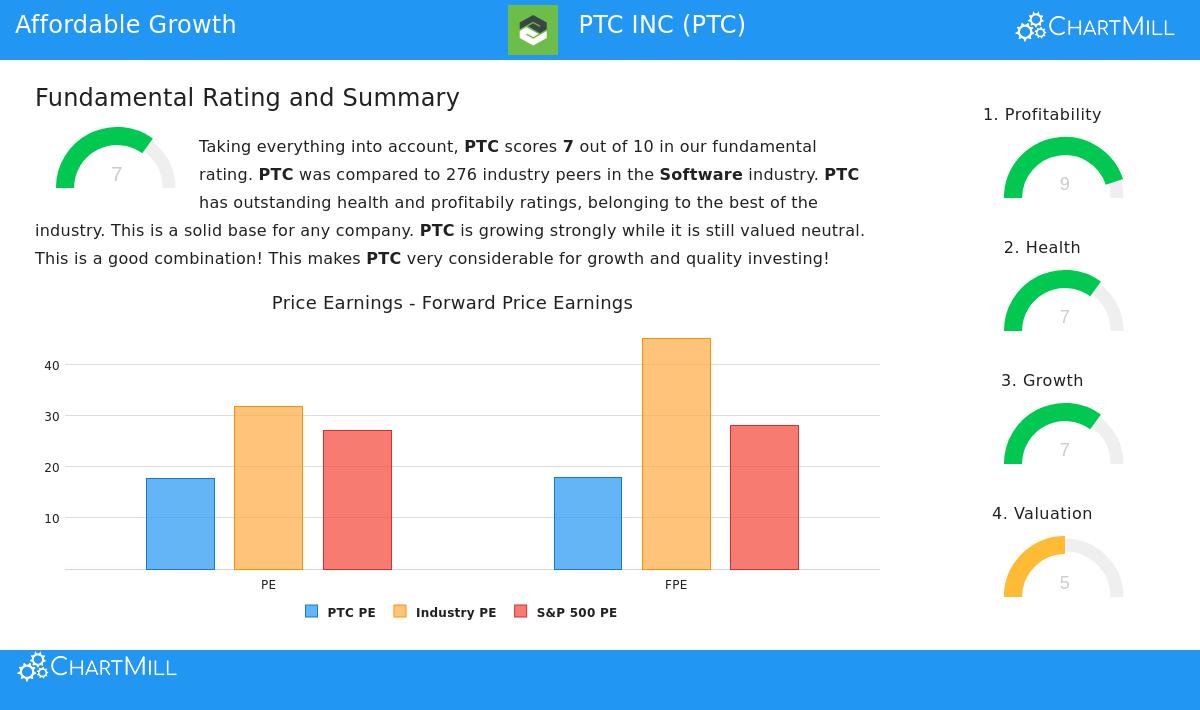
One company that recently appeared from a Peter Lynch-influenced filter is PTC Inc. (NASDAQ:PTC), a worldwide software company focused on computer-aided design (CAD), product lifecycle management (PLM), and industrial Internet of Things (IoT) offerings. Based in Boston, PTC supplies the digital foundation for companies to create, oversee, and maintain physical goods, a sector with lasting structural growth trends. We will look at how PTC matches the Lynch model.
Matching the Lynch Measures
Peter Lynch’s filter searches for a particular mix of growth, price, and financial soundness. PTC’s present numbers show a good match across many of these main rules:
- Lasting Earnings Growth: Lynch wanted companies increasing earnings per share (EPS) between 15% and 30% each year over five years, thinking growth outside this band was often not maintainable. PTC’s five-year EPS growth rate of 25.6% sits directly inside this preferred range, showing a steady rise in profit.
- Sensible Price (The PEG Ratio): Maybe the central part of Lynch’s GARP idea is the Price/Earnings to Growth (PEG) ratio. A PEG of 1 or lower implies the stock’s cost is sensible compared to its earnings growth. PTC’s PEG ratio, calculated from its last five-year growth, is about 0.69. This implies the market could be pricing the company’s past growth path too low, a good sign for price-aware growth investors.
- High Profit (Return on Equity): Lynch demanded an ROE above 15% as a mark of effective management and a lasting edge. PTC’s ROE of 21.3% is much higher than this level, putting it with the leading companies in its software industry group.
- Cautious Financial Setup: To confirm stability, Lynch liked companies with little debt. His filter uses a Debt/Equity ratio under 0.6, and he individually favored levels below 0.25. PTC’s D/E ratio of 0.31 shows a cautious balance sheet, supported mainly by equity instead of debt, which lowers money risk in weak economic times.
- Sufficient Near-Term Condition: The need for a Current Ratio of at least 1 makes sure a company can pay its upcoming bills. PTC’s ratio of 1.22 passes this basic test, showing enough cash availability.
A Broad Fundamental Look
A closer look into PTC’s total financial situation supports the positives shown by the Lynch filter. The company receives a high fundamental grade, led by excellent marks in profit and financial condition. Its profit margins are high and have been getting better, while returns on invested money are good. The balance sheet, as shown by the low debt ratio, is firm, with an Altman-Z score far from the trouble area.
While the usual Price-to-Earnings (P/E) ratio could seem high by itself, the good growth and high profit give perspective. When compared to industry peers on measures like Enterprise Value/EBITDA and Price/Free Cash Flow, PTC’s price looks more acceptable. The growth expectation stays positive, with experts forecasting continued, though slower, rises in sales and earnings.
You can see the full, itemized fundamental study for PTC Inc. here.
Fit for GARP Investors
For investors following the "growth at a reasonable price" idea, PTC offers a good example. It is not a high-risk, very-fast-growth story, but instead a settled company in the necessary software field showing careful, profitable growth. The mix of a good past growth rate, a PEG ratio hinting that growth is not completely reflected in the price, high returns on equity, and a cautious balance sheet meets the main points for a Lynch-type investment.
The company’s attention on CAD, PLM, and industrial IoT—software that aids other companies make and oversee physical goods—matches Lynch’s liking for clear businesses in necessary areas. While past results do not assure the future, the financial discipline shown by the numbers gives a base for judging its possibility as a long-term asset.
Locating Other Choices
PTC Inc. is one case found through a structured use of Peter Lynch's rules. Investors curious about finding other companies that pass this strict mix of growth, price, and financial condition tests can examine the filter on their own.
You can locate the full Peter Lynch strategy filter and its present outcomes here.
Disclaimer: This article is for information only and is not financial guidance, a suggestion, or a proposal to buy or sell any securities. The study uses public data and a particular investment strategy model. Investors must do their own complete study and think about their personal money situation and risk comfort before making any investment choices.