

Principal Financial Group (NASDAQ:PFG) has become a notable option for technical traders using a methodical screening process. The method uses two specific indicators: the ChartMill Technical Rating, which measures general technical condition, and the Setup Quality Rating, which finds consolidation patterns that may be ready for a move. Stocks with good scores on both measures can offer good potential for position initiation.
Technical Strength Evaluation
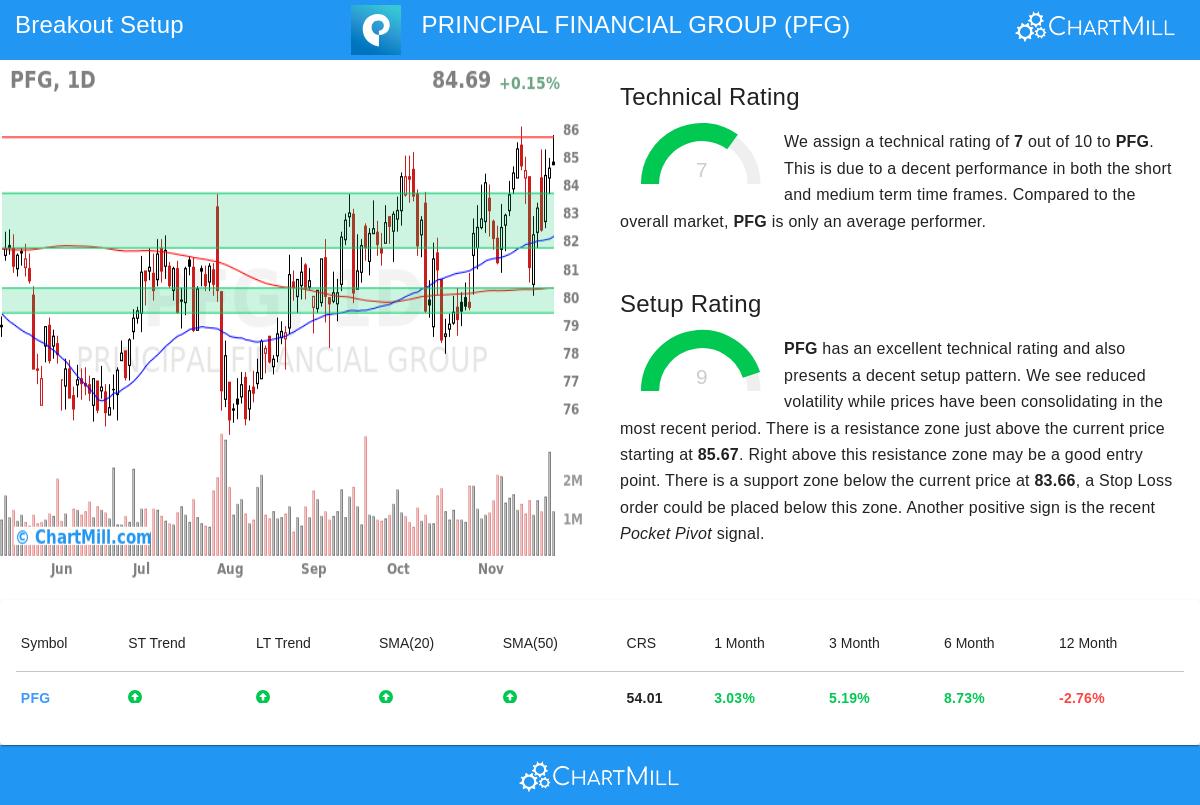
Principal Financial Group shows good technical foundations with a Technical Rating of 7 out of 10. This rating looks at several items such as trend condition, moving average position, and performance compared to the market. The detailed technical report notes a few items supporting this rating:
- Both short and long-term trends are currently positive
- The stock price is higher than its main moving averages (20-day, 50-day, 100-day, and 200-day)
- Price action is staying in the higher part of its 52-week span
The technical rating method favors stocks displaying steady condition across different timeframes. Stocks with a score of 7 or more usually show confirmed upward trends, making them better for breakout methods than stocks moving sideways or down. While PFG's relative strength rank of 54 shows it is keeping pace with the wider market rather than doing much better, its steady trend features make it technically acceptable for more review.
Setup Quality Evaluation
What makes Principal Financial Group especially interesting is its very good Setup Rating of 9 out of 10. This measure assesses how a stock is situated for possible entry by looking at consolidation formations, volatility levels, and distance from support and resistance points.
The present situation displays a few positive features:
- Prices have been moving in a range between $80.00 and $86.05 for the last month
- Lower volatility points to less selling activity
- A recent pocket pivot signal hints at institutional buying
- Clear support is found at $83.66 with resistance at $85.67
Good setup scores find times when stocks change from consolidation to possible upward movement. The narrow trading span together with specific support and resistance points forms an organized setting for position control. The closeness to resistance gives a clear level for entry, while the identified support area provides a sensible point for stop placement.
Trading Considerations
The mix of good technicals and very good setup quality indicates Principal Financial Group could be nearing a point of action. The automated review proposes:
- Possible entry above resistance at $85.68
- Stop loss set below support at $81.69
- A possible loss of about 4.66% on the position
This structure lets traders get involved if the stock shows strength by moving past resistance, while limiting losses if the move does not happen. The setup's quality comes from the clear difference between the consolidation area and possible movement zones, giving specific rules for trade management.
Market Environment and Industry Standing
In the insurance industry, Principal Financial Group is in the better half of performers, doing better than 66% of its 147 industry competitors. This good standing within its industry adds to the positive technical view. While the wider market displays a neutral long-term trend with positive short-term movement, PFG's own features suggest it could be forming its own strength.
Locating Other Options
The process that found Principal Financial Group can be used to find other possible breakout options. The Technical Breakout Setups screen constantly searches for stocks displaying both good technical ratings and high-quality setups, offering traders a methodical way to find possible options across the market.
Disclaimer: This review uses technical measures and automated screening methods. It is not investment advice. Always perform your own research, think about your risk tolerance, and talk with a financial advisor before making investment choices. Past results do not assure future outcomes, and all trading has risk including the possible loss of capital.