

For investors aiming to create a portfolio centered on dependable income, a disciplined screening method is necessary. One useful technique includes looking for companies that provide an appealing dividend now and also have the fundamental financial soundness to maintain and raise those payments in the future. This method chooses quality and longevity over seeking the absolute highest yield, which can sometimes indicate business problems. A functional tactic is to use a tool that finds stocks with a good dividend rating, while also demanding acceptable scores for earnings and financial condition. This layered filter aids in finding companies where the dividend is supported by reliable earnings and a firm balance sheet.
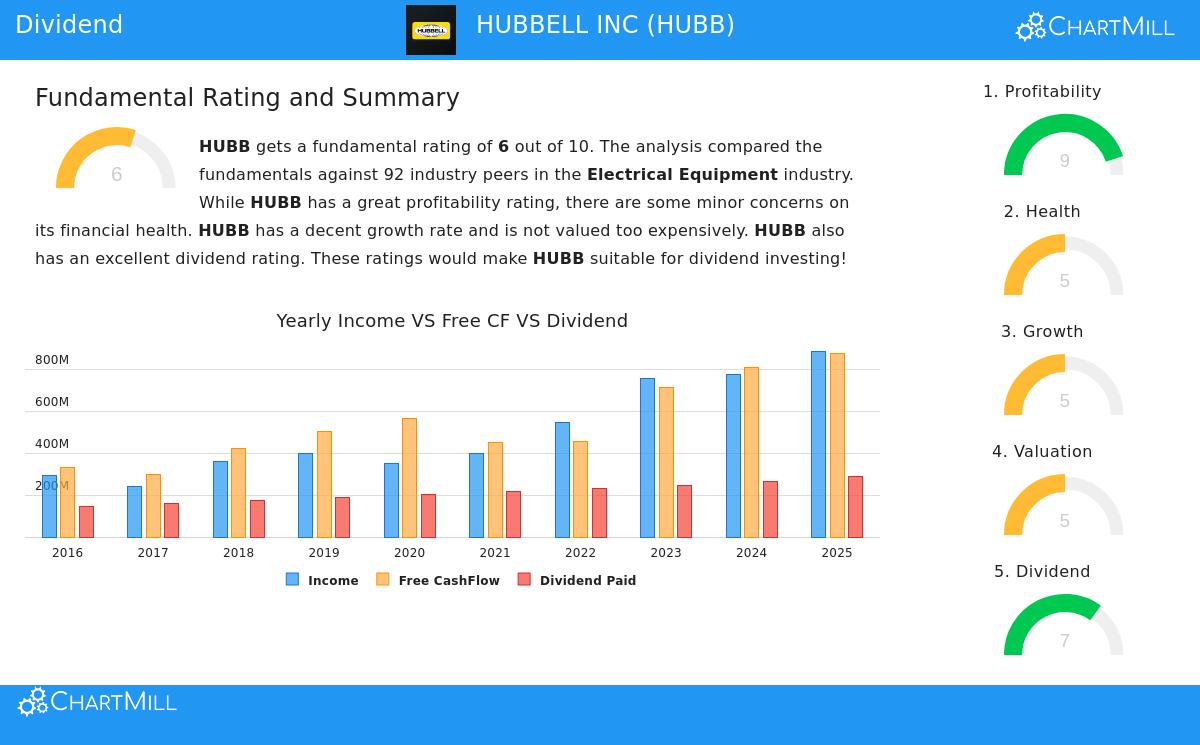
HUBBELL INC (NYSE:HUBB), a maker of electrical and utility products, appears as a result from this kind of screen. The company’s fundamental picture indicates it might be a noteworthy option for dividend-oriented investors searching for steadiness and consistent expansion in their income.
Dividend Dependability and Increase
The center of any dividend investment case rests on the payout itself. Hubbell’s dividend details show several traits that income investors appreciate.
- Manageable Payout Ratio: The company distributes about 32% of its earnings as dividends. This is a cautious ratio, showing the dividend is secure and allows significant capacity for the company to fund its operations, handle economic slowdowns, or keep lifting the payout without financial pressure.
- History of Increase: Hubbell has raised its dividend for at least 10 straight years without a cut. During this time, the dividend has risen at an average yearly rate of 7.73%, a pace that exceeds inflation and adds to total shareholder return.
- Satisfactory Yield: With a present yield near 1.10%, Hubbell’s income return is moderate but acceptable, particularly when combined with its solid growth path. It is significant that this yield comes from a consistently higher share price and a rising dividend, not a low stock price—an important point for lasting income investing.
This mix of a low payout ratio, a lengthy record of steady raises, and a sensible yield growth rate describes a company that emphasizes a lasting and increasing return to shareholders.
Supporting Earnings Strength
A lasting dividend needs to be paid from steady earnings. This is why filtering for acceptable earnings is a key partner to dividend measures. Hubbell performs well here, receiving a high ChartMill Earnings Rating of 9. The company’s ability to earn is seen in several important figures:
- Firm Margins: Hubbell functions with a solid profit margin of 15.26% and an even better operating margin of 21.06%, both ranking well within the electrical equipment sector. These margins have gotten better in recent years, pointing to effective operations.
- Effective Capital Use: The company produces good returns on its invested capital, with a Return on Invested Capital (ROIC) of 14.44% that exceeds most of its competitors. This shows management is using capital well to create earnings, which then backs the dividend.
For a dividend investor, this degree of earnings strength is comforting. It means the money required to pay the dividend comes from a sound, well-managed business, lessening the need for borrowing or selling assets.
Financial Condition Factors
Financial condition is the base that supports both earnings strength and dividend longevity. It makes sure a company can endure economic shifts without risking its obligations. Hubbell gets an average Condition Rating of 5, pointing to a generally stable but not outstanding situation.
- Controlled Debt: The company’s debt-to-equity ratio of 0.53 matches sector norms, showing a reasonable use of financing. More critically, its debt compared to free cash flow is a low 2.66 years, meaning it could pay off all debt with under three years of cash flow—a marker of soundness.
- Sufficient Liquidity: With current and quick ratios showing enough short-term assets to meet liabilities, Hubbell does not have near-term liquidity issues. This steadiness is vital for making sure dividend payments continue without cash problems.
While the report mentions some small points, like a recent rise in debt compared to assets, the overall condition view supports the finding that Hubbell has the financial durability to keep its dividend approach.
Valuation and Expansion Setting
While the main goal for a dividend investor is income longevity, valuation and expansion potential give important background. Hubbell is not a bargain stock; its Price-to-Earnings ratio matches the wider market. However, its valuation seems more fair when measured against its own industry, where it trades below many peers. The company has achieved good past growth in earnings per share and is projected to continue mid-single-digit revenue and earnings expansion going forward. This anticipated growth helps support the current valuation and, more importantly, offers a way for future dividend raises.
For a complete look at all these fundamental items, you can see the full ChartMill Fundamental Analysis Report for HUBB.
Summary
Hubbell Inc. shows an example of the kind of company a quality dividend screen tries to find. It provides a dividend that is both dependable—with ten years of growth—and lasting, due to a low payout ratio. This income is supported by firm and bettering earnings figures and a financial condition that, while not perfect, indicates enough stability. For an investor creating a portfolio based on lasting income, these are the necessary parts: a satisfactory yield backed by a sound business.
This review of Hubbell came from a methodical screening process. Investors wanting to examine other companies that fit similar standards for dividend longevity, earnings, and condition can use the "Best Dividend Stocks" screen directly to find other possible ideas.
Disclaimer: This article is for informational purposes only and does not constitute financial advice, a recommendation, or an offer to buy or sell any security. Investing involves risk, including the potential loss of principal. Readers should conduct their own research and consult with a qualified financial advisor before making any investment decisions.