

For investors aiming to build a portfolio that creates steady passive income, a methodical screening process is important. One useful strategy involves selecting for companies that not only provide an appealing dividend now but also have the fundamental financial soundness to maintain and possibly raise those payments in the future. This method frequently uses combined ratings that judge a stock using several basic measures. A sensible first step is to find companies with a high dividend rating, which examines yield, growth, and sustainability, while also confirming they hold at least satisfactory scores in profitability and financial condition. This pairing helps to sidestep the danger of high-yield stocks that are hiding basic business problems.
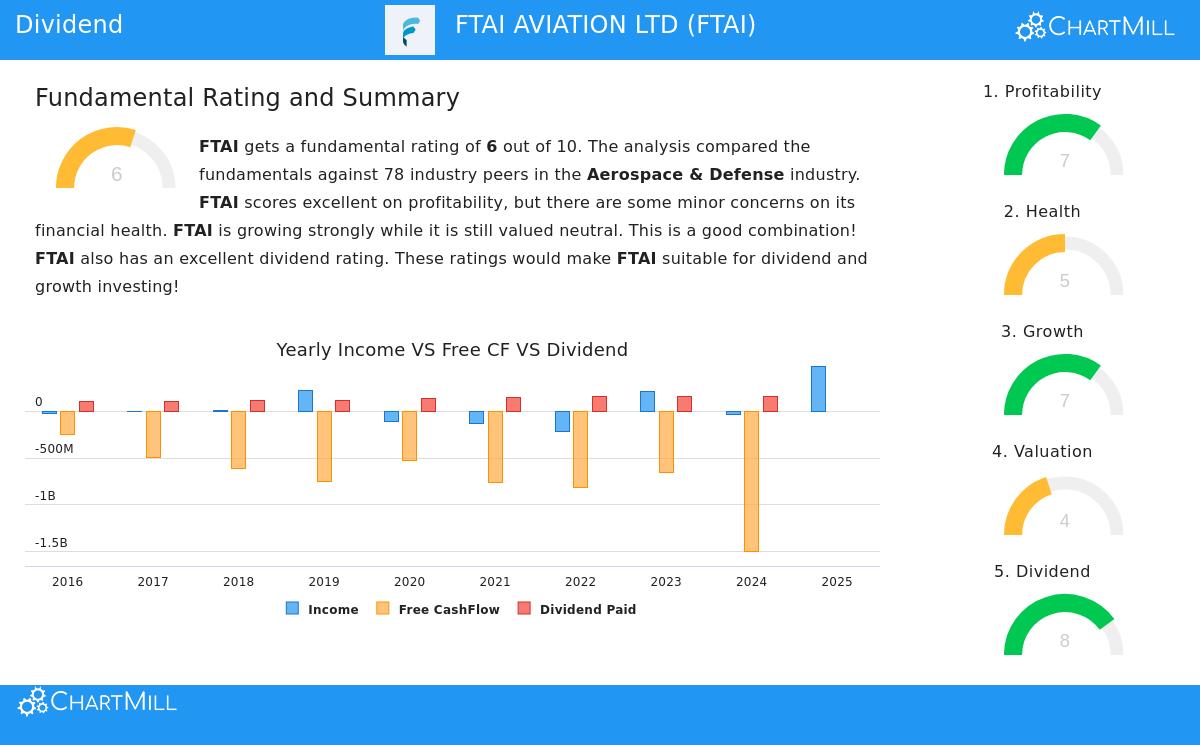
FTAI AVIATION LTD (NASDAQ:FTAI), a company centered on owning, leasing, and maintaining commercial jet engines, recently appeared from this kind of screening method. Its basic profile indicates it may deserve more examination from income-oriented investors. The company’s activities in aviation leasing and aerospace products offer a view into its ability to generate cash, which is the foundation of any lasting dividend policy.
Dividend Attraction: High Yield with a Dependable History
The most direct draw for dividend investors is frequently the yield, and FTAI Aviation is notable here. The company’s basic report features a yearly dividend yield of 8.16%, which is much greater than both the industry average and the wider S&P 500. Yet, a high yield by itself can be a signal of caution if it comes from a falling share price or a payment that cannot last. FTAI’s dividend rating of 8 out of 10 shows the screen has found more than just a high figure.
- Sustainable Payout Ratio: A vital test for sustainability is the payout ratio. FTAI uses about 31.92% of its earnings for dividends. This is seen as a low ratio, meaning the company keeps a large part of its profits for reinvestment and protection against weak periods, instead of paying out almost everything it earns.
- Earnings Supporting Dividend Growth: The report states that FTAI’s earnings are increasing more quickly than its dividend. This situation is important for the long-term plan, as it implies the current payment is not pressuring the business and allows space for future raises.
- Established History: The company has provided a dividend for at least ten years, creating a history of giving capital back to shareholders. While the yearly dividend growth rate has been small lately, the mix of a high beginning yield and a sustainable base can be attractive.
Basic Business Soundness: Profitability and Condition
A high dividend rating is much more believable when backed by sound business basics. This is why the screening strategy also requires satisfactory scores in profitability and financial condition, to confirm the dividend is not being funded from limited time or too much debt.
- Sound Profitability Measures: FTAI receives a profitability rating of 7. Its return on assets, return on equity, and operating margins all place well inside the competitive Aerospace & Defense industry. Sound profitability is the driver that powers both business expansion and shareholder returns; without it, a dividend is always in danger.
- Satisfactory Financial Condition: The company gets a condition rating of 5, signaling an acceptable but not outstanding financial state. The examination shows a varied image:
- Liquidity is a Positive Point: The company’s current and quick ratios are solid, indicating it has sufficient short-term assets to meet its near-term liabilities. This is a good signal for operational steadiness.
- Leverage is a Factor: FTAI has a high debt-to-equity ratio, which is typical in industries requiring large capital like aviation leasing. While the report mentions this shows a reliance on debt financing, it also states that this amount of leverage is actually less than many industry competitors. The positive direction in its debt/assets ratio and a firm Altman-Z score imply the debt is currently workable within its business model.
Growth and Valuation Setting
For a dividend stock to be a genuine long-term investment, the basic business should preferably be expanding. FTAI displays strong historical growth in both revenue and earnings per share. While future growth projections are anticipated to be good, if a bit more measured than the fast rates of the very recent past, this continued development supports the argument for dividend sustainability. On valuation, the stock sells at a high price-to-earnings ratio, but the report proposes this could be partly reasonable due to its high profitability and sound expected earnings growth.
A First Step for More Examination
The screening process that found FTAI Aviation is made to emphasize companies that satisfy a measured group of standards for dividend investors. The company’s high yield, sustainable payout ratio, demonstrated profitability, and acceptable liquidity build a solid argument for its place on an income investor’s watchlist. As with any screen, this is the start of the examination process, not the conclusion. The basic report gives a detailed, item-by-item assessment of FTAI’s positive and negative points, which investors can examine completely here.
This one idea came from a wider search. Investors wanting to investigate other companies that meet similar filters for high dividend quality, profitability, and financial condition can use the "Best Dividend Stocks" screen independently to see the present list of outcomes and change standards based on their own investment aims.
Disclaimer: This article is for informational purposes only and does not constitute financial advice, a recommendation, or an offer or solicitation to buy or sell any securities. The information presented is based on data provided and should not be the sole basis for any investment decision. Investors should conduct their own due diligence and consult with a qualified financial advisor before making any investment. Past performance is not indicative of future results.