

For investors looking for a dependable source of passive income, a methodical screening strategy can help find companies that provide more than a high current yield. A typical method includes selecting for stocks that display a good total dividend profile, backed by acceptable core business condition and earnings. This process tries to sidestep the dangers of unmaintainable distributions by focusing on companies with a record of consistent dividends, acceptable payout ratios, and the monetary capacity to continue them through different economic periods. One stock that appears from this kind of screening is Cincinnati Financial Corp (NASDAQ:CINF), a property and casualty insurer with an established history.
Examining the Dividend Profile
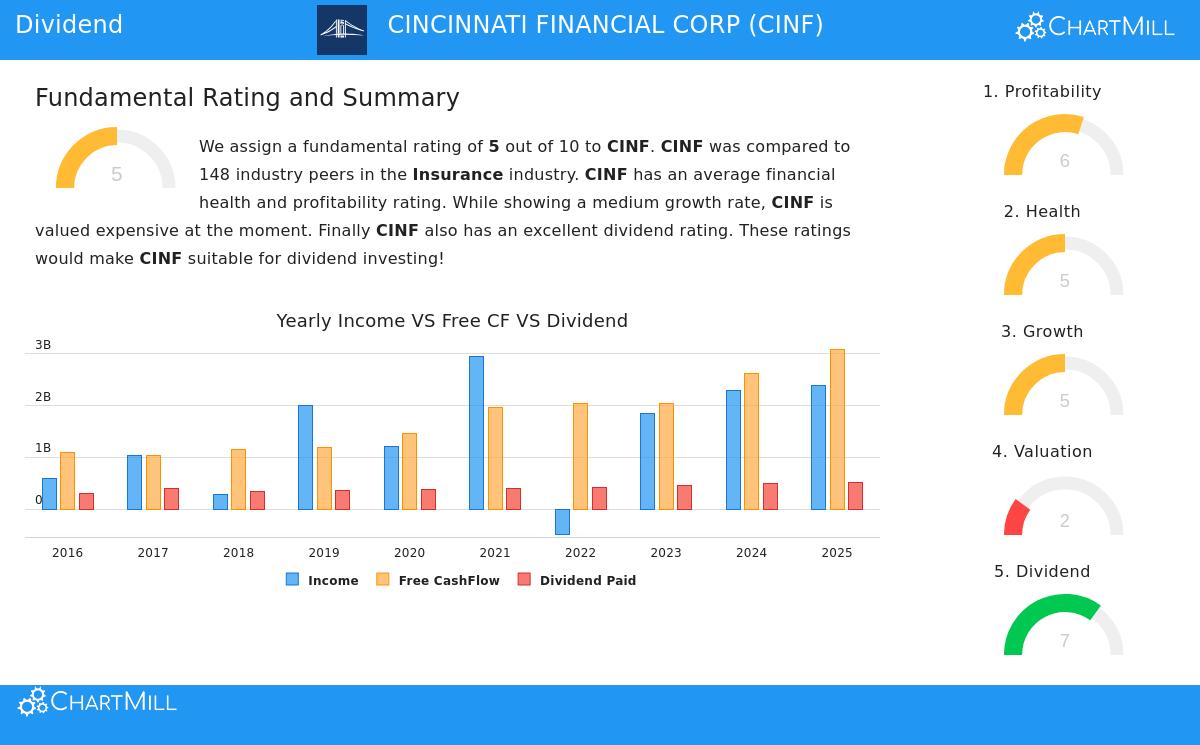
For dividend investors, the maintainability and growth path of a distribution are frequently more important than the simple yield. Cincinnati Financial’s dividend details, as shown in its fundamental analysis report, offer a strong case.
- Reliable History: The company has given a dividend for at least ten straight years and has not lowered it in that time. This creates a history of dedication to giving capital to shareholders.
- Steady Increase: The dividend has increased at an average yearly rate near 7.8% over the last five years, showing a management practice of distributing the company’s gains with investors.
- Maintainable Distribution: A central measure for maintainability is the payout ratio. Cincinnati Financial distributes close to 22% of its earnings as dividends, which is a careful amount. This provides sufficient space to put money back into the business, meet responsibilities, and continue the dividend even in times of reduced profit.
These elements together add to its good ChartMill Dividend Rating of 7 out of 10. For an income-centered plan, this mix of consistency, increase, and safety in the distribution is a basic need, as it assists in reducing the chance of a reduction that could interrupt an investor’s income flow.
Backed by Acceptable Profitability
A lasting dividend needs to be financed by a profitable company. Cincinnati Financial’s profitability measures supply the needed backing for its shareholder distributions.
- Good Margins: The company’s profit margin of almost 19% is better than a large portion of its insurance industry counterparts. This effectiveness in turning revenue into net profit is a good indicator.
- Acceptable Returns: Its Return on Equity (ROE) of 15.04% is higher than almost 70% of industry rivals, showing good use of shareholder capital.
These positives are seen in its ChartMill Profitability Rating of 6. While not the top possible, a rating of "acceptable" or above is important for the screening strategy. It confirms the company is producing enough earnings to finance both its activities and its dividend, looking past companies that might be paying dividends from borrowed money or asset liquidation.
Bolstered by Financial Condition
The last part of the screening strategy reviews the company’s financial condition, making sure it has the balance sheet fortitude to endure declines without putting the dividend at risk. Cincinnati Financial displays a varied but generally sufficient image here, receiving a ChartMill Health Rating of 5.
- Solvency Fortitude: The company shows high solvency, with a very low Debt-to-Free-Cash-Flow ratio of 0.26, meaning it could pay off all its debt in roughly three months using its cash flow. This ratio is with the top in its field.
- Careful Borrowing: A Debt-to-Equity ratio of 0.05 shows a balance sheet that is not heavily dependent on loans, giving a buffer against increasing interest costs or economic pressure.
- A Point to Watch: The report mentions that the company’s Return on Invested Capital (ROIC) is presently under its cost of capital, which implies it may not be generating surplus value from its investments currently. This is a point for investors to observe, although it is balanced by the good solvency measures.
For a dividend strategy, confirming a company is not excessively indebted is critical. A firm, liquid balance sheet lets a company continue its dividend during the certain difficult times in the business cycle.
Valuation and Growth Factors
While the screen focuses on dividend quality, profitability, and condition, it does not directly filter for valuation. Presently, Cincinnati Financial trades at a Price-to-Earnings ratio just below 20, which the fundamental report states is high compared to its insurance peers but a bit lower than the wider S&P 500 average. Future earnings increase is forecast at a moderate rate. This shows a common balance: stocks with very appealing, consistent dividend profiles are often not available at low prices. Investors are in practice paying more for the security and steadiness of the income flow.
Locating Additional Dividend Options
Cincinnati Financial Corp illustrates the kind of company a methodical dividend screening process can reveal: one with a consistent and increasing distribution, backed by acceptable profitability and a fundamentally sound balance sheet. For investors aiming to create or add to an income-producing portfolio, such a method helps sort through the market to find options made for the long duration.
Interested in reviewing other stocks that fit similar standards for consistent dividends, profitability, and financial condition? You can use the same "Best Dividend" screen applied in this review to see the present list of matching companies. View the screen results here.
,
Disclaimer: This article is for informational purposes only and does not constitute financial advice, a recommendation, or an offer or solicitation to buy or sell any securities. The analysis is based on current data and may change with market conditions. All investment decisions involve risk, and you should conduct your own research or consult with a qualified financial advisor before making any investment decisions.